
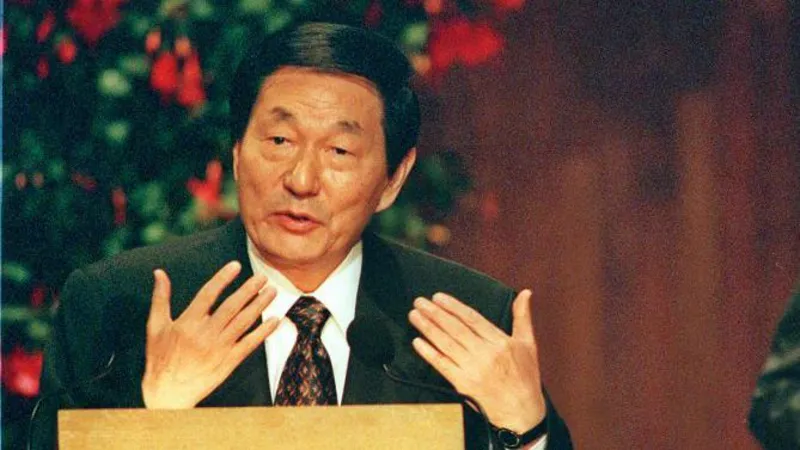

Former Chinese Premier Zhu Rongji, who played a pivotal role in opening China’s economy to global trade and investment, has died at the age of 97.
Zhu served as China’s premier from 1998 to 2003, a period that saw major economic reforms and rapid expansion of the country’s role in the global economy.
Zhu Rongji’s Role in China’s Global Economic Rise
Zhu was one of the key figures behind China’s entry into the World Trade Organization (WTO), a move that helped connect Chinese manufacturers with international markets and attracted large amounts of foreign investment.
His economic policies contributed to the transformation of China’s industrial sector and helped lay the groundwork for the country’s emergence as a global manufacturing powerhouse.
Major Economic Reforms
During his time in senior government positions, Zhu pushed through significant reforms to China’s economy.
He supported the transfer of greater tax authority to the central government, the restructuring and closure of struggling state-owned enterprises and policies that encouraged home ownership.
The reforms were often painful, but supporters argued that they were necessary to modernise the Chinese economy and improve its competitiveness.
Tough and Straight-Talking Leader
Zhu was widely known for his tough, pragmatic and outspoken style.
He frequently spoke openly about corruption, inequality and weaknesses within China’s public institutions.
In 1998, Zhu warned that China faced several potential crises, including widespread public dissatisfaction, official corruption, a growing gap between rich and poor and abuses of power by some local officials.
His blunt comments often attracted attention, including his description of rogue bankers as “half-wits” and his criticism of poorly constructed flood-control infrastructure along the Yangtze River.
Legacy of Economic Transformation
Zhu’s tenure coincided with a period of rapid economic expansion that helped accelerate China’s transition from a relatively isolated communist economy into a major participant in global trade.
His efforts to reform state-owned enterprises, strengthen central financial control and integrate China into international markets played an important role in the country’s economic transformation.
Although some of his reforms caused significant social disruption, Zhu remained an influential figure in China’s modern economic history.
His death at 97 marks the passing of one of the leaders most closely associated with the economic reforms that helped shape modern China.