

Iran has announced the discovery of more than 7.5 trillion cubic feet of natural gas in its southern Fars province, a find state media says could add tens of billions of dollars to the country’s economy even as it remains under one of the most extensive sanctions regimes in the world. The announcement lands at a pivotal moment in the long and complicated list of sanctions against Iran, just weeks after a fragile US-Iran de-escalation deal collapsed.
Background
Iran’s Oil Minister Mohsen Paknejad said Sunday that the new field, located in southern Fars province, contains gas reserves large enough to supply 15 years of production from a single phase of the South Pars field, one of the largest gas fields in the world. He described the find as “sweet gas,” which requires less processing and lowers development costs.
The discovery comes at a difficult time for Iran’s energy sector, which has been repeatedly targeted during months of conflict with the United States and Israel earlier this year. Paknejad noted the newly discovered reserves would help offset disruption to production and infrastructure caused by the fighting, even though any actual extraction and development is likely years away.
Details
List of Sanctions Against Iran: How We Got Here
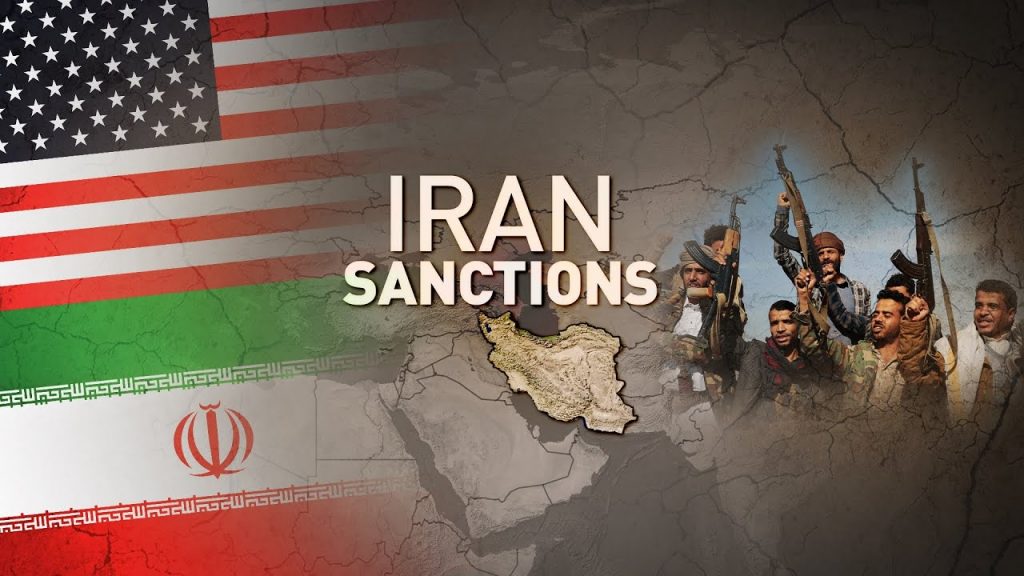
Iran has faced layered international sanctions for nearly two decades, primarily tied to its nuclear program, missile development, and support for regional armed groups. The United States withdrew from the 2015 nuclear deal, formally known as the Joint Comprehensive Plan of Action, in 2018 under President Trump, reimposing sweeping U.S. sanctions on Iran’s oil exports, banking sector, and shipping industry that year.
Those U.S. sanctions on Iran from 2018 onward became the foundation of what officials called a “maximum pressure” campaign, targeting Iranian crude exports, its central bank, and hundreds of individuals and entities linked to the country’s nuclear and missile programs. The U.S. Treasury has continued adding new Iran-related designations on a near-monthly basis since then, most recently targeting oil trading networks tied to China in early 2026.
UN Sanctions Snapback of 2025
A major shift occurred in September 2025, when the UN Security Council’s sweeping “snapback” mechanism reimposed sanctions that had been suspended since the 2015 nuclear deal. Britain, France, and Germany triggered the process in August 2025, arguing Iran was in “significant non-performance” of its nuclear commitments, and the sanctions officially returned on September 27, 2025, restoring an arms embargo, missile-related restrictions, and asset freezes on designated individuals.
Russia and China have disputed the legality of the snapback, arguing the process was procedurally flawed, and have indicated they will largely ignore the reinstated measures. This has created an unusual split where Western governments treat the sanctions as fully binding while Tehran, Moscow, and Beijing contest their legal standing.
Iran Sanctions 2026 Timeline: War, a Brief Thaw, and Renewed Pressure
Iran sanctions in 2026 have moved through several dramatic swings. In February 2026, the United States and Israel launched Operation Epic Fury, a joint military campaign against Iranian nuclear and military targets, which continued until an April 7 ceasefire. Following months of tension, President Trump and Iranian President Masoud Pezeshkian signed a 14-point memorandum of understanding on June 17, 2026, outlining a path to end hostilities and roll back sanctions in stages.
As part of that agreement, the U.S. Treasury’s Office of Foreign Assets Control briefly eased restrictions through General License X, authorizing the sale and delivery of Iranian crude oil and petroleum products for a 60-day window starting June 22, 2026. The move was meant to help reopen the Strait of Hormuz to commercial shipping after months of disruption.
That relief proved short-lived. On July 7, 2026, OFAC revoked General License X and replaced it with a narrow wind-down authorization, and President Trump publicly declared the memorandum “over” on July 8 after Iran was accused of continuing to interfere with shipping in the Strait of Hormuz. Fighting between the two sides resumed shortly after, and the broader sanctions relief promised under the June agreement never advanced beyond that brief 60-day window.
Number of Sanctions on Iran Today
Tracking the exact number of sanctions on Iran is difficult given how many overlapping U.S., UN, EU, and UK measures exist simultaneously, covering everything from individual officials and companies to entire sectors like oil, shipping, and banking. The U.S. Treasury alone has issued dozens of new Iran-related sanctions actions in 2026, targeting shadow fleet oil tankers, financial networks, and entities accused of facilitating illicit crude sales to China, in addition to the broader UN sanctions reinstated in 2025.
Quotes
Paknejad struck an optimistic tone about the new gas discovery, saying the reserves add significant value to the country’s wealth despite the sanctions and wartime disruption Iran’s energy sector has faced. He added that development of the field would proceed “as soon as possible.”
U.S. Secretary of State Marco Rubio described the September 2025 UN snapback as “an act of decisive global leadership” by European allies, framing the reimposition of sanctions as a necessary response to Iran’s continued nuclear activity.
Legal experts reviewing the collapsed June 2026 memorandum noted that a general license limited in scope, duration, and political durability is unlikely to offer meaningful sanctions relief, a caution that proved accurate once General License X was revoked just over two weeks after it took effect.
Impact
The back-and-forth nature of Iran sanctions in 2026 has created significant uncertainty for global energy markets and companies weighing whether to engage with Iranian oil and gas exports. The brief opening created by General License X saw some firms move quickly to arrange Iranian crude purchases, only for that window to close abruptly less than three weeks later.
For Iran’s economy, the persistence of sanctions continues to deter the foreign investment needed to develop discoveries like the new Fars province gas field, even as officials tout its long-term value. Without sanctions relief or significant outside investment, new discoveries often take years or even decades to reach full production, as has been the case with several previous Iranian gas finds.
Regionally, the collapse of the June memorandum and resumption of tensions in the Strait of Hormuz have kept global shipping and insurance costs elevated, given the strait’s role as a critical corridor for global oil and gas trade.
Conclusion
With the June 2026 memorandum now effectively dead and both sides again exchanging fire, the list of sanctions against Iran shows no sign of shrinking anytime soon. Whether Iran’s new gas discovery attracts renewed interest from international energy companies will likely come down to whether Washington and Tehran can find their way back to a more durable de-escalation agreement than the one that fell apart in July.
Frequently Asked Questions
Did the U.S. lift sanctions on Iran?
The United States briefly eased a narrow set of sanctions in June 2026 through General License X, which temporarily authorized the sale and delivery of Iranian crude oil and petroleum products as part of a broader memorandum of understanding between Washington and Tehran. However, that relief was revoked less than three weeks later, on July 7, 2026, when OFAC replaced the license with a wind-down authorization, and President Trump declared the underlying agreement “over” the following day. As of now, the vast majority of U.S. sanctions on Iran remain fully in place, alongside the UN sanctions reinstated through the September 2025 snapback process.
Is Iran under American sanctions?
Yes, Iran remains under extensive American sanctions covering its oil exports, banking sector, shipping industry, and numerous individuals and entities tied to its nuclear and missile programs. These sanctions have been in place in various forms since the 1979 Islamic Revolution, with major escalations following the U.S. withdrawal from the 2015 nuclear deal in 2018 and continuing through repeated rounds of new designations by the Treasury Department in 2026, including recent measures targeting Iran’s oil trade with China and its shadow fleet of tankers.
How much money has Iran lost due to sanctions?
Estimating Iran’s total economic losses from decades of sanctions is difficult given the range of measures involved, but various economic analyses have suggested Iran has lost well over $100 billion in oil revenue alone since the reimposition of U.S. sanctions in 2018, along with additional losses from restricted access to international banking, foreign investment, and technology. Iranian officials have periodically cited even higher cumulative figures when discussing the broader economic toll of sanctions dating back to the early 2000s, though independent verification of exact totals remains challenging given limited transparency around Iran’s economic data.