

SINGAPORE: Global oil prices declined by more than $1 a barrel on Monday as investors took profits following recent gains, while markets awaited details of new US sanctions against Iran that could further disrupt crude supplies from the Middle East.
Brent crude futures dropped $1.23, or 1.3%, to $93.16 a barrel by 0329 GMT. US West Texas Intermediate (WTI) crude fell $1.36, or 1.6%, to $85.70 a barrel.
Despite Monday’s decline, both benchmarks recorded their second consecutive weekly gains last week, climbing by more than 5% as diplomatic negotiations between Washington and Tehran reached an impasse.
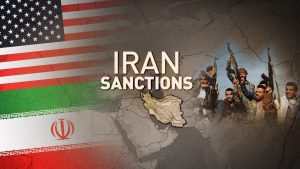
Investors are closely watching the United States for details of its planned sanctions against Iran.
US Treasury Secretary Scott Bessent is expected to announce additional measures that could put further pressure on Iran’s oil exports and economy.
Bessent has described the planned measures as potentially being among the toughest sanctions ever imposed on Iran.
US President Donald Trump has also threatened to penalise Iran’s trading partners, increasing concerns that restrictions could affect the flow of Iranian crude into international markets.
Analysts say the impact of the new measures will depend largely on how effectively they can restrict Iran’s exports and whether other countries continue purchasing Iranian oil.
Strait of Hormuz Remains Critical
The Strait of Hormuz remains at the centre of concerns over global energy supplies.
The strategic waterway is one of the world’s most important oil shipping routes, and disruptions in the area could have a significant impact on international crude markets.
Tensions between the United States and Iran have already affected oil shipments through the region. Any prolonged disruption could tighten global supplies and increase price volatility.
Vivek Dhar, a commodities analyst at Commonwealth Bank of Australia, said it was still uncertain whether Washington’s strategy of economically isolating Iran would achieve its objectives.
He warned that if the sanctions prove effective, Iran could potentially respond in ways that create additional risks for global energy markets.
Iran Calls for Diplomacy
Iran has strongly criticised the planned US sanctions, while President Masoud Pezeshkian has called for a diplomatic solution to the confrontation.
Analysts believe the response from Tehran could depend on the balance between officials seeking to reduce tensions and those advocating a tougher response.
IG Markets analyst Tony Sycamore said the more pragmatic elements of Iran’s leadership could favour de-escalation, while hardliners might prefer continued confrontation.
He said developments over the coming days could provide a clearer indication of which side has greater influence within Iran’s leadership.
Trade sources said offers of Iranian crude to Chinese buyers have fallen, while prices have increased as US restrictions put pressure on Tehran’s oil shipments.
China remains a major buyer of Iranian crude, making any sustained decline in exports significant for the wider oil market.
Meanwhile, Iran has reportedly allowed several Iraqi oil tankers to pass through the Strait of Hormuz following repeated requests from Baghdad, according to Iran’s state news agency IRNA.
The move could help maintain some regional energy flows despite the broader tensions.
Analysts at Morgan Stanley said global crude supplies were becoming increasingly tight, pointing to a sharp decline in oil held at sea and falling onshore inventories, including in China.
The analysts said the most significant reduction was coming from the Middle East, with several data sources indicating that regional exports had returned to levels seen in March and April.
As a result, expectations for a rapid recovery in Middle Eastern oil supplies have been pushed back.
Monday’s decline in crude prices does not necessarily signal an easing of pressure on the oil market.
Investors remain focused on the potential impact of US sanctions on Iran, the future of Iranian oil exports and developments around the Strait of Hormuz.
If diplomatic efforts fail and regional tensions continue to escalate, further disruptions to Middle Eastern supplies could put upward pressure on crude prices.
For now, traders are watching Washington’s sanctions announcement and developments between the US and Iran for clues about the direction of the global oil market.