

The Supreme Court has reduced the mandatory legal practice requirement for entry-level judicial service candidates from three years to one, modifying its own landmark 2025 ruling that had barred fresh law graduates from sitting the Civil Judge exam. The decision comes after more than a year of legal challenges from law graduates and universities across the country.
Background
In May 2025, a bench led by then Chief Justice B R Gavai ruled that candidates must have at least three years of legal practice before they could appear for the Civil Judge (Junior Division) examination, reversing the Court’s own 2002 position that had allowed fresh graduates to enter judicial service directly. That earlier judgment, delivered in All India Judges Association v Union of India, argued that practical courtroom exposure was essential for producing competent judges.
The 2025 ruling triggered immediate backlash from law students and universities, who argued it unfairly disadvantaged an entire cohort of graduates who had built their career plans around the previous rules. Review petitions soon followed, including one filed by Bhumika Trust on behalf of specially-abled candidates seeking exemption from the practice mandate altogether.
Several review pleas specifically pointed out that there was no empirical data showing lawyers with less than three years of practice performed worse as judges once appointed. Petitioners also flagged that the sudden change disproportionately affected women and graduates from leading law schools who had planned to enter judicial service straight out of college.
Details
What the New Ruling Changes
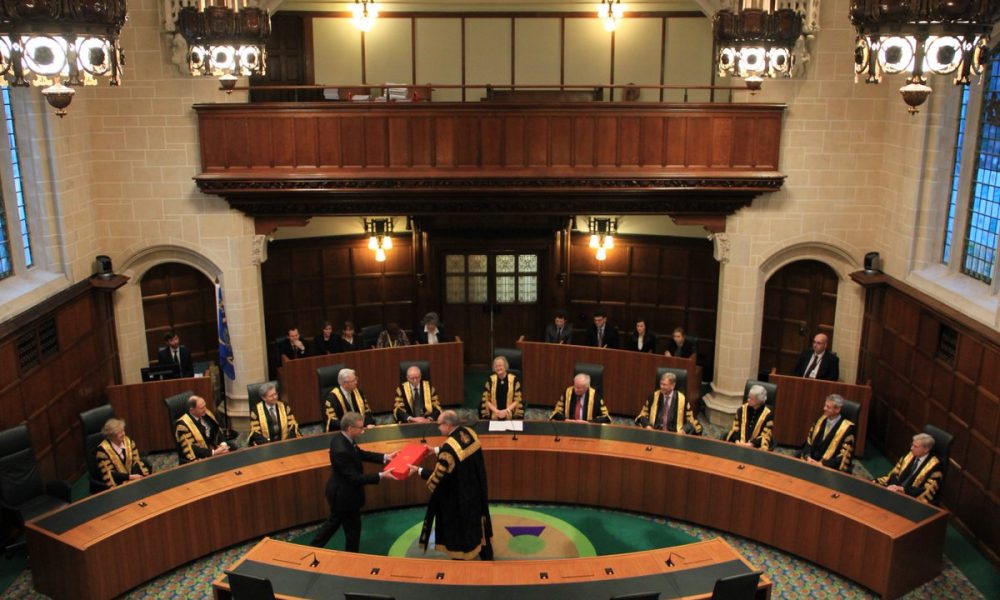
On August 21, a bench comprising Chief Justice Surya Kant along with Justices Augustine George Masih and K. Vinod Chandran modified the earlier 2025 judgment. The Supreme Court reduces practice requirement for the Civil Judge exam from three years to one year, while adding a new layer of structured post-selection training to compensate for the shorter pre-exam practice period.
Justice K. Vinod Chandran dissented from the majority, holding that there was no valid ground to review the earlier judgment and that the original three-year requirement should have remained in place.
The New Training and Clerkship Structure
Under the revised framework, candidates selected after passing the exam will be designated Trainee Judicial Officers and required to undergo one year of intensive training at their state’s Judicial Academy, a period the court said would count as equivalent to one year of Bar practice for the purposes of the original three-year rule. Trainees will receive half the salary of a Judicial Magistrate First Class during this period.
Following the academy training, selected candidates must then complete a further year of structured law clerkship under a sitting judge. A High Court judge overseeing the clerkship must submit a written evaluation, and candidates whose performance is found unsatisfactory may not be confirmed in the regular post, according to the court’s order.
Timeline for the Transition
The new one-year practice requirement takes effect for judicial exams notified after April 1, 2027. For exams already notified between May 20, 2025 and March 31, 2027, the court has allowed candidates to apply regardless of prior practice experience, though they will still be appointed only as Trainee Judicial Officers subject to the same training and clerkship conditions.
The court explained its reasoning by noting that the abrupt restoration of the three-year rule in 2025, without any transitional arrangement, had created real hardship for young lawyers and recent graduates who had no way to adjust their plans in time. It described the modification as a limited but necessary intervention rather than a full reversal of its earlier position.
Notably, this Supreme Court judgement on 3-year practice does not affect the Higher Judicial Services, which require a minimum of seven years of Bar practice for direct entry as a District Judge. That separate framework remains unchanged by the latest order.
Quotes
The bench majority held that the sudden restoration of the three-year practice rule without any transitional arrangement had visited hardship on young lawyers and law graduates, and that this justified limited intervention to soften the rule’s impact.
Review petitioners had earlier argued in court filings that there was no rational basis to treat fresh graduates differently from those with three years of Bar experience, pointing to the reasonable classification principle established in State of West Bengal v. Anwar Ali Sarkar to support their case.
During earlier hearings, one bench member floated the idea of phasing in the requirement gradually rather than applying it all at once, suggesting a model where the practice requirement would rise incrementally year by year until reaching the full three-year mark.
Impact
The ruling carries significant weight for thousands of law graduates and current students who had been left uncertain about their eligibility for judicial service since the original 2025 judgment. Law schools across the country, including institutions that submitted formal recommendations to the court, had raised concerns that the three-year rule discouraged talented graduates from pursuing judicial careers early.
For state judicial academies, the ruling creates new administrative responsibilities, since they must now design and deliver a full year of structured training for every batch of newly selected Trainee Judicial Officers under the revised framework.
More broadly, the case reflects an ongoing tension within India’s judicial system between prioritizing practical courtroom experience and ensuring fair, predictable access to judicial careers for young law graduates, an issue that is likely to resurface as the transitional period plays out over the coming years.
Conclusion
With the one-year practice requirement set to take full effect from April 2027, law graduates and universities now have a clearer runway to plan around the new eligibility rules. Whether the added training and clerkship structure actually addresses the concerns that drove the original three-year rule will likely only become clear once the first batches of Trainee Judicial Officers complete the new process.
Frequently Asked Questions
Has the Supreme Court ever reversed a decision?
Yes, the Supreme Court has reversed or substantially modified its own past decisions on multiple occasions, a practice generally carried out through review petitions or larger constitutional benches revisiting earlier rulings. The 3-year practice requirement case itself is a clear example: the Court’s 2025 judgment reversed its own 2002 ruling in the same All India Judges Association case, and this year’s modification softened that 2025 position after sustained legal challenges. Such reversals typically happen when the Court identifies a compelling need to correct an earlier position, address unintended hardship, or respond to new evidence not available when the original judgment was delivered.
Who was the shortest-serving Chief Justice of Pakistan?
Muhammad Shahabuddin holds the record for the shortest tenure as Chief Justice of Pakistan, having died in office just nine days after taking his oath. This makes his term the briefest in the history of the Supreme Court of Pakistan, standing in sharp contrast to Justice Muhammad Haleem, who served the longest tenure of any Chief Justice, holding the position for 3,205 days between 1981 and 1989. The Chief Justice of Pakistan position has seen considerable turnover over the decades, shaped by a mix of retirements, resignations, and, in Shahabuddin’s case, an unexpected death shortly after assuming the role.
What is higher than a Supreme Court?
In most national legal systems, including India’s, the Supreme Court is the highest domestic judicial authority, meaning there is no higher national court above it, and its decisions are final and binding within the country. However, in matters involving international law, human rights treaties, or cross-border disputes, certain international bodies such as the International Court of Justice or specialized human rights tribunals can have jurisdiction over specific categories of cases, though these operate independently of and do not sit in a hierarchical relationship above a country’s domestic Supreme Court. For purely domestic legal matters, a country’s Supreme Court generally represents the final and highest level of judicial appeal.