

IMF Praises Sri Lanka’s Economic Reforms Despite Middle East Crisis:
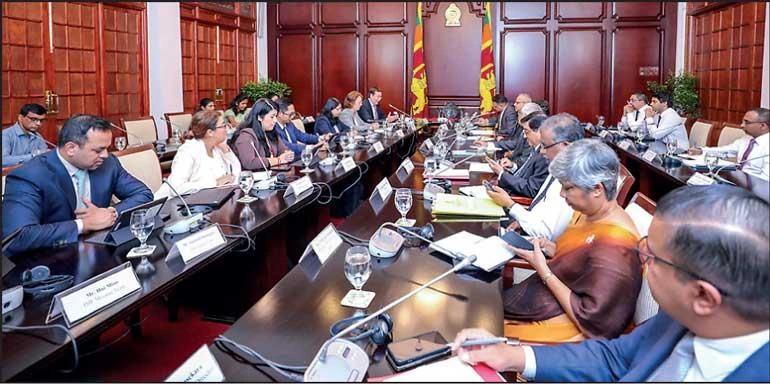
In late June, an International Monetary Fund (IMF) team led by Evan Papageorgiou visited Colombo to review Sri Lanka’s economic progress amid ongoing challenges. The team assessed how the country’s prompt policy actions during the Middle East war helped maintain macroeconomic and social stability, thanks in part to gains from Sri Lanka’s economic reform program supported by the IMF’s Extended Fund Facility.
Despite the war’s pressure, including rising inflation—up from 1.6% in February 2026 to 5.5% by May—and slower growth in tourism and reserves, Sri Lanka took decisive steps. The Central Bank raised interest rates by 100 basis points and introduced measures to stabilize the financial system. Meanwhile, the government provided temporary relief through subsidies for fuel, electricity, and fertilizer, alongside cash transfers to vulnerable households. Encouragingly, recent drops in global commodity prices have eased some external pressures.
Looking ahead, Papageorgiou emphasized the importance of sticking to the reform agenda to strengthen Sri Lanka’s recovery and ensure fiscal and external stability. The government plans to return to a primary fiscal balance target of 2.3% of GDP in 2027 after easing in 2026. Key priorities include improving tax collection, broadening the tax base, enhancing financial management, and speeding up state-owned enterprise reforms. Social safety nets will remain crucial to protect the most vulnerable, especially as the country recovers from natural disasters.
Debt restructuring is nearly complete, but strengthening the Public Debt Management Office is vital for prudent debt practices and market confidence. Monetary policy must stay flexible and data-driven to maintain price stability amid global uncertainty, with exchange rate flexibility helping absorb shocks. The IMF also highlighted the need to phase out balance of payments restrictions and bolster financial safeguards like cybersecurity and anti-money laundering measures to preserve financial stability.
In summary, Sri Lanka’s careful and coordinated response amid global and local challenges underlines the importance of sustained reforms and prudent policies as the country works toward a stronger economic future.
- Building resilience to shocks and achieving inclusive, durable growth in Sri Lanka requires steadfast governance reforms.
- Bold reforms are needed to:
- Improve tax system efficiency and fairness,
- Liberalize trade,
- Address labor market rigidities,
- Enhance the business environment to attract investment, create jobs, and reduce poverty.
- Sri Lanka’s progress will be formally assessed during the Seventh Review of the Extended Fund Facility (EFF); mission dates will be announced later.
- The IMF mission met with key officials including:
- President and Finance Minister Anura Kumara Dissanayake,
- Prime Minister Dr. Harini Amarasuriya,
- Labor Minister and Deputy Finance Minister Prof. Anil Jayantha Fernando,
- Central Bank Governor Dr. P. Nandalal Weerasinghe,
- Treasury Secretary Dr. Harshana Suriyapperuma,
- Senior advisors and other government and Central Bank officials.
- The mission also engaged with representatives from the private sector, civil society, and development partners.
- The IMF expressed gratitude for the excellent engagement during the visit.