

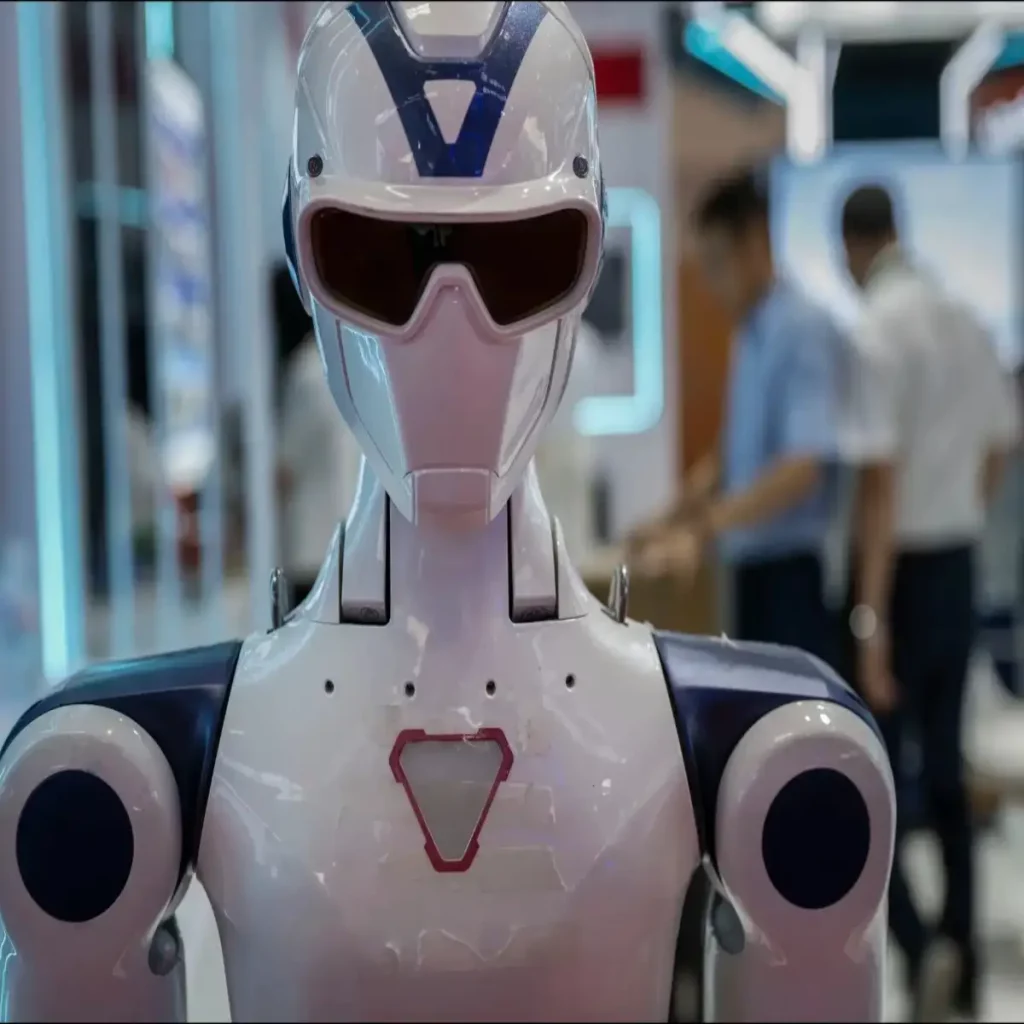

WASHINGTON: The Trump administration has announced a sweeping ban on the import of new foreign-made humanoid robots and advanced robotic systems, citing growing concerns over national security, cybersecurity, and the protection of America’s critical infrastructure.
The new restrictions, unveiled on Tuesday, apply to advanced robotic devices—including humanoid and four-legged robots—many of which are manufactured in China. The move reflects Washington’s broader strategy to reduce dependence on foreign technology as competition with Beijing intensifies in artificial intelligence (AI), robotics, and advanced manufacturing.
Alongside the robotics restrictions, the Federal Communications Commission (FCC) also prohibited the import of certain foreign-made power inverters, warning that the devices could pose significant cybersecurity risks if exploited by hostile foreign governments or cybercriminals.
US Expands Technology Security Measures
FCC Chairman Brendan Carr said the agency is committed to strengthening America’s technology supply chains and protecting critical infrastructure from emerging security threats.
According to the FCC, both advanced robotic systems and power inverters have been added to its Covered List, which identifies communications equipment and technologies considered to pose unacceptable risks to US national security.
Officials warned that compromised power inverters—commonly used in solar energy systems, data centres, and industrial facilities—could potentially allow foreign actors to remotely disable equipment, access sensitive information, conduct surveillance, or launch cyberattacks against essential infrastructure.
Humanoid Robots Under Greater Scrutiny
The ban specifically targets newly imported advanced robots designed for commercial, industrial, research, and defence-related applications. Humanoid robots are increasingly being deployed in manufacturing, logistics, healthcare, warehouses, and public services, making their security a growing concern for US policymakers.
Officials argue that restricting imports of foreign-produced robotic systems will help reduce potential vulnerabilities while encouraging domestic innovation and manufacturing within the United States.
The latest action comes as China continues investing heavily in AI-powered robotics, with Chinese companies emerging as major global competitors in the sector.
Existing Products Remain Authorized
The FCC clarified that the new restrictions only apply to future imports of newly manufactured foreign-made robotic devices and power inverters.
Products that were previously authorised and legally imported into the United States before the policy takes effect will not be affected by the new regulations.
This means businesses and organisations already using approved equipment can continue operating without disruption.
China Criticises US Decision
China’s embassy in Washington condemned the latest restrictions, accusing the United States of politicising trade and technology issues.
A spokesperson said Beijing has consistently opposed sanctions and trade barriers imposed under what it described as “groundless pretexts,” arguing that such measures undermine fair international trade and cooperation.
The latest dispute adds to a series of technology-related tensions between the world’s two largest economies, including restrictions on semiconductors, telecommunications equipment, artificial intelligence technologies, and advanced computing.
US-China Tech Competition Intensifies
Industry experts say the import ban highlights Washington’s increasing focus on securing strategic technologies viewed as essential to national security and economic competitiveness.
With artificial intelligence and robotics expected to play a central role in future industries, governments around the world are tightening regulations on foreign technology while investing heavily in domestic innovation.
Analysts believe the new US restrictions could accelerate investment in American robotics manufacturing but may also further deepen technology and trade tensions between the United States and China.