

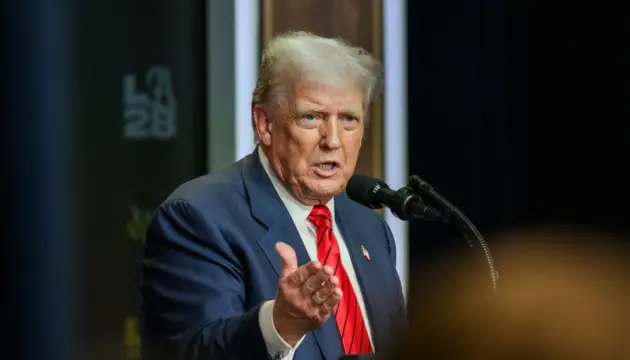

US President Donald Trump has announced a sweeping new economic campaign against Iran, describing it as the “most crushing economic operation ever taken against any country” and warning nations and businesses that continue to provide financial or commercial support to Tehran.
In a post on Truth Social, Trump accused Iran of rejecting opportunities for negotiations with his administration and said Washington would pursue economic warfare and unprecedented isolation against the Islamic Republic. The announcement represents a significant escalation in the US pressure campaign against Tehran.
Trump Warns Iran’s Economic Supporters
Trump said countries allowing their financial institutions, companies, airports or government agencies to provide Iran with what he described as an economic “lifeline” would face “tremendous economic consequences.”
He specifically called for an end to activities including oil smuggling, financial swap arrangements, cash transfers, exchange-house operations, ship registries and the use of front companies to support Iran’s economy.
Trump also urged US allies to join Washington in isolating Tehran, describing the planned measures as an “Economic D-Day.” He said the campaign was intended to weaken Iran’s ability to project influence abroad and repeated his position that Tehran must never obtain a nuclear weapon.
The warning could have broader implications for countries and companies that maintain commercial ties with Iran, particularly those involved in its oil trade and financial networks. Trump’s threat comes as Washington seeks to close channels that could allow Tehran to bypass existing economic restrictions.
Tensions Rise as Diplomacy Remains Uncertain
Trump’s latest announcement comes amid mixed signals over the possibility of renewed diplomacy between Washington and Tehran. The US president has previously indicated that negotiations could take place, while Iranian officials have maintained that any talks must respect the country’s sovereignty and national interests.
The dispute also remains closely linked to tensions surrounding the Strait of Hormuz, a vital global energy route. Trump has claimed that the waterway remains open and said the US naval blockade has been effective, while Iranian officials have continued to take a firm position on the conditions required for resolving the confrontation.
Iranian President Masoud Pezeshkian has said that negotiations should not be interpreted as surrender, arguing that diplomacy should take place from a position of strength. Iranian officials have also stressed that ending the conflict and lifting restrictions remain important priorities.
Meanwhile, Iranian Parliament Speaker Mohammad Bagher Ghalibaf has taken a more confrontational stance toward Washington, accusing the United States of pursuing regional dominance and exploiting Middle Eastern resources.
Regional Diplomacy Continues
Despite the increasingly aggressive rhetoric, diplomatic contacts have continued. Iranian Foreign Minister Abbas Araghchi has held discussions with Pakistani military leadership over regional developments, diplomatic efforts and possible political solutions.
The contrasting positions from Washington and Tehran underscore the difficulty of finding a diplomatic exit from the confrontation. With tensions surrounding Iran’s nuclear programme, the Strait of Hormuz and economic sanctions continuing to dominate the crisis, Trump’s latest announcement could further intensify pressure on Iran and countries maintaining economic relations with Tehran.
For now, the key question is whether the threatened economic measures will force Iran back to the negotiating table or further deepen the confrontation between Washington and Tehran.