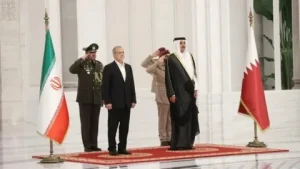

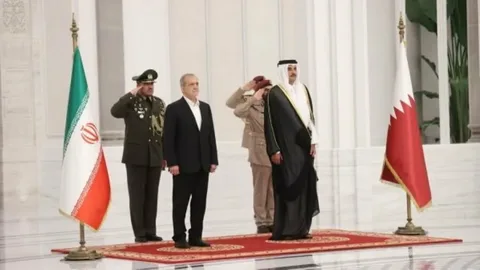

Qatar’s Prime Minister Sheikh Mohammed bin Abdulrahman Al Thani is traveling to Tehran this week to revive stalled diplomacy between the United States and Iran, marking one of the most significant Qatar-Iran deal efforts since the conflict began. The visit comes just a day before the war reaches its six-month mark, with fighting largely paused but no lasting breakthrough achieved.
Background
Qatar has served as a critical back-channel negotiator throughout the US-Israel war on Iran, using its close ties with Tehran and its status as a longtime US ally to keep diplomatic lines open. The country played a direct role in brokering the June ceasefire that briefly halted hostilities before the truce eventually broke down.
Qatar-Iran relations have been tested repeatedly during this conflict, most notably when Iran’s Revolutionary Guard launched retaliatory missile strikes on Qatar’s Al Udeid Air Base in June 2025, just two days after the US struck three Iranian nuclear facilities. Despite the direct attack on Qatari soil, Doha continued its mediation role rather than cutting ties with Tehran, a decision that has shaped Qatar-Iran relations ever since.
Details
Why the Qatar PM Is Visiting Tehran
Sheikh Mohammed, who also serves as Qatar’s foreign minister, is expected to meet a number of senior Iranian officials during his visit to discuss de-escalation and what Doha has called “conditions conducive to dialogue.” A Qatari foreign ministry spokesperson said the trip reflects Qatar’s consistent position that diplomacy remains the best path toward regional security and stability.
Iran’s foreign ministry confirmed the visit separately, saying discussions would cover the continuation of Qatar’s mediation efforts alongside broader regional developments. The visit follows a similar trip by Pakistan’s army chief, General Asim Munir, who traveled to Tehran earlier in the week and reportedly delivered a US proposal offering to lift sanctions and blockades in exchange for Iran reopening the Strait of Hormuz and ending proxy attacks in the region.
The Iran Attack on Qatar That Reshaped the Region
The relationship between the two countries has been marked by direct military confrontation despite Qatar’s mediator role. Iran struck Al Udeid Air Base again in March 2026 as the conflict resumed, with a ballistic missile slipping past air defenses and damaging communications infrastructure on the base, according to Pentagon officials. A further wave of strikes followed in July 2026, when Iran’s Revolutionary Guard claimed what it called the “15th wave of Operation Nasr 2” against the same base, alleging it had destroyed radar systems and refueling aircraft, claims that have not been independently verified.
Each Iran attack on Qatar has drawn condemnation from Doha, which has called the strikes violations of its sovereignty and airspace, while stopping short of direct military retaliation. Qatar keeps mediating anyway, despite being targeted, and that alone says something about how central its diplomatic role has stayed throughout the war, even as tensions between the two countries have periodically flared into open confrontation.
Has Qatar Withdrawn from the War?
Qatar has never been a direct combatant in the US-Israel war on Iran, but its position as host to Al Udeid Air Base, the forward headquarters for US Central Command, has repeatedly drawn it into the conflict’s crossfire. Rather than withdrawing from any active military role it never formally held, Qatar has instead worked to reduce its exposure through diplomacy, pushing for de-escalation precisely because continued fighting threatens its own territory and regional stability.
What’s at Stake in the Strait of Hormuz Dispute
Much of the current diplomatic push centers on the Strait of Hormuz, a critical global oil chokepoint that Iran has used as leverage throughout the conflict. The UN’s International Maritime Organization has recorded 70 incidents in the strait since February 28, resulting in 19 seafarer deaths. Iran and Oman have held on-and-off talks for weeks over controlling strait traffic, while Tehran and Washington have each attempted to impose separate blockades on shipping routes.
Quotes
Qatar’s foreign ministry spokesperson Majed Al Ansari said the upcoming talks in Tehran align with Doha’s “firm position that the diplomatic path is the best means of resolving differences and promoting security and stability in the region.”
Iranian Revolutionary Guard spokesperson Brigadier General Hossein Mohebbi struck a more defiant tone regarding the Strait of Hormuz dispute, stating that the waterway would remain shut unless the United States met Tehran’s conditions under the interim ceasefire agreement signed in June, including an end to the blockade on Iranian ports and removal of sanctions.
US President Donald Trump commented separately on the broader conflict, saying he believes Iranian Supreme Leader Mojtaba Khamenei remains alive despite what officials have described as severe injuries sustained during ongoing military operations.
Impact
The outcome of Qatar’s renewed mediation push carries significant weight for global energy markets, given the Strait of Hormuz’s role as a chokepoint for a large share of the world’s oil shipments. Continued disruption in the strait risks further volatility in oil prices well beyond the immediate region.
For Qatar itself, maintaining its mediator role despite repeated attacks on its own soil has reinforced its diplomatic standing among Gulf states, even as it exposes the country to real security risks tied to hosting major US military infrastructure. The involvement of Pakistan alongside Qatar in these mediation efforts also signals a broader coalition of regional actors working to prevent further escalation.
Conclusion
With the war approaching its sixth month and no diplomatic breakthrough yet achieved, Sheikh Mohammed’s visit to Tehran is one of the more consequential mediation attempts in recent weeks. Whether this latest round of Qatar-Iran talks produces any lasting progress on the Strait of Hormuz dispute or broader US-Iran tensions should become clearer in the days following the visit.
Frequently Asked Questions
Did Qatar retaliate against Iran?
Qatar has not launched any direct military retaliation against Iran despite multiple missile attacks on its Al Udeid Air Base since June 2025. Instead, Doha has consistently responded through diplomatic condemnation, calling the strikes violations of its sovereignty and international law, while continuing to pursue its long-standing mediation role between Iran, the United States, and Israel. This approach reflects Qatar’s broader strategy of using diplomatic leverage rather than military confrontation to manage its relationship with a powerful neighbor.
What is the Qatar mediation law?
There is no single specific piece of legislation known as a “Qatar mediation law.” Rather, Qatar’s mediation role stems from its long-standing foreign policy approach, which has positioned the country as a neutral back-channel negotiator in numerous regional conflicts over the past two decades, including talks involving Hamas, the Taliban, and now the US-Iran conflict. Qatar’s ability to maintain communication channels with parties that often refuse to speak directly to each other has made it a preferred venue and facilitator for sensitive negotiations across the Middle East and South Asia.
Did Iran send a missile to Qatar?
Yes, Iran has launched missiles at Qatar on multiple occasions during the ongoing conflict, beginning with a retaliatory strike on Al Udeid Air Base on June 23, 2025, in response to US strikes on Iranian nuclear facilities. Iran launched further strikes on the same base in March 2026 and again in July 2026, with varying levels of damage reported by Qatari and US officials. Qatar’s air defense systems have intercepted the majority of these missiles, and officials have reported minimal casualties across the various attacks, though the Pentagon has confirmed damage to communications infrastructure on the base.