

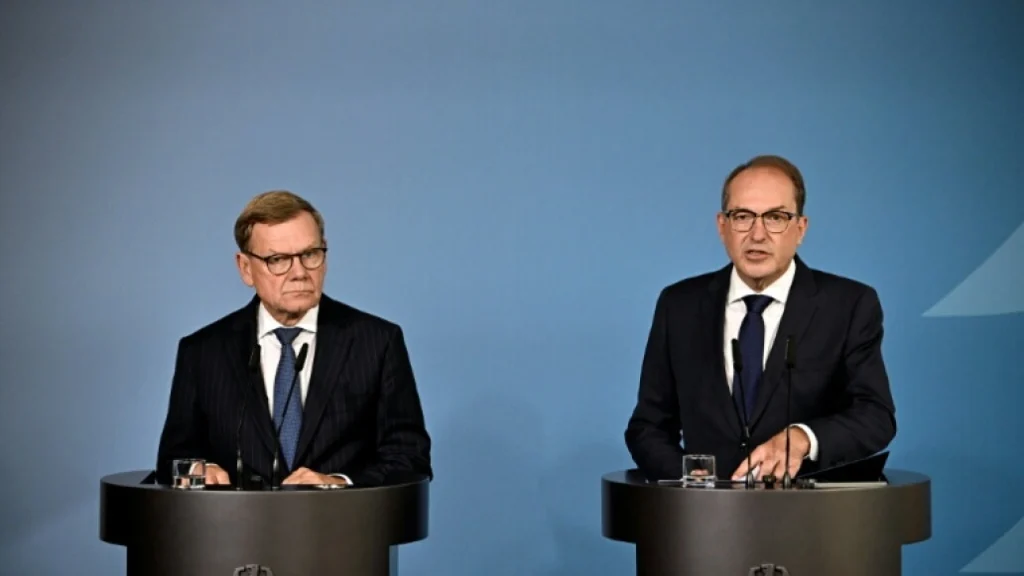

BERLIN: NATO and European Union leaders have warned that Russia recklessness is creating a new security threat in Europe and pledged to respond more quickly to what they describe as an increasingly dangerous “new normal.”
European Commission President Ursula von der Leyen said the reported Leipzig airport incident represented a fresh escalation on EU territory after Germany accused Russia of being behind a failed drone attack at Leipzig/Halle airport last month.
“Leipzig marks a new escalation on European Union soil directly attributed to Russia,” von der Leyen said. She called for European countries to strengthen their response and be prepared to react to Russia’s recklessness faster and more effectively.
NATO Secretary General Mark Rutte said the entire alliance, including the United States, stood in “full solidarity with Germany.”
Russia Recklessness Raises Security Concerns in Germany
German authorities said the drone incident occurred on 4 August when an unmanned aircraft carrying explosives allegedly targeted a Ukrainian cargo plane at Leipzig/Halle airport.
A robot was used to defuse the drone, while a second drone reportedly collided with another cargo aircraft. A third drone was reportedly discovered at the airport about 10 days later.
Leipzig/Halle is considered strategically important because it serves as a NATO logistics hub and is regularly used by Ukrainian Antonov transport aircraft.
Germany announced on Tuesday that police investigations and intelligence assessments had led officials to conclude that Russia was responsible for the incidents.
German Interior Minister Alexander Dobrindt said the drone’s configuration, components, explosives and detonator were consistent with equipment previously identified in other alleged Russian hybrid operations.
Russia has rejected the accusations and denied deliberately targeting the Ukrainian cargo aircraft.
As part of its response to the Leipzig incident, Berlin announced plans to close the Russian consulate in Bonn and the Russian House cultural institution in Berlin.
German authorities have faced criticism over the institution, which some officials and critics have accused of serving as a platform for Kremlin propaganda.
The Kremlin rejected Germany’s allegations, with the Russian Foreign Ministry saying Berlin had failed to provide evidence supporting its claims.
Moscow also promised a “mirror-image” response to Germany’s measures.
Russian President Vladimir Putin described Germany’s actions as a serious mistake, arguing that they were contrary to the interests of the German people.
Russian Deputy Foreign Minister Alexander Grushko was also asked whether Moscow could sever diplomatic relations with Berlin. He responded that it was “maybe” possible, although he said Russia was currently allowing diplomacy to continue.
NATO and EU Prepare Wider Response to Russia Recklessness
German critics have argued that Berlin’s immediate response to the Leipzig incident was relatively limited. However, the government is reportedly seeking a broader and coordinated response with European allies.
Potential measures include expanded European Union sanctions against Russia and tighter entry restrictions on Russian visitors across the bloc.
The warnings from von der Leyen and Rutte indicate that European governments increasingly view alleged Russian hybrid operations as part of a wider security challenge rather than isolated incidents.
The Leipzig airport case has therefore intensified calls for NATO and EU members to improve intelligence sharing, airport security and rapid-response mechanisms.
With tensions between Russia and Western governments already high because of the war in Ukraine, concerns over Russia’s recklessness could further shape European security policy and relations with Moscow.