
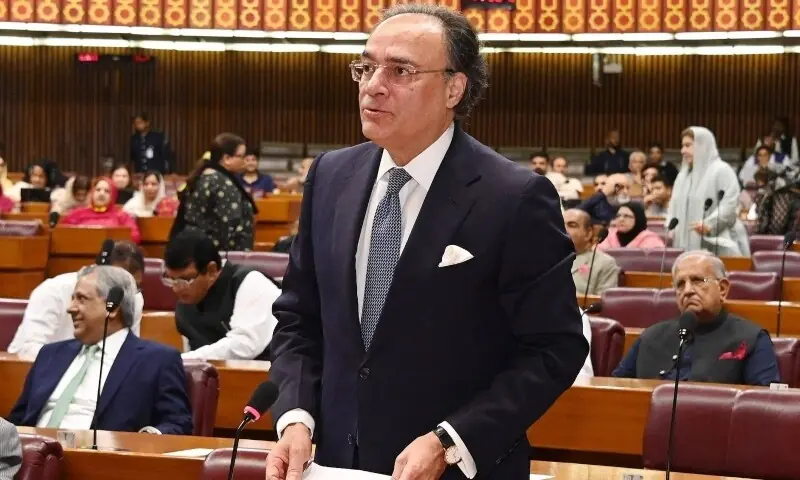

The Punjab Assembly has formally passed the Punjab Finance Bill 2026-27, completing approval of the province’s annual budget for the new fiscal year. The session in Lahore saw the opposition Pakistan Tehreek-i-Insaf walk out before the final vote was taken.
Lawmakers approved all 131 demands for grants before passing the Finance Bill itself, officially adopting the Punjab government’s spending plan. The move brings to a close weeks of budget debate inside the Punjab Assembly Lahore chamber.
Background: How the Session Unfolded
The Punjab Assembly session was called to formally debate and finalize the province’s budget proposals for the coming fiscal year. Deputy Speaker Zaheer Iqbal Channar presided over key portions of the sitting as members worked through dozens of cut motions filed by opposition lawmakers.
PTI members argued they were not given adequate time to speak on the cut motions before grants were put to a vote. They also raised objections about quorum during the approval process, a common procedural complaint during budget sessions across Pakistan’s provincial and national assemblies.
Despite the objections, proceedings continued and the House moved forward with clause-by-clause approval of the budget grants. Once the opposition staged its walkout, the ruling party benches completed the remaining agenda items without further disruption.
Details of the Punjab Finance Bill 2026-27
The Punjab Finance Bill 2026-27 introduces a series of tax reforms aimed at broadening the province’s revenue base. Officials say the changes are designed to improve compliance, enhance transparency, and align the provincial tax regime with current economic conditions.
Among the notable proposals is a revision of token tax rates for vehicles above 1000cc, marking the first such change in more than two decades. Rates for commercial vehicles, including trucks and delivery vans, have also been adjusted as part of the broader revenue strategy.
The government has proposed making property tax payments through the e-Pay system mandatory, replacing the manual process many residents currently use. A monthly surcharge on delayed property tax payments will also be replaced with a quarterly mechanism under the new bill.
In a relief measure aimed at the agriculture sector, the government proposed abolishing the levy on cotton under the Punjab Finance Act 1973. Officials say the move is intended to support farmers and help revive cotton production, particularly in South Punjab, where several ginning factories have shut down in recent years.
Overall, the province is targeting a significant increase in tax collection compared to the previous fiscal year, with new revenue measures expected to widen the tax base without introducing entirely new categories of taxation. The budget also allocates substantial funding toward development schemes, salaries, and pension payments for government employees.
Official Statements and Reactions
Senior Minister Maryam Aurangzeb defended the government’s overall performance during the session, highlighting security arrangements during recent religious observances. She noted that a large number of security personnel had been deployed across the province as part of these efforts.
Finance officials also announced a bonus for employees of the Punjab Assembly Secretariat, the Law Department, and other allied departments following the passage of the grants. This gesture was framed as recognition of staff contributions during a demanding legislative period.
Opposition lawmakers, meanwhile, maintained that the budget process lacked sufficient transparency and debate time. Their walkout reflected broader frustrations that have periodically surfaced during provincial budget sessions across Pakistan in recent years.
Wider Context: National Assembly and Other Provinces
The Punjab Finance Bill 2026-27 was passed shortly after the National Assembly approved its own Finance Bill 2026-27 for the federal budget. The National Assembly session saw the government reject all opposition-proposed amendments before finalizing the federal spending plan.
Other provincial assemblies followed a similar pattern this budget season. The Azad Jammu and Kashmir Legislative Assembly, for instance, passed its own budget for the same fiscal year shortly after it was formally presented, with limited opposition attendance recorded during that sitting.
Impact on Residents and the Provincial Economy
The passage of the Punjab Finance Bill 2026-27 has direct implications for residents, particularly vehicle owners and property taxpayers who will be affected by the revised rates. Analysts note that the reforms are designed to generate additional revenue without introducing sweeping new tax categories.
For the agriculture sector, the removal of the cotton levy is expected to offer some relief to farmers in South Punjab, a region that has struggled with declining cotton output in recent seasons. Officials hope the change will help revive local ginning operations that had closed amid falling demand.
The broader development allocations within the budget are expected to fund thousands of ongoing and new schemes across the province, touching sectors including health, education, and infrastructure. Provincial officials have framed the budget as a step toward long-term fiscal sustainability.
Conclusion: What Comes Next
With the Punjab Finance Bill 2026-27 now passed, attention shifts to implementation of the new tax measures and development schemes outlined in the budget. The Punjab Assembly is expected to reconvene for further sittings to address remaining legislative business in the coming weeks.
Opposition parties are likely to continue raising concerns over budget transparency in future sessions, while the provincial government moves forward with rolling out the newly approved fiscal measures across departments.
FAQs
Who is Maryam Nawaz’s personal assistant?
There is no officially confirmed or widely reported public designation of a specific individual holding the title “personal assistant” to Chief Minister Maryam Nawaz Sharif that has been verified through trusted government or media sources. Details about personal staff roles within the Chief Minister’s office are not typically disclosed publicly, and readers are advised to refer to official Government of Punjab communications for accurate and updated information on staffing matters.
What are some recent bills passed in Pakistan?
In recent months, Pakistan’s federal and provincial assemblies have passed several significant pieces of legislation, most notably the Finance Bill 2026-27 at the national level and corresponding provincial finance bills, including the Punjab Finance Bill 2026-27. These bills primarily deal with budget allocations, taxation reforms, and revenue collection targets for the new fiscal year. Provincial assemblies, including Punjab and Azad Jammu and Kashmir, have also passed their respective budgets around the same period, reflecting the broader annual legislative cycle tied to Pakistan’s fiscal year that begins on July 1.
What bills has the National Assembly passed?
The National Assembly recently passed the Finance Bill 2026-27, which gave legal effect to the federal government’s financial proposals for the new fiscal year after a clause-by-clause debate process. Several opposition-proposed amendments were rejected during the session, while government-backed amendments were approved with coalition support. The bill included changes such as adjustments to duties on selected imported goods and updates to sales tax exemptions for specific industries, forming part of the broader Rs18.7 trillion federal budget for the year.