

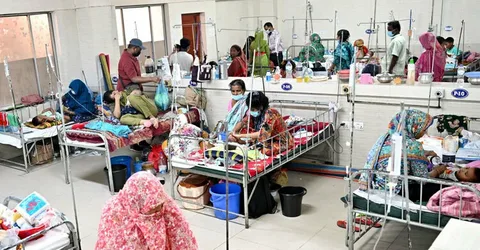

The Bangladesh measles outbreak has become one of the deadliest public health emergencies the country has faced in decades. Health officials confirm that child deaths linked to measles are approaching the grim figure of 1,000 since the outbreak began in mid-March. Suspected and confirmed measles cases across Bangladesh have now crossed 180,000, leaving hospital wards overcrowded with sick infants and toddlers.
Parents across the country are describing scenes of panic and grief inside pediatric wards, where oxygen machines run around the clock and beds are shared between multiple sick children. The scale of this measles outbreak has alarmed both local authorities and global health agencies monitoring the crisis closely.
Background
Measles was once considered a largely controlled disease in Bangladesh. Between 2014 and 2015, the country ran nationwide measles-rubella vaccination campaigns that reached more than fifty million children. By the mid-2010s, national vaccine coverage for the first dose had crossed ninety percent, giving health experts confidence that outbreaks would remain rare.
That progress has clearly reversed. In late February 2026, isolated measles cases began appearing in scattered districts. Within weeks, the virus had spread rapidly, exposing serious gaps in routine child immunization coverage that had built up quietly over recent years.
By early April 2026, the outbreak had already reached 58 out of Bangladesh’s 64 districts, spanning all eight administrative divisions. Health authorities describe this measles outbreak as a warning sign of fragile immunization systems, not simply an unfortunate seasonal spike.
Details of the Bangladesh Measles Outbreak
Case fatality data collected through the outbreak period shows Dhaka division carrying the heaviest burden, followed closely by Rajshahi, Chattogram, and Khulna divisions. Nearly eight out of every ten reported cases have occurred in children under the age of five, a pattern that public health experts say reflects incomplete routine vaccination among the youngest age group.
Hospitals in Dhaka, including the city’s Shishu Hospital, have been forced to set up dedicated measles wards. Even so, intensive care beds remain in short supply. Parents have described children being treated on the floor of overcrowded corridors because no beds were available.
The Bangladesh government responded by launching an emergency mass vaccination campaign targeting children aged between six and fifty-nine months. Officials say more than eighteen million children have already received emergency doses as part of this catch-up immunization push.
Measles Symptoms Parents Should Know
A few days after the initial symptoms appear, small white spots may develop inside the mouth, followed by a distinctive red rash that usually starts on the face before spreading down the body. In malnourished or unvaccinated children, measles can quickly progress to severe complications.
Serious complications linked to this outbreak include pneumonia, severe diarrhea leading to dehydration, and dangerous brain swelling known as encephalitis. Doctors note that children under five and those with weakened immune systems face the highest risk of death from these complications.
What the Measles Outbreak Means for Public Health
The term “measles outbreak” refers to a sudden increase in measles cases beyond what is normally expected in a specific community or region within a defined period. Public health agencies typically declare an outbreak when transmission spreads sustainedly across multiple areas rather than remaining isolated to a single household or cluster.
In Bangladesh’s case, the outbreak has grown severe enough that global health experts now classify the national risk level as high. This classification reflects ongoing transmission across multiple divisions, a large pool of unvaccinated or under-vaccinated children, and repeated hospital reports of severe cases requiring emergency care.
Measles Outbreak in India and the Wider Region
Bangladesh is not alone in facing renewed measles pressure. Measles outbreak activity in India and several neighboring South Asian countries has also drawn attention from regional health monitors throughout 2026, as vaccination gaps left behind by earlier disruptions continue to surface.
Public health researchers have repeatedly warned that pockets of low immunization coverage in South Asia create fertile ground for measles to spread quickly once it re-enters a community. Cross-border travel and densely populated urban centers can accelerate transmission even further, making regional cooperation on vaccination coverage increasingly important.
Quotes From Officials and Experts
Health workers on the ground have described harrowing scenes inside overwhelmed hospital wards. One mother keeping vigil beside her nine-month-old son at Dhaka’s Shishu Hospital told reporters that a child had died in front of her family just an hour earlier, illustrating the raw toll this crisis is taking on families.
International aid officials working with the International Rescue Committee have noted that a massive immunization campaign has already reached millions of children in recent weeks. However, they caution that it will likely take additional time before rising case numbers begin to meaningfully decline.
Impact of the Outbreak
The impact of this measles outbreak extends well beyond the immediate health emergency. Bangladesh’s healthcare system, already stretched thin in many regions, is facing significant strain as hospitals divert staff and resources toward measles wards.
Economically, families of sick children are facing lost income as parents take unpaid leave to care for hospitalized kids. Rural households in particular report difficulty affording transportation to distant hospitals equipped to handle severe measles complications.
On a regional level, international health organizations have flagged Bangladesh among the countries reporting the highest measles case counts globally during the past year. This has renewed global conversations about restoring routine immunization systems that were disrupted in many countries in recent years.
Conclusion and What Comes Next
Bangladesh’s ongoing mass vaccination campaign remains central to controlling this outbreak. Health officials say expanding vaccine coverage among children under five, alongside stronger surveillance systems, will be critical to preventing similar outbreaks in the future.
International health agencies, including the World Health Organization and UNICEF, continue working alongside Bangladesh’s health ministry to strengthen outbreak response and close remaining immunization gaps. As case numbers are tracked daily, officials hope the emergency vaccination drive will begin showing measurable results in the coming weeks.
Frequently Asked Questions (FAQs)
Which country has the highest measles outbreak?
As of 2026, Bangladesh has been identified by international health monitors as one of the countries reporting the highest measles case counts globally, with suspected and confirmed cases surging past 180,000 since March. The United States has also reported a historically large outbreak this year, its biggest since the early 1990s, while several other nations, including some in Europe and North America, have seen sharp increases tied to declining routine vaccination coverage.
Which country is no longer measles free?
Several countries have lost their official measles-free or measles-elimination status in recent times due to sustained community transmission. The United Kingdom lost its measles-free status after a rise in cases and a decline in MMR vaccination uptake, joining several other countries in the WHO’s European region facing similar reversals. Canada also lost its measles elimination status due to an ongoing outbreak that began spreading mainly among unvaccinated children.
What is the biggest cause of death in Bangladesh?
Historically, cardiovascular diseases, respiratory illnesses, and complications related to non-communicable diseases have remained among the leading causes of death in Bangladesh, similar to trends seen in many developing nations. However, during 2026, the measles outbreak has emerged as an urgent and highly visible cause of child mortality specifically, with reported deaths among young children climbing sharply due to complications such as pneumonia, severe dehydration, and encephalitis.