

Maharashtra authorities have extended the deadline for taxi and tuk-tuk drivers to learn Marathi after a language requirement triggered protests from drivers’ unions and migrant workers.
The Indian state of Maharashtra has given taxi and tuk-tuk drivers an additional year to learn the local Marathi language after a new mandatory language rule sparked protests and concerns over drivers’ livelihoods.
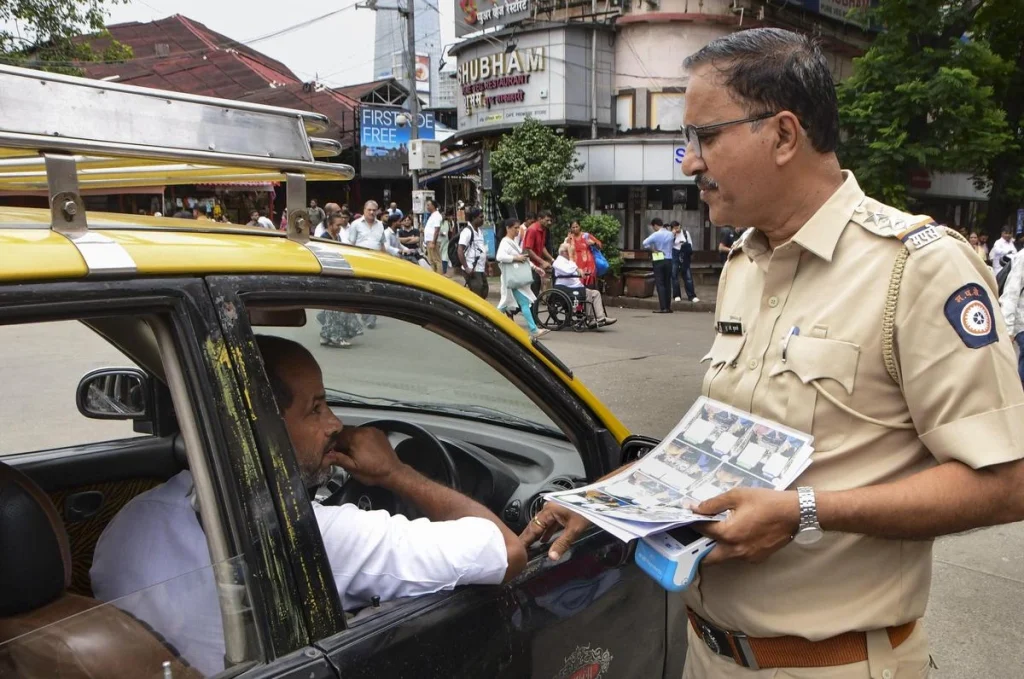
Transport officials began testing drivers on their ability to conduct basic conversations in Marathi, the official language of Maharashtra, on August 20.
Under the original requirement, drivers who failed the language test were given one month to improve their Marathi skills. Those who failed to meet the requirement after that period risked having their driving licences suspended or cancelled.
Authorities said the language requirement was introduced to improve communication between drivers and passengers and contribute to safer journeys.
The new rule quickly became a source of concern among drivers’ unions, particularly because many taxi and tuk-tuk drivers are migrants from other parts of India.
A significant number of workers have moved to Maharashtra from Hindi-speaking states such as Uttar Pradesh and Bihar in search of employment.
Drivers’ representatives argued that workers should not face the loss of their livelihoods while they are still learning Marathi.
Following protests, Maharashtra Chief Minister Devendra Fadnavis announced that drivers would receive an additional year to learn the language.
Fadnavis said many drivers had been outside the formal education system for years and therefore required additional time to meet the language requirement.
Maharashtra Transport Minister Pratap Sarnaik said drivers would be expected to use the additional year to learn Marathi and warned that there would be no further extensions.
The decision has provided relief to drivers who feared that failing the language requirement could prevent them from working.
Mumbai taxi driver Lakhan Pandey said drivers had been concerned about the impact of licence suspensions on their daily income.
The extension, he said, had eased some of those concerns.
The scale of the issue is significant. Maharashtra has almost 979,000 valid taxi and tuk-tuk permits, with nearly half of them operating in the Mumbai metropolitan region.
The new deadline gives thousands of drivers additional time to learn Marathi without immediately risking their ability to earn a living.
However, the controversy has also revived a much broader debate over language, migration, employment and regional identity in Maharashtra.
The dispute is not simply about whether taxi drivers should be able to communicate with passengers in Marathi.
According to journalist, author and political analyst Prakash Akolkar, the controversy is connected to long-running debates about Marathi identity, migration and access to employment.
Maharashtra was created in 1960 following a prolonged movement for a separate Marathi-speaking state.
As Mumbai developed into one of India’s most important financial centres, the city attracted generations of migrants from across the country looking for employment and economic opportunities.
Over time, language became closely connected to political arguments about jobs and opportunities for local Marathi speakers.
The political dimension of the issue dates back decades.
In 1966, the Shiv Sena was founded as a regional political party rooted in Marathi nationalism. Its early political platform promoted the idea that Marathi-speaking residents were losing employment opportunities to migrants from other parts of India.
The party subsequently became one of Maharashtra’s most influential political forces, with Marathi identity remaining central to its political appeal.
Today, Maharashtra is governed by a coalition led by Chief Minister Devendra Fadnavis’s Bharatiya Janata Party (BJP) and a faction of the Shiv Sena.
The Shiv Sena split in 2022, while its rival faction and the Maharashtra Navnirman Sena (MNS) have also continued to campaign around Marathi language and regional identity.
The one-year extension appears to have reduced immediate pressure on taxi and tuk-tuk drivers, particularly those who feared losing their licences.
However, the controversy highlights the difficult balance between promoting the use of a state’s official language and protecting the livelihoods of migrant workers.
For now, drivers have another year to meet the Marathi language requirement. Authorities have made clear that the extension is intended to provide additional learning time rather than remove the requirement altogether.
The debate is likely to continue as Maharashtra attempts to balance Marathi language requirements, migrant employment and the state’s long-standing regional identity politics.