

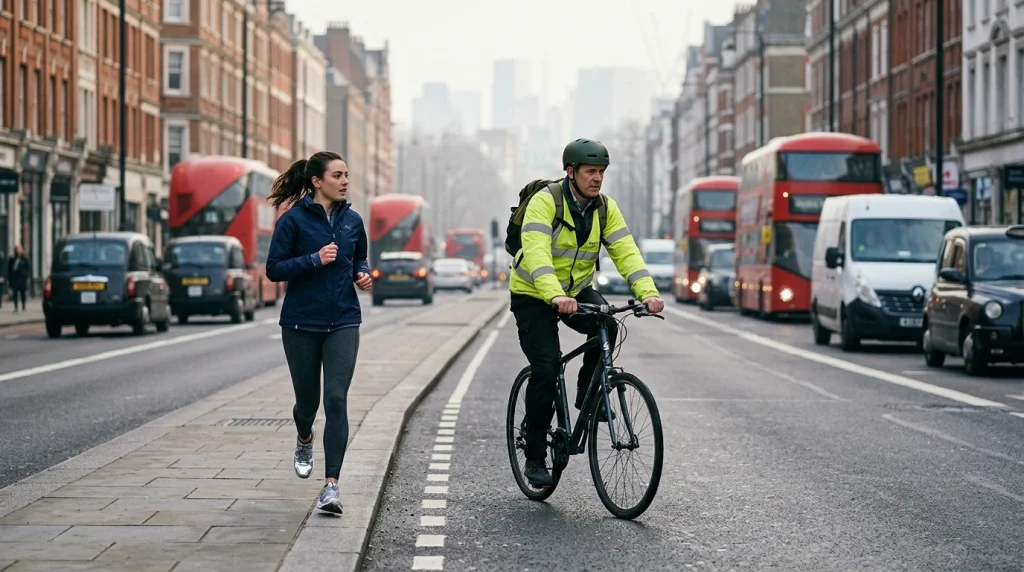

Exercise and Air Pollution: Balancing the Benefits and Risks
LONDON: Running, cycling and walking are widely recognised as beneficial forms of physical activity, but exercising near busy roads can increase exposure to polluted air. For people who regularly exercise in cities, the question is whether the health benefits of staying active outweigh the potential risks from traffic pollution.
During exercise, breathing becomes deeper and faster. This can mean that people exercising outdoors may inhale more air than they would during normal daily activities, potentially increasing their exposure to pollutants when air quality is poor.
Does Pollution Cancel Out the Benefits of Exercise?
For most people, the overall health benefits of regular physical activity generally outweigh the risks associated with moderate exposure to outdoor air pollution.
Exercise supports cardiovascular health, physical fitness and overall wellbeing. However, the level of pollution, duration of exercise and an individual’s health can all affect the balance of risks and benefits.
People with respiratory or cardiovascular conditions may need to take additional precautions, particularly when pollution levels are high.
Choosing Where and When to Exercise
One practical way to reduce exposure is to move workouts away from heavily trafficked roads.
Parks, quieter residential streets and dedicated cycling routes can provide alternatives to busy intersections. Exercising during periods when traffic and pollution levels are lower may also help reduce exposure.
Checking local air-quality information before a long outdoor workout can be useful, particularly on days when pollution levels are elevated.
Simple Ways to Reduce Exposure
Runners and cyclists can also reduce their exposure by choosing routes with less traffic and avoiding areas where vehicles are idling. Shortening or moving an outdoor session indoors can be another option when air pollution is particularly high.
The goal does not necessarily have to be avoiding outdoor exercise altogether. Instead, adjusting the timing, location and intensity of activity can help people remain physically active while limiting unnecessary exposure to polluted air.
For urban residents, the message is therefore one of balance: staying active remains important, while making sensible choices about where and when to exercise can help reduce exposure to air pollution.