

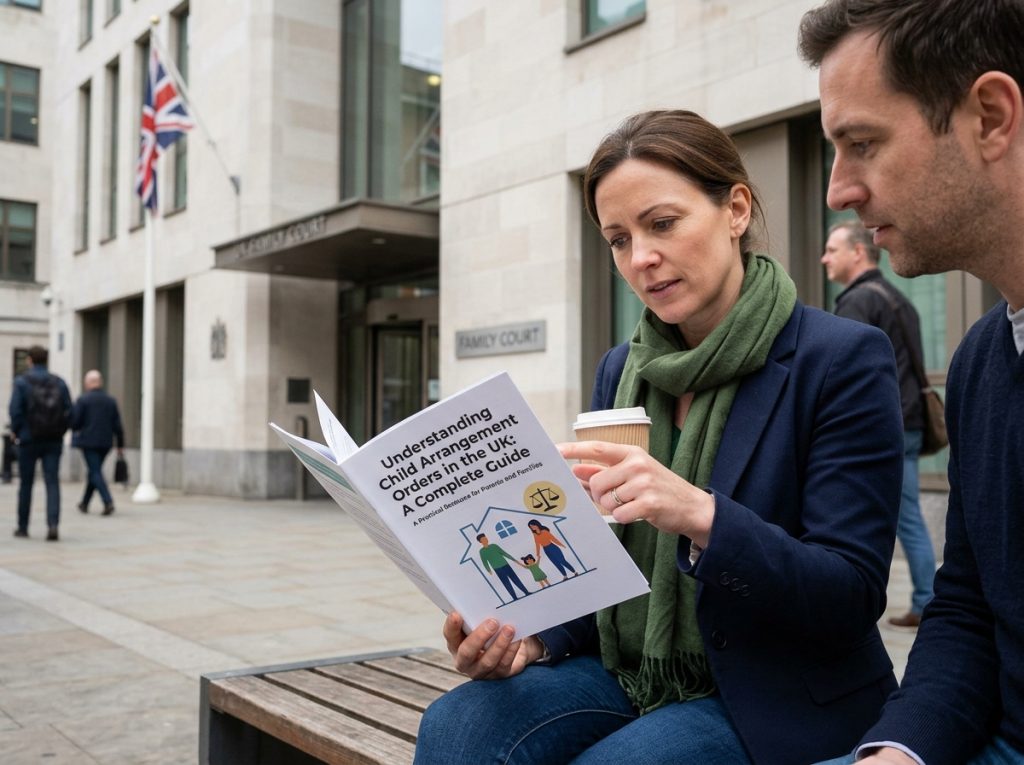

A child arrangement order is a legal document issued by a family court in England and Wales that sets out where a child will live and who they will spend time with. It replaced the older “custody” and “access” orders under the Children Act 1989. Parents apply using Form C100, and the process usually starts with a mediation meeting before any court hearing takes place.
Background
Before 2014, UK family courts used separate “residence orders” and “contact orders” to decide a child’s living arrangements after parents separated. The Children and Families Act 2014 merged these into a single child arrangement order, aiming to reduce the sense that one parent had “won” and the other had “lost.” The change was meant to encourage cooperation rather than conflict between separating parents.
Since then, the order has become the standard route for resolving disputes about where a child lives and how contact with the other parent is managed. It sits alongside two related orders: the prohibited steps order, which stops a parent from taking a specific action such as moving a child abroad, and the specific issue order, which settles a single disputed decision like schooling or medical treatment.
Details
What a child arrangement order covers
The order can decide two main things: where a child lives, known as “lives with” arrangements, and how much time they spend with the other parent, known as “spends time with” arrangements. A single order can combine both, and it is legally binding once made by the court.
How to apply for a child arrangement order
Applicants must complete Form C100 and submit it to the Family Court, either online through the GOV.UK service or by post with additional copies. Before applying, most people must first attend a Mediation Information and Assessment Meeting, known as a MIAM, where an accredited mediator explores whether the dispute can be settled without going to court.
The court fee has changed several times in recent years. By mid-2026 it stood at £270, though fee reductions are available for applicants on a low income. Applicants with concerns about domestic abuse or safety can also submit a supplementary Form C1A alongside the main application.
Prohibited steps order
A prohibited steps order stops a parent from taking a particular action affecting the child without the court’s permission, most commonly relocating the child outside the UK or changing their school without agreement. It is often applied for urgently when one parent fears the other is about to act unilaterally.
Consent order for child arrangements When both parents agree on arrangements, they can ask the court to formalise their agreement as a consent order. This still goes through Form C100 but tends to move faster, since there is no dispute for a judge to resolve. A consent order carries the same legal weight as one made after a contested hearing.
A typical example A common example involves separated parents agreeing that a child lives mainly with their mother during the school week and spends alternate weekends and half of school holidays with their father. Once approved by the court, both parents are legally required to follow this schedule unless they later agree to change it or apply to vary the order.
Quotes
Family mediators say early intervention tends to produce better outcomes for children. Practitioners at Mediate UK note that grandparents and other relatives who have cared for a child for an extended period may also qualify to apply, provided they can show a genuine, lasting connection to the child’s upbringing.Solicitors who handle these cases frequently stress that court should be viewed as a last resort. Their guidance consistently points parents toward mediation first, reserving litigation for cases involving safety concerns or entrenched disagreement.
Impact
Child arrangement orders directly affect thousands of separating families across England and Wales each year. The current C100 process now includes a strengthened MIAM and non-court dispute resolution framework, reflecting a wider push by the family courts to keep more cases out of the courtroom.For children, a clear order can reduce uncertainty and conflict by fixing a predictable routine. For parents, it provides legal protection, meaning arrangements cannot be changed unilaterally without going back to court.
Conclusion
Child arrangement orders remain the main legal tool for settling disputes over where a child lives and who they see after their parents separate. With court fees, mediation requirements, and form versions subject to periodic updates, anyone considering an application should check the latest guidance on GOV.UK or speak to a family law professional before starting the process.
FAQs
How long does a child arrangement order last?
A child arrangement order dealing with who a child lives with generally lasts until the child turns 18, unless the court specifies an earlier end date or the order is varied or discharged. Orders about spending time with a parent can also run until the child is 18, though courts sometimes set a shorter period if circumstances are expected to change, such as a child’s schooling or a parent’s relocation plans.
What are some reasonable reasons for breaching a child arrangement order?
Courts recognise a small number of legitimate reasons for not following an order exactly, such as the child being unwell, a genuine safety concern, or an agreed but undocumented change between parents.. Anyone struggling to comply with an order should raise the issue with the other parent or seek legal advice rather than simply not following it.
Can a child arrangement order be changed later?
Yes. Either parent can apply to vary or discharge the order using Form C100 if circumstances change significantly, such as a house move, a change in the child’s needs, or a shift in a parent’s working hours. The court will only approve a variation if it remains in the child’s best interests.