

Railway tickets on the Peshawar-Rawalpindi corridor have become extremely hard to find after major roads leading to Islamabad were shut down ahead of the Pakistan Tehreek-e-Insaf’s long march. With highways closed, thousands of commuters have shifted to trains, leaving stations overcrowded and tickets reportedly changing hands on the black market.
Background
The shortage stems from a wider security lockdown imposed by federal authorities ahead of the PTI’s planned march on Islamabad on September 27. In the days leading up to the protest, motorways including the M-1 Peshawar Motorway, M-14 CPEC route and Hazara Motorway were closed at multiple points, alongside sections of the GT Road connecting Khyber-Pakhtunkhwa to the federal capital.
These measures were part of a broader effort by the interior ministry to prevent protest caravans from Khyber-Pakhtunkhwa from reaching Islamabad. Mobile phone and internet services were also suspended in Islamabad, Rawalpindi and parts of Attock on September 26 and 27 as additional security steps.
Details
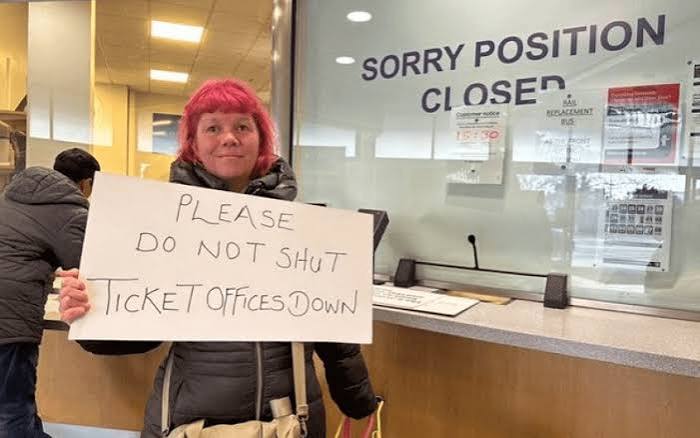
With road travel largely cut off, commuters in Peshawar turned to the railway network as their only realistic way of reaching Rawalpindi and nearby cities. Tickets for popular services, including the Jaffar Express, Awami Express, Khyber Mail and Rehman Baba Express, became almost impossible to secure through normal booking channels, with some reportedly being resold on the black market.
Trains departing Peshawar for Rawalpindi, Attock, Nowshera, Jahangira and Taxila have been leaving fully loaded, well beyond their usual passenger capacity. The situation has not been limited to one direction, as trains travelling from Rawalpindi back to Peshawar have also been filling up completely.The overcrowding has left many passengers standing for the duration of their journey, since seating and even standing space inside carriages ran out quickly once demand surged. Railway staff have had limited options to manage the crowds given the sudden and sustained spike in passenger numbers.
Quotes
Officials overseeing the road closures, including Interior Minister Mohsin Naqvi, had earlier warned that the government intended to enforce the law strictly around the long march and would not allow the capital to be brought to a standstill, a stance that set the stage for the scale of closures that followed. That posture from federal authorities is what ultimately pushed so many travellers toward the rail network in the first place.
Impact
The scarcity of train tickets highlights how heavily commuters in Khyber-Pakhtunkhwa and the twin cities depend on functioning road links for daily travel, and how quickly that system can strain under a prolonged security lockdown. Beyond the inconvenience to individual travellers, sustained overcrowding on trains also raises safety concerns, given Pakistan Railways’ history of accidents linked to ageing infrastructure and heavy passenger loads.
The disruption adds to broader economic costs already being felt across Rawalpindi and Islamabad, where businesses, schools and transport terminals faced closures in the run-up to the march, compounding the impact of a week that saw multiple separate protest movements converge on the capital.
Conclusion
Whether ticket availability eases will likely depend on how quickly the affected motorways and highways reopen once the long march concludes. Until road access is restored to normal, rail travel is expected to remain the primary option for commuters on the Peshawar-Rawalpindi corridor, keeping pressure on an already stretched railway system.
Frequently Asked Questions
Why have railway tickets become scarce between Peshawar and Rawalpindi?
Railway tickets on this corridor became scarce because major road routes connecting Khyber-Pakhtunkhwa to Islamabad and Rawalpindi were closed by federal authorities ahead of the Pakistan Tehreek-e-Insaf’s planned long march on September 27. With motorways such as the M-1, M-14 and sections of the GT Road shut down, commuters who would normally travel by car, bus or coach had no practical option except the railway, causing sudden and overwhelming demand for train tickets on services like the Jaffar Express, Awami Express and Khyber Mail.
Which roads were closed ahead of the PTI long march in September 2026?
Ahead of the long march, authorities closed several major routes, including the M-1 Peshawar Motorway from the Islamabad Toll Plaza to Chachh Interchange, the M-14 CPEC route between Hakla and Kundal, the Hazara Motorway, and sections of the GT Road at Attock Khurd. Connecting roads such as the Rawalpindi-Kohat Road and Abbottabad-Hassanabdal Road were also closed from specific points, as part of a broader security plan to prevent protest caravans from reaching the federal capital.
Is it common for Pakistan Railways to see overcrowding during political unrest?
Yes, overcrowding on Pakistan Railways tends to spike whenever major roads are closed due to political protests, long marches or security lockdowns, since trains often become the only functioning mode of long-distance travel in such situations. This pattern has repeated during previous long marches and protest movements in Pakistan, where road blockades pushed sudden surges of passengers onto rail services that were not originally scheduled to handle that level of demand, leading to full trains, standing passengers and, at times, informal ticket reselling.