

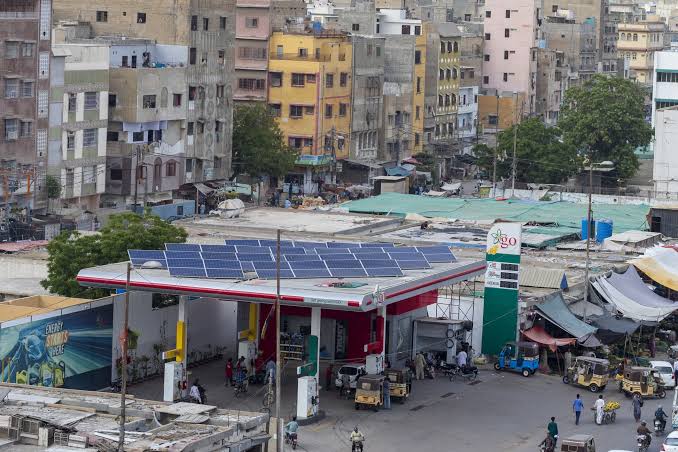

Rooftops in Multan, once the place where families gathered and slept on hot summer nights, are increasingly covered with solar panels. Households are installing them mainly to deal with high electricity costs, and in doing so they are changing how one of the most familiar parts of the home is used.
Background
For generations, the rooftop was a natural extension of home life in Multan, a city known for its long and fierce summers. After sunset, families would carry bedding upstairs to catch the evening breeze, children would play, and elders would sit and talk late into the night.
That routine is fading as solar power spreads across residential areas. Rising electricity bills have pushed many families to generate their own power, and the roof, with its direct exposure to the sun, is the obvious place to do it. The trend has been reported by the Associated Press of Pakistan and The Express Tribune.
Details
In many neighbourhoods, large parts of rooftops are now taken up by rows of panels, metal mounting frames and wiring. Solar installers say the equipment has become a permanent feature of many homes, in new houses as well as older ones that have been adapted to take the panels.
Installer Muhammad Asif said homeowners now plan panel placement carefully, trying to make the most of the available space while keeping part of the roof free for household activities. Some families have left an open corner, while others have created sitting areas beneath or beside the panels.
The change is most noticeable among families who used to sleep on the roof in summer. With solar power running air conditioners and other appliances during the day, some residents say rooms stay cooler and there is less need to go upstairs after dark. Government employee Antique Chaudhary said his family has reduced or stopped sleeping on the roof because the panels occupy much of the space.
Older residents feel the difference more sharply. Rana Arif, who works with a local NGO, recalled how families once carried charpoys upstairs and spent long evenings on the roof, and said the same rooftops now look very different. Some residents are also careful about using areas close to the panels for sleeping or recreation.
Quotes
Asif described the shift as a change of purpose rather than a loss, saying the rooftop is not vanishing from family life. In his view, homeowners are simply adjusting how they use the space, with some giving priority to electricity generation and others holding on to a small area for relaxing in the evening.
Impact
For most households, the practical gain from solar power outweighs the loss of open space. Lower dependence on the grid means more control over monthly bills, and the ability to run cooling during the day has changed summer routines inside the home.
The shift also shows how quickly household priorities are changing. A generation ago, a rooftop was valued for its open space, ventilation and family activities. Today it also has economic value as a place to produce electricity, which is why solar installation has become a major consideration for both new builds and renovations.
Conclusion
As more families switch to solar, the rooftop is likely to keep changing from a shared family space to a mix of power station and living area. Homeowners will continue to balance the financial benefits against the traditions they are giving up, and the choices will vary from one household to the next.
Frequently Asked Questions
Why are families in Multan installing rooftop solar panels?
The main reason is the rising cost of electricity. Many households want to generate their own power to reduce bills and depend less on the grid, particularly during the long summer when air conditioning use is high. Multan also receives abundant sunlight for much of the year, which makes rooftops a practical location for panels. The trend is visible in newly built homes and in older houses where owners are modifying their roofs to fit solar systems.
How has solar power changed the way people use their rooftops?
Rooftops were once open family spaces used for sleeping on hot nights, children’s games and evening conversations. Now, large portions are often covered with panels, mounting structures and wiring. Some families have stopped sleeping on the roof, especially since running air conditioners with solar power during the day keeps rooms cooler at night. Others have adapted by leaving a section open or creating sitting areas next to or under the panels, so the roof still serves some family purposes.
Can families still use their rooftops after installing solar panels?
In many cases, yes, though the space is smaller and used differently. Installers say homeowners increasingly plan the layout of their panels so that part of the roof stays free for household activities. Some residents, however, prefer to stay away from areas close to the panels when sleeping or relaxing. The way families balance energy needs with tradition depends on the size of the roof, the number of panels and personal preference.