

AI Revolutionizes Early Disease Detection with Faster, Smarter Diagnostics
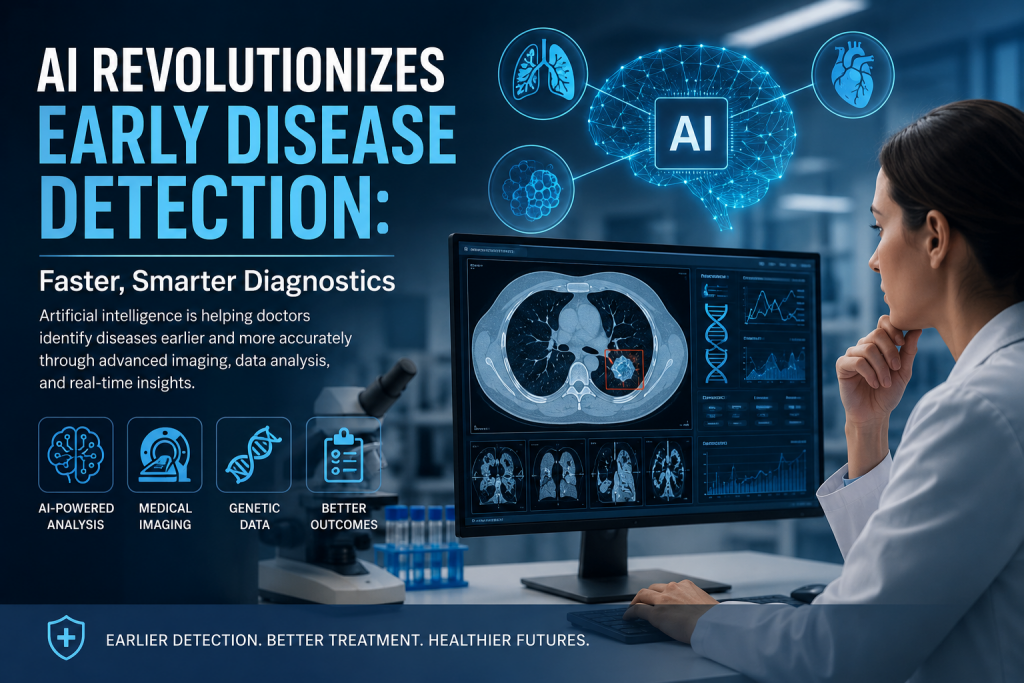
Artificial intelligence (AI) is transforming the healthcare sector by helping doctors detect diseases earlier and more accurately than ever before. By analyzing medical images, genetic data, and blood biomarkers AI systems can identify subtle signs of illness that may not be visible during routine medical examinations.
Advanced AI technologies are now capable of detecting small lung nodules in CT scans, identifying microscopic tissue abnormalities, and recognizing early indicators of conditions such as cancer heart disease, and neurological disorders. Rather than replacing healthcare professionals, these systems support clinicians by highlighting high-risk cases and enabling quicker, evidence-based decisions.
Medical experts say the use of AI in diagnostics is already improving patient care by reducing delays in diagnosis and helping hospitals prioritize urgent cases. Earlier detection allows patients to begin treatment sooner increasing the chances of successful outcomes while reducing the need for more aggressive medical procedures.
Researchers believe AI will play an even greater role in the future of healthcare as it becomes more integrated into clinical practice. Ongoing efforts are focused on improving the accuracy of AI systems across diverse populations and combining medical imaging, genomic information, and patient records to deliver more personalized and effective disease screening.