



Canada is overhauling its private-sector privacy legislation through Bill C-36, introducing stronger protections for personal data, children’s privacy and AI-driven decision-making.
Canada has unveiled Bill C-36, the Protecting Privacy and Consumer Data Act, marking the country’s most significant reform of private-sector privacy laws in more than 25 years as governments worldwide respond to the rapid growth of artificial intelligence and digital technologies.
The proposed legislation aims to modernize Canada’s privacy framework by recognizing privacy as a fundamental right while introducing tougher requirements for businesses that collect, process and use personal information.
The reforms come as AI-powered tools, deepfakes and automated decision-making systems increasingly influence everyday life, raising concerns over data protection, transparency and digital rights.
Bill C-36 Introduces Stronger Privacy Protections
Under Bill C-36, Canadians would receive greater control over their personal information, including stronger rights to request the deletion of personal data held by organizations.
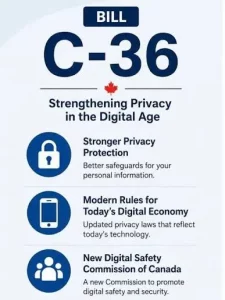
The legislation also introduces enhanced protections for children’s personal information, recognizing minors as particularly vulnerable in the digital environment.
Organizations handling personal data would be required to adopt higher standards of accountability and ensure information is collected and used responsibly.
New Rules for Artificial Intelligence Decisions
One of the most significant elements of Bill C-36 is its focus on automated decision-making systems powered by artificial intelligence.
The proposed law would require organizations to provide greater transparency whenever AI systems make significant decisions affecting individuals, helping consumers better understand how automated technologies influence outcomes involving employment, financial services, healthcare and other sectors.
Supporters say these measures will improve public trust in AI while ensuring organizations remain accountable for algorithmic decision-making.
Privacy Reform for the Digital Economy
Bill C-36 represents Canada’s first comprehensive update to private-sector privacy legislation in over two decades, reflecting the growing importance of protecting personal information in an increasingly digital economy.
The government says the reforms are designed to strengthen consumer confidence, promote responsible innovation and align Canada’s privacy standards with emerging global expectations.
If approved by Parliament, Bill C-36 would establish one of the country’s most significant digital privacy frameworks, balancing technological innovation with stronger protections for individuals.
The legislation underscores Canada’s commitment to preparing its legal system for the challenges posed by artificial intelligence, big data and rapidly evolving digital technologies.