

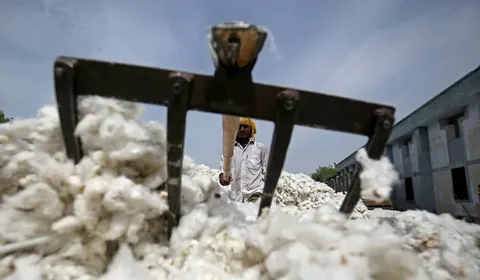

Cotton yield in Pakistan today has taken a turn for the better in the early weeks of the 2026-27 season, with cotton arrivals at ginning factories jumping a record 77.3 percent by July 15 compared to the same period last year. The Pakistan Cotton Ginners Association (PCGA) confirmed total seed cotton arrivals reached 527,900 bales by mid-July, up from 297,751 bales during the corresponding period in 2025.
The numbers are encouraging, but cotton experts are urging caution. August and September rains, pest pressure, and the ongoing crisis in the textile sector could still significantly affect the final crop output for the season.
Background: Pakistan’s Cotton Crisis and the Road to Recovery
Pakistan’s cotton sector has been fighting a long decline. Two decades ago, the country produced 14.26 million bales in 2004. By 2022, that figure had collapsed to around 4.91 million bales, crippling the textile industry and forcing Pakistan to spend billions of dollars on cotton imports.
What Went Wrong?
The decline wasn’t caused by a single factor. A combination of poor seed quality, unchecked pest infestations, water scarcity, sugarcane encroachment into designated cotton zones, and volatile prices drove millions of farmers away from the crop.
Cotton yield in Pakistan 2021 was particularly painful to watch the country that once clothed much of the world was quietly becoming a net cotton importer, spending precious foreign exchange on a commodity it once exported in abundance.
The 2022 floods made things worse. Pakistan’s cotton-growing heartland in Sindh and southern Punjab was submerged, destroying crops at scale and setting the sector back by years. Sindh’s last genuinely impressive production was back in 2009, when it produced 4.2 million bales. That level hasn’t been repeated since.
Cotton Yield in Pakistan Today: The 2026-27 Season Update
Record Early Arrivals
The first production report of the 2026-27 season released by the PCGA on July 19 was the best opening number the sector has seen in years.Total seed cotton arrivals at ginning factories reached 527,900 bales by July 15, up by 230,149 bales from 297,751 bales recorded during the corresponding period last year a 77.3 percent increase marking the strongest early-season recovery in years.
Overall cotton production for the current season is showing a 32 percent jump compared to the same period in 2025, according to Dawn’s reporting. This is a significant turnaround after several years of declining output.
Why the Early Numbers Are Promising
Punjab, which contributes roughly 60 percent of Pakistan’s total cotton arrivals, has led the recovery this season. Districts like D.G. Khan and Khanewal have reported strong early harvests, and planting area has remained broadly stable at around 1.41 million hectares.
The Balochistan cotton crop has also drawn attention this year.The Cotton Ginners Forum has highlighted the superior quality of cotton grown in less-cultivated areas like Balochistan and Cholistan, where minimal use of fertilisers produces fiber with greater length and strength than conventional varieties earning at least Rs500 per 40kg more for raw cotton and Rs1,200 per 40kg more for cottonseed due to higher oil content.
Risks That Could Still Derail the 2026 Season
Weather and Pests Remain the Biggest Threat
The positive early numbers come with a consistent warning from agricultural experts: do not count the crop before August and September are through.
Prolonged humidity and heavy rainfall in those two months could trigger outbreaks of whitefly, pink bollworm, and fungal crop diseases that devastate lint quality and reduce yields sharply. Experts have advised growers to ensure proper drainage, closely monitor pest populations, and consult with agricultural extension officials on plant protection measures before the situation escalates.
Farmers Shifting Away from Cotton
Despite multiple government initiatives over the last few years to increase cotton planting, Pakistan’s planted area for the crop has remained stagnant. Growers in Punjab in particular remain dissatisfied with cotton’s profitability and are considering shifting toward alternative crops such as corn, sugarcane, and rice, which offer more stable returns.
This shift is the structural problem underneath the seasonal numbers. Even a good 2026 season doesn’t fix the underlying question of whether cotton remains competitive enough to hold farmers long-term.
Sugarcane Encroachment
Forum Chairman Ihsanul Haq has stressed repeatedly that cotton production and quality cannot improve unless there is a complete ban on sugarcane cultivation in designated cotton zones. Sugarcane cultivation in these areas is known to be detrimental to cotton crops.
This is not a new argument, but it’s one that successive governments have failed to enforce. The Cotton Ginners Forum blames poor enforcement of crop zoning laws as one of the key threats to both yield and quality.
Pakistan Cotton Plan 2026 The Government’s Response
Ishaq Dar Leads the Push
Responding to years of alarm over Pakistan’s cotton decline, Deputy Prime Minister Ishaq Dar has been leading the rollout of the Pakistan Cotton Plan 2026, a comprehensive strategy that consolidates earlier proposals from the Ministry of Food Security and the All Pakistan Textile Mills Association (APTMA).
Implementation of the strategy is anticipated to significantly boost cotton yields, which would lead to a substantial reduction in the national import bill for cotton and edible oils.The plan addresses seed technology, pest management, crop zoning enforcement, and support prices the same set of structural issues that have undermined Pakistan’s cotton output for years.
The Import Bill Problem
Pakistan’s dependence on cotton imports has become a serious drain on foreign exchange. The country imported a record 3.482 million tonnes of edible oil worth $3.785 billion in 2025-26, a figure that includes cottonseed oil and reflects how deeply the decline in domestic cotton has affected the broader agricultural import bill.
USDA’s 2026/27 forecast for Pakistan’s cotton production stands at 5.05 million bales approximately 3 percent lower than the 2025/26 season, despite the strong early-season start.The gap between early arrival numbers and final production forecasts reflects how much can still go wrong between July and the season’s end.
Comparing Cotton Yield in Pakistan 2021 vs 2026
A Five-Year Snapshot
| Season | Estimated Production | Key Challenge |
| 2021-22 | ~8.3 million bales | Pest pressure, poor seeds |
| 2022-23 | ~4.9 million bales | Catastrophic flooding |
| 2023-24 | ~5.2 million bales | Slow recovery |
| 2024-25 | ~5.5 million bales | Stagnant area, volatile prices |
| 2025-26 | ~4.8 million bales (est.) | Textile slowdown, weather |
| 2026-27 | 5.05 million bales (forecast) | Strong early start, weather risk |
Cotton yield in Pakistan 2021 was the last year the country came close to double-digit million bale territory before the 2022 floods reset the baseline entirely. The current recovery, while real, is still operating at roughly a third of Pakistan’s production peak.
Regional Breakdown Where Is Cotton Growing in Pakistan?
Punjab
Punjab remains the backbone of Pakistan’s cotton production, contributing around 60 percent of total national output. Districts including Vehari, D.G. Khan, Multan, Rahim Yar Khan, and Bahawalpur are the primary growing areas. However, Vehari, which once produced 1.6 million bales annually, now struggles to match even Sindh’s reduced output a reflection of how much the province’s cotton base has eroded.
Sindh
Sindh’s main cotton districts are concentrated on the Indus River’s left bank.Sanghar is home to the highest cotton acreage, with 125,000 hectares under cultivation, followed by Ghotki at 93,000 hectares and Khairpur at 85,000 hectares.Sindh’s output has been severely affected by water shortages, heat stress, and extreme weather events in recent years.
Balochistan
Balochistan produces a smaller volume but a notably higher quality of cotton. Its naturally grown fiber, requiring less synthetic input, commands a significant price premium over conventional varieties making it a potential model for premium cotton development in Pakistan.
What Officials and Experts Are Saying
Agricultural extension officials advising farmers this season have focused on three priorities: water drainage management as monsoon rains arrive, early detection of pink bollworm and whitefly infestations, and use of certified seeds rather than farm-saved varieties that have lower germination rates and pest resistance.
Khalid Mehmood Khokhar of Pakistan Kissan Ittehad has been among the voices warning that seasonal early-arrival numbers can be misleading. His observation that Vehari district alone once produced more cotton than all of modern Sindh is a reminder of the gap between historical potential and current reality.
USDA analysts noted in their April 2026 assessment that local cotton expert opinion suggests this situation will continue unless there is notable improvement in seed technology and pest management practices two reforms the Pakistan Cotton Plan 2026 has identified but not yet delivered at scale.
Global and Regional Impact
Pakistan is one of the world’s major cotton-producing and textile-exporting nations. When its cotton output falls, the impact is felt across the global textile supply chain. Pakistan’s textile sector consumed an estimated 10.6 million bales in 2025-26 but produced only 4.8 million domestically, meaning more than half of raw cotton needs were met through imports.
That import gap costs Pakistan billions in foreign exchange annually and weakens its textile sector’s competitiveness against Bangladesh, Vietnam, and India, which have more stable domestic cotton supplies.
A genuine recovery in cotton yield in Pakistan today would reduce import dependence, strengthen the textile export sector, and stabilize cotton prices for domestic mills with knock-on benefits for employment across the 15 million people whose livelihoods are connected to the cotton and textile value chain.
Conclusion
The 2026-27 early season figures for cotton yield in Pakistan today are the best opening numbers the sector has produced in years. A 32 percent production jump and 77.3 percent increase in early arrivals represent a genuine positive development, not just a statistical blip.
But Pakistan’s cotton story has been one of false dawns before. The structural challenges farmer profitability, seed quality, pest management, crop zoning enforcement, and water availability haven’t been resolved by one good month of arrivals. August and September will be the real test, and the Pakistan Cotton Plan 2026’s implementation will determine whether this season becomes a turning point or just another temporary uptick in a long decline.
FAQs
Where is most cotton grown in Pakistan?
Most of Pakistan’s cotton is grown in Punjab and Sindh provinces, which together account for roughly 95 percent of national production. Within Punjab, the major cotton districts include Vehari, D.G. Khan, Multan, Rahim Yar Khan, Bahawalpur, and Khanewal. In Sindh, the key cotton-growing areas are concentrated in the left bank districts, particularly Sanghar, Ghotki, and Khairpur, which historically produced large volumes of the province’s crop. A smaller but high-quality cotton crop is also produced in Balochistan, particularly in Cholistan-adjacent areas, where natural growing conditions produce fiber with greater length, strength, and oil content than conventional varieties. Balochistan’s cotton commands a significant price premium despite lower overall volumes.
What is the current cotton yield in Punjab?
Punjab’s cotton yield in the 2026-27 early season has been notably stronger than the previous year, with the province contributing approximately 60 percent of Pakistan’s total cotton arrivals. Districts like D.G. Khan and Khanewal have reported strong early harvest figures. However, the average yield across Punjab remains well below historical potential the province once produced over 10 million bales at its peak but has been operating at roughly 3 million bales or less in recent years. The USDA estimates Pakistan’s five-year average national yield at around 570 kg per hectare, which serves as the baseline for crop forecasting. Actual per-acre yields in Punjab vary significantly depending on seed quality, water availability, pest pressure, and whether certified or farm-saved seeds were used.
How to calculate cotton yield?
Cotton yield is typically measured in kilograms per hectare (kg/ha) or in bales per acre, depending on the context. To calculate it: first measure the total seed cotton harvested from a field, then divide by the total area of that field in hectares or acres. For example, if a farmer harvests 1,200 kg of seed cotton from 2 hectares, the yield is 600 kg/ha. In Pakistan, one standard cotton bale weighs 170 kg (though some newer bale weights are 150 kg), so farmers also convert kg/ha figures to bales/acre for market purposes. At the national level, Pakistan’s Cotton Ginners Association tracks total arrivals at ginning factories on a seasonal basis, which serves as a proxy for total production. USDA’s official yield benchmark for Pakistan is approximately 570 kg/ha based on a five-year average excluding the 2022 flood season.