

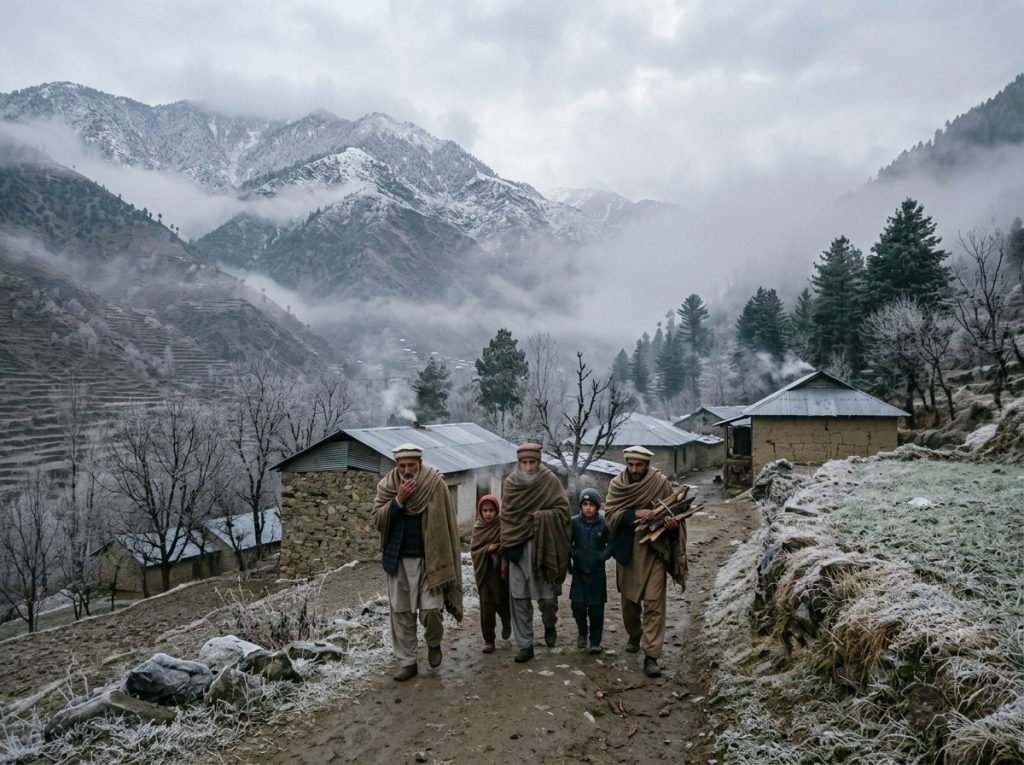

A sharp change in the weather has reached Shangla in the last week of September, bringing cold conditions to the district earlier than many residents expected. In the upper mountain areas, temperatures have dropped noticeably after recent rain and hail, and families have already started getting their homes ready for winter.
Background
Shangla a mountainous district in Khyber Pakhtunkhwa lying between Swat and Battagram, is known for cold winters, especially in its upper reaches. Heavy snowfall and long spells of low temperatures are a regular part of life there, so households usually begin preparing well before the worst of the season arrives.
This year the cold has come early. The Nation reported on September 18 that rain had fallen on and off for five days in Shangla and nearby areas, with light snow settling on the higher ridges. Residents in high-altitude areas had started using heaters and traditional stoves, while herders had begun moving their livestock down from high pastures to warmer ground.
Details
Over the past few days, the drop in temperature has become more pronounced in the upper areas, where mornings and evenings are now particularly cold. Recent spells of rain and hail at higher elevations have added to the chill, pushing families to act sooner than they might in a milder year.
In many homes, people are preparing and installing iron stoves, locally called angheethis, along with heaters known as bukharas. These simple, durable devices remain the main source of warmth in upper Shangla, where winters can be harsh and access to other heating options is limited.
The change has also brought local craftsmen back to work. Artisans who make iron stoves and heaters by hand have reopened their shops and set up temporary workshops in markets across the district, including Alpuri, Bele Baba, Dherai and Shahpur Kana. Demand has risen with the falling temperatures, and the sound of hammers shaping metal is becoming familiar again in these bazaars.
Quotes
No official statement from the district administration or the weather authorities was included in the local reports on this early cold spell. The accounts instead rely on what residents and craftsmen are doing, with families explaining through their actions that delays leave homes exposed once heavy snow and prolonged cold arrive.
Impact
The early cold is giving a seasonal boost to local artisans and small shopkeepers, whose work depends heavily on demand for heating equipment. For many of them, the run-up to winter is one of the busiest stretches of the year, and an early start means a longer period of steady business.
For households, especially in the upper areas, it means an earlier need to buy or repair stoves and to stock up on winter essentials. Families with limited income can feel that pressure quickly, since the cost of heating and warm clothing arrives all at once. Herders who depend on high pastures are also affected, as an early cold pushes them to bring their animals down sooner.
Conclusion
If temperatures keep falling, more snowfall on the upper mountain ranges is likely in the coming weeks, and demand for stoves and heaters is expected to stay high. Residents and craftsmen appear to be in familiar territory, combining traditional methods with early preparation to face another winter in the hills.
Frequently Asked Questions
Where is Shangla district and why does it get so cold?
Shangla is a mountainous district in Khyber Pakhtunkhwa, Pakistan, located between the districts of Swat and Battagram. Its upper areas sit at high elevation and are surrounded by hills and forested ranges, which is why they receive snow and cold winds in the winter months while the lower parts of the district stay milder. Areas such as Alpuri and the neighbouring mountain regions are usually the first to feel a drop in temperature when rain, hail or fresh snow arrives from the surrounding ranges.
What are angheethis and bukharas?
An angheethi is a traditional iron stove used in northern Pakistan to heat homes, usually fuelled by wood or similar materials, while a bukhara is a type of heater that serves the same purpose. Both are handmade by local craftsmen in many parts of Shangla and other hilly districts, and they remain popular because they are sturdy, affordable to repair and well suited to areas where winters are long and cold. Families often install or service them at the start of the cold season so that living spaces are warm before heavy snowfall begins.
How do people in Shangla usually prepare for winter?
Preparation typically begins as soon as the first cold spells arrive. Families install or repair stoves and heaters, bring out warm clothing and blankets, and stock essentials in case snow makes roads difficult to use. Herders living in high pastures known as bandas usually move their livestock down to warmer areas, and local artisans reopen their workshops to meet the rising demand for heating equipment. Starting early helps households avoid shortages and last-minute costs once heavy snowfall sets in.