

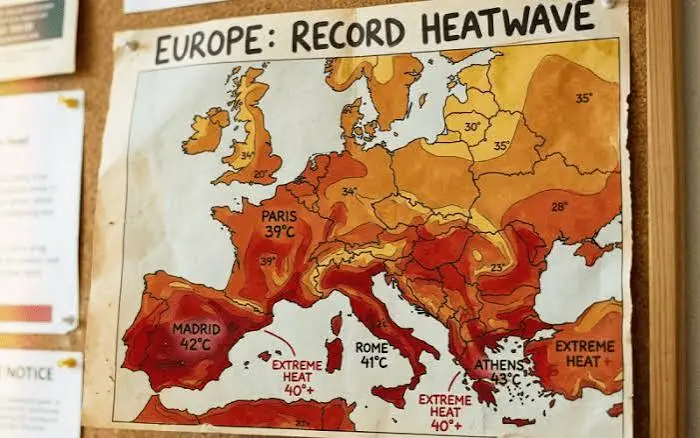

The World Health Organization has warned that a new heatwave sweeping across Europe could bring life-threatening temperatures, urging vulnerable groups to take precautions against heat-related illnesses.
A powerful new heatwave is gripping large parts of Europe, prompting the World Health Organization to warn that the coming weeks could be among the most dangerous of the summer.
Health authorities say soaring temperatures increase the risk of heat exhaustion, heatstroke and dehydration, particularly among older adults, young children, pregnant women and people living with chronic medical conditions.
WHO Issues Heat Health Warning
The WHO has urged governments and the public to take immediate precautions as temperatures continue to climb across several European countries.
Officials warned that prolonged periods of extreme heat can significantly increase illness and deaths, especially when high daytime temperatures are followed by unusually warm nights that prevent the body from cooling down.
Who Is Most at Risk?
Health experts say the following groups face the greatest danger during extreme heat:
- Older adults
- Infants and young children
- Pregnant women
- People with heart, lung or kidney diseases
- Individuals working outdoors
Safety Advice During the Heatwave
The WHO recommends several measures to reduce the risk of heat-related illness, including:
- Drink plenty of water throughout the day.
- Avoid prolonged outdoor activities during peak afternoon heat.
- Stay in cool, shaded or air-conditioned environments whenever possible.
- Wear lightweight, light-colored clothing.
- Check regularly on elderly relatives, neighbors and vulnerable individuals.
- Seek immediate medical attention if symptoms such as dizziness, confusion, rapid heartbeat or fainting occur.
Extreme Heat Becoming More Frequent
Scientists warn that Europe is experiencing increasingly frequent and intense heatwaves, placing additional pressure on healthcare systems, infrastructure and emergency services.
Authorities across the continent continue to monitor weather conditions and encourage residents to follow official health guidance as the heatwave persists.