

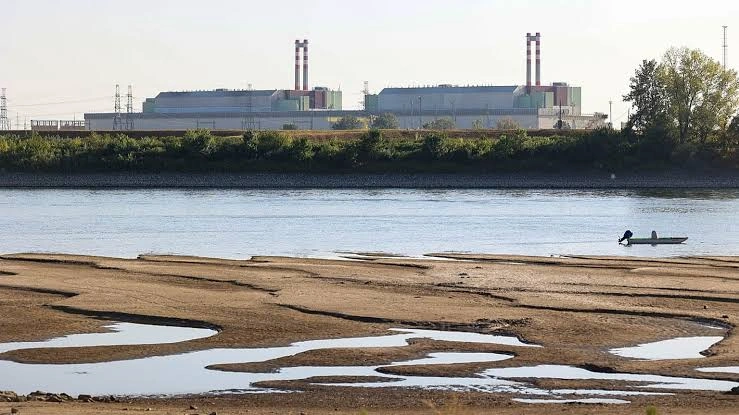

BUDAPEST: Hungary will shut down its only nuclear power plant for the first time in 44 years after record-low water levels in the Danube River disrupted cooling operations, Prime Minister Peter Magyar announced on Sunday.
The decision comes as prolonged drought and successive heatwaves continue to fuel an energy crisis across parts of Europe, placing increasing pressure on electricity generation and water resources.
The Paks Nuclear Power Plant, located south of Budapest, normally produces around one-third of Hungary’s electricity. The facility relies on water from the Danube River to cool its reactors, but the river’s water level has fallen to historic lows following months of below-average rainfall and persistent extreme temperatures.
In a post on X, Prime Minister Magyar said one of the plant’s remaining operating reactor units would be shut down during the early hours of Sunday as water levels continued to decline.
“Due to the further drop in the Danube’s water level, one of the last two generating units at the Paks Nuclear Power Plant will be shut down at 1:30 a.m. As a result, the plant’s output will fall to just 240 megawatts, and tomorrow it will be completely shut down for the first time in 44 years,” he wrote.
Historic Shutdown Amid Extreme Heat
The announcement follows a warning issued by the plant’s operator on Friday, which said the continued fall in Danube water levels could force the facility to suspend operations entirely if conditions failed to improve.
Meteorologists say Hungary is experiencing one of its most severe heatwaves in recent history. The country’s weather service, HungaroMet, has forecast temperatures exceeding 40°C in the coming days, with highs of 42°C expected later this week—matching the national temperature record set earlier this summer.
Climate Pressures on Energy Infrastructure
The shutdown highlights the growing impact of extreme weather on critical infrastructure across Europe.
Nuclear power plants require large volumes of water for cooling, making them particularly vulnerable during periods of drought and unusually high temperatures. Reduced river flows can limit cooling capacity and force operators to reduce output or temporarily suspend operations to meet safety requirements.
Scientists have repeatedly warned that climate change is increasing the frequency and intensity of heatwaves and droughts, creating new challenges for energy security, water management, and electricity supply across the continent.
The temporary closure of the Paks Nuclear Power Plant is expected to place additional pressure on Hungary’s electricity system as authorities monitor weather conditions and river levels before determining when operations can safely resume.