

Pakistan opener Imam-ul-Haq suffered a left calf strain while fielding on the opening day of the second Test against England at Lord’s, with the Pakistan Cricket Board confirming scans showed low-grade damage. His participation in the remainder of the match now depends entirely on how well the Imam calf injury treatment progresses over the coming days.
Background
Imam-ul-Haq, Pakistan’s 30-year-old left-handed opener, has been a regular fixture at the top of the order during the team’s current tour of England. He had featured in the first Test at Headingley before the injury struck during fielding duties on day one at Lord’s on Friday.
Calf strains are a common issue in cricket, particularly for players covering ground quickly in the field or making sharp movements between the wickets. Injuries like this have disrupted Pakistan’s squad before; all-rounder Mohammad Hafeez was once ruled out of a World Cup campaign entirely after failing to recover from a similar calf muscle injury.
Details
How the Injury Happened
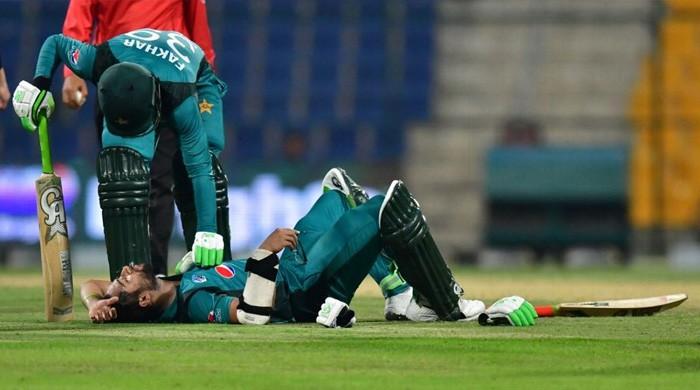
The Pakistan Cricket Board said in an official statement that Imam sustained the strain to his left calf muscle while fielding on the opening day of the Lord’s Test. He was seen struggling with movement shortly after the incident and did not take further part in Pakistan’s fielding innings.
Imam Calf Injury Test Results
Following the incident, Imam underwent scans to assess the severity of the damage. The Pakistan Cricket Board confirmed the Imam calf injury test results showed a low-grade calf strain, a classification that typically indicates a Grade 1 injury involving minor muscle fiber damage rather than a complete tear.
Imam Calf Injury Treatment and Recovery Plan
Imam is currently receiving treatment under the supervision of Pakistan’s medical team, according to the PCB’s statement. The board said his participation in the remainder of the Test would depend entirely on how his recovery progresses following treatment, leaving his status for the rest of the match genuinely uncertain.
With Imam sidelined, Pakistan were forced to rework their batting order. Azan Awais opened alongside Shan Masood on day two, while Babar Azam moved up to bat at number three. It’s the kind of reshuffling any team has to do when a specialist opener gets ruled out mid-match.
Quotes
The Pakistan Cricket Board’s official statement was direct about the situation, noting that “Pakistan opening batter Imam-ul-Haq sustained a strain to his left calf muscle while fielding on the opening day of the second Test against England at Lord’s.”
The board added that “scans later confirmed low grade calf strain and Imam is currently receiving treatment under the supervision of the Pakistan’s medical team,” while stressing that “his participation in the remainder of the Test depends on treatment leading to recovery.”
Impact
Imam’s injury adds further pressure on Pakistan’s batting depth during a demanding tour of England, a series that already carries significant weight for both teams. Losing an established opener mid-Test forces reshuffling throughout the batting order, as seen with Azan Awais and Shan Masood opening in his place and Babar Azam shifting up the order.
Beyond this match, the injury raises broader questions about Pakistan’s squad depth heading into the remainder of the series. If Imam’s recovery is prolonged, the team management may need to consider bringing in cover from the wider squad or reserves, a scenario Pakistan has faced before with other players sidelined by calf-related injuries in the past.
Conclusion
With Pakistan’s medical team continuing to monitor Imam’s recovery, updates on his availability are expected as the Lord’s Test progresses. Whether he returns to bat later in the match or misses the rest of the series will likely shape how Pakistan manages its opening combination for the remainder of the England tour.
Frequently Asked Questions
How serious is a calf injury?
The severity of a calf injury depends heavily on its grade, ranging from Grade 1, a mild strain with minor muscle fiber damage, to Grade 3, a complete muscle tear or rupture requiring much longer recovery and sometimes surgical intervention. Imam-ul-Haq’s confirmed low-grade calf strain falls at the milder end of this spectrum, which generally means less severe damage and a comparatively shorter recovery window compared to more serious muscle tears, though any calf strain still requires careful management to avoid re-injury if the player returns to activity too soon.
How long will a calf injury take to heal?
Recovery time varies significantly based on the grade of the strain, with mild Grade 1 calf strains typically healing within one to three weeks with proper rest and rehabilitation, while more severe Grade 2 or Grade 3 injuries can take anywhere from four to eight weeks or longer to fully heal. Professional athletes often follow structured physiotherapy programs involving gradual reintroduction of movement, strength training, and flexibility work before being cleared to return to full competitive activity, since returning too early significantly raises the risk of re-aggravating the same muscle.
What would a calf strain feel like?
A calf strain typically presents as a sudden, sharp pain in the back of the lower leg, often described as feeling like a sudden pull, pop, or tightening sensation during physical activity such as running, sprinting, or quick directional changes. Depending on severity, symptoms can include swelling, bruising, difficulty walking or bearing weight, and a noticeable weakness or stiffness in the affected leg. Athletes frequently report the injury occurring during an explosive movement, similar to the fielding action that led to Imam-ul-Haq’s calf strain at Lord’s, rather than during steady, low-intensity movement.