
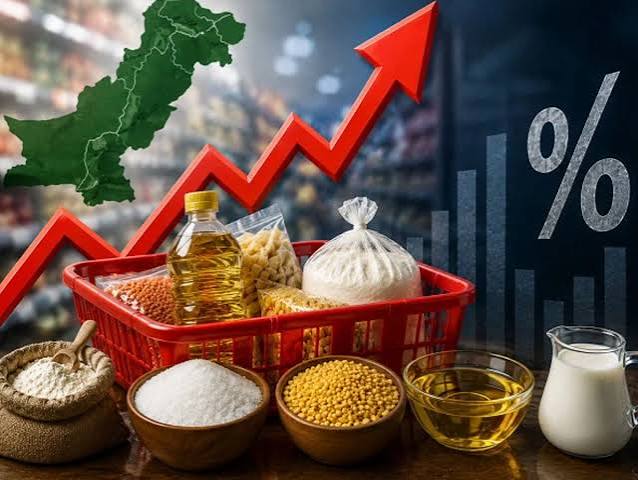

A new survey has found that soaring inflation has pushed almost nine out of ten low-income households in Peshawar into debt, with most families now struggling to repay loans they took simply to cover everyday expenses. The findings were released at the Peshawar Press Club on Wednesday by the Institute of Regional Studies.
Background
Pakistan has spent much of 2026 battling stubborn price pressures, and Khyber Pakhtunkhwa’s provincial capital has been among the hardest-hit cities. The latest official data from the Pakistan Bureau of Statistics puts national annual inflation at 11.1 percent in August 2026, a jump from 9.2 percent the previous month, with analysts projecting the September reading to land somewhere between 10.25 and 10.75 percent.
Against that backdrop, the Institute of Regional Studies set out to measure how inflation is actually being felt in Peshawar’s poorer neighbourhoods rather than just at the national level. Researchers surveyed 462 households, held focus-group discussions, and consulted with local stakeholders to build a clearer picture of household finances in the city.
Details
The survey’s headline finding was stark. Overall prices for essential goods and services in Peshawar have climbed by 35 to 40 percent, and in the city’s low-income areas, 48.7 percent of households described themselves as extremely affected by the price surge. Even though 67.3 percent of families reported some rise in income over the same period, those gains have been dwarfed by the pace at which expenses have grown.
The combined effect has forced families into borrowing simply to keep up with daily costs. According to the study, most of these households are now unable to repay the loans they took out, leaving them trapped in a cycle of debt rather than finding relief. Many families have also had no choice but to switch to cheaper, lower-quality food items to stretch their shrinking budgets further.
Dr Muhammad Iqbal Khalil, chairman of the Institute of Regional Studies, presented these findings to media and stakeholders at the Peshawar Press Club. The IRS report frames the data as part of a wider pattern in which inflation is not just a national statistic but a daily, compounding burden on the city’s most vulnerable residents.
Quotes
Dr Khalil’s presentation at the Peshawar Press Club centred on the gap between rising incomes and even faster-rising costs, which he identified as the core driver pushing families toward unsustainable borrowing. The IRS findings underline that while some households did see their earnings increase, that improvement has not been enough to offset the scale of the price hikes recorded across the city.
Impact
The findings carry weight beyond Peshawar itself. They illustrate how national inflation figures, even when they ease slightly month to month, can mask much sharper pain in specific cities and income groups. A near 90 percent debt rate among low-income households signals a level of financial distress that goes well beyond typical household budgeting struggles.
The report also adds to a broader regional picture. Other recent accounts from Khyber Pakhtunkhwa, including protests by transport operators over fuel and transport costs, point to a province where inflation, unemployment, and rising utility bills are compounding each other. Economists have separately warned that Pakistan’s reliance on imported energy and ongoing exchange-rate pressures make near-term relief difficult to guarantee.
Conclusion
With CPI inflation still hovering around 10 to 11 percent nationally and food and energy costs continuing to climb, there is little immediate sign of relief for Peshawar’s low-income households. Policy watchers will be looking to the State Bank of Pakistan’s upcoming monetary decisions and the government’s handling of fuel and electricity pricing to see whether any measures can ease the debt burden the IRS survey has brought into sharp focus.
Frequently Asked Questions
What is the current crisis in Pakistan?
Pakistan is currently grappling with a persistent cost-of-living crisis driven by elevated inflation, a heavy reliance on imported energy, and a fragile currency. Annual CPI inflation stood at 11.1 percent in August 2026, well above the State Bank of Pakistan’s target range of 5 to 7 percent, after briefly easing to 9.2 percent in July. Rising fuel and electricity prices, food inflation, and circular debt in the power sector have combined to squeeze household budgets, with low-income families in cities like Peshawar reporting the sharpest impact. The crisis has also been compounded by slower economic growth and ongoing IMF programme conditions that limit the government’s room to offer broad relief through subsidies.
What is Pakistan’s current inflation rate?
Pakistan’s official annual inflation rate, as measured by the Consumer Price Index, was recorded at 11.1 percent in August 2026 by the Pakistan Bureau of Statistics, up from 9.2 percent in July. Rural inflation was running higher than urban inflation, at 12.2 percent compared with 10.4 percent, driven largely by food and transport costs. Analysts at Topline Securities projected September’s figure to come in between 10.25 and 10.75 percent, suggesting inflation is likely to remain in double digits in the near term, though the official September number depends on the Pakistan Bureau of Statistics’ upcoming release.
Which country is facing the highest inflation?
Venezuela currently has the highest inflation rate in the world by a wide margin, with annual price increases running into the hundreds of percent through 2026, driven by years of economic mismanagement, currency collapse, and an overreliance on oil revenue that has not translated into broader economic stability. Other countries experiencing severe inflation include Sudan, South Sudan, Zimbabwe, and Iran, all of which have seen annual rates well into double or triple digits. By comparison, Pakistan’s inflation, while high and painful for ordinary households, remains far lower than these extreme cases, sitting closer to the global middle of the ranking among countries with elevated price pressures.