

Jamaat-e-Islami Pakistan is once again dominating headlines, this time over a protest campaign that’s pulled in sit-ins, strike calls, and threats of a long march on Islamabad. For a party often discussed in shorthand, there’s a lot of history and structure behind the name that rarely makes it into the news cycle.
Background: A Party Older Than Most of Pakistan’s Politics
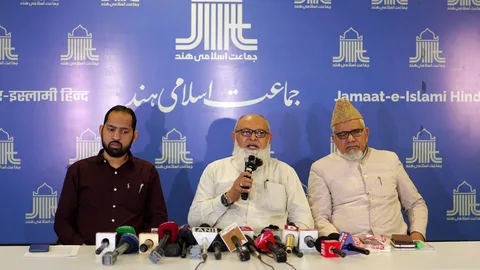
Jamaat-e-Islami traces its roots to 1941, when it was founded in India by Maulana Sayyid Abul A’la Maududi as a movement built around Islamic governance and Quranic principles. After Partition, the party’s Pakistani wing reorganized as Jamaat-e-Islami Pakistan, while cadres who stayed behind in India eventually formed the separate Jamaat-e-Islami Hind.
That makes JI Pakistan the country’s oldest religio-political party, older than the PPP, the PML factions, and certainly PTI. It’s also one of the few Pakistani parties that actually holds regular intra-party elections, choosing its top leadership through an internal vote roughly every five years rather than through inheritance.
Details: Leadership, Structure, and Current Standing
Hafiz Naeem ur Rehman currently serves as JI’s Ameer, elected in April 2024 after winning over 80 percent of the vote among more than 45,000 party members. He’s the sixth person to hold the position, following a line that runs from founder Maududi through Mian Tufail Muhammad, Qazi Hussain Ahmed, Munawar Hasan, and Sirajul Haq.
Rehman is a Karachi-born civil engineer who came up through the party’s student wing, the Islami Jamiat-e-Talaba, before working his way through JI’s Karachi chapter and into the national leadership. He also heads Al-Khidmat Karachi, a welfare arm tied to the party that handles on-ground relief and charity work.
JI describes itself as working toward an Islamic welfare state built on the Quran and Sunnah, and most analysts place it firmly on the right of Pakistan’s political spectrum. Unlike explicitly militant religious outfits, JI has consistently framed its activism around peaceful, constitutional means, elections, sit-ins, and street mobilization rather than armed struggle.
What’s Driving the Current Protests
As of September 2026, JI has been running an active protest movement centered on fuel prices, inflation, and what the party calls government overspending. Rehman has led sit-ins in Karachi and elsewhere, pushing demands that include cutting petrol prices to Rs 225 per litre and ending what he calls “extortion taxes” on ordinary households.
The party set up protest camps in multiple cities and called for a nationwide strike in early September, tying the campaign to broader grievances about the IMF’s role in Pakistan’s economic policy. Rehman has warned that if the government doesn’t respond, JI could organize a long march toward Islamabad’s D-Chowk, bringing what he describes as the concerns of around 50 million people to the capital.
Quotes From the Party Leadership
Speaking to protesters at a Karachi sit-in, Rehman said the party’s demonstrations would continue regardless of the government’s response. “Even if the government accepts our proposal, the sit-ins will continue until it is implemented,” he told supporters, framing the protests as a test of the government’s follow-through rather than just its intentions.
He’s also been sharply critical of the ruling coalition’s spending choices, accusing senior officials of extravagance while ordinary citizens face rising costs. That contrast, between elite spending and public hardship, has become a consistent theme across JI’s recent speeches and rallies.
Impact: Where This Fits in Pakistan’s Wider Political Picture
JI doesn’t have the electoral weight of PTI, PML-N, or PPP, but its knack for pulling people into the streets gives it outsized influence on the national conversation, especially on economic issues that cut across party lines. A sustained JI-led movement can push the government to respond publicly even when the party holds very few seats in parliament.
The party’s donation and welfare network, run largely through Al-Khidmat, also gives it a grassroots presence that outlasts any single protest cycle. That mix of ideological consistency and organizational reach is a big part of why JI keeps landing in national headlines despite rarely forming government on its own.
What to Watch Next
The immediate question is whether the government makes concessions on fuel pricing and taxation before JI’s threatened long march materializes, or whether talks scheduled between the party and a government committee produce enough movement to avoid an escalation. Either way, JI’s current campaign looks set to keep testing how much street pressure the coalition government is willing to absorb before responding.
FAQs
Who is the leader of Jamaat-e-Islami Pakistan?
Hafiz Naeem ur Rehman has served as JI Pakistan’s Ameer since April 2024, when he was elected with more than 80 percent support from the party’s membership. Before taking the national role, he spent years leading JI’s Karachi chapter and running Al-Khidmat’s Karachi operations, which gave him a strong base among the city’s working-class and religious communities. He’s the sixth Ameer in the party’s history, following founder Maulana Maududi and four other leaders across more than eight decades.
How many countries have Jamaat-e-Islami?
The Jamaat-e-Islami movement isn’t limited to Pakistan. Sister organizations sharing similar ideological roots operate under related names in India (Jamaat-e-Islami Hind), Bangladesh, Kashmir, and Sri Lanka, among other places, each functioning as an independent organization rather than a branch of a single global body. They generally trace their intellectual lineage back to Maulana Maududi’s original writings, even though each party operates entirely on its own within its own country’s political system.
Is Jamaat-e-Islami left or right?
JI is widely seen as a right-wing party, both in Pakistan and among its sister organizations elsewhere. Its politics center on Islamic governance, religious conservatism, and social values drawn from Quranic principles, which puts it squarely on the right in most conventional readings of the political spectrum. That said, some of its current economic messaging, opposing IMF-driven austerity and pushing for relief on fuel and taxes, sounds a lot like positions usually associated with populist or left-leaning movements elsewhere, which makes JI genuinely tricky to slot into a single Western-style category.