

Mir Raza Ali murder probe remains inconclusive as chemical, DNA reports raise fresh questions
KARACHI: Investigators probing the death of young businessman Mir Raza Ali have received a chemical examiner’s report and a DNA report, but officials say the findings are not yet conclusive enough to determine the exact direction of the investigation.
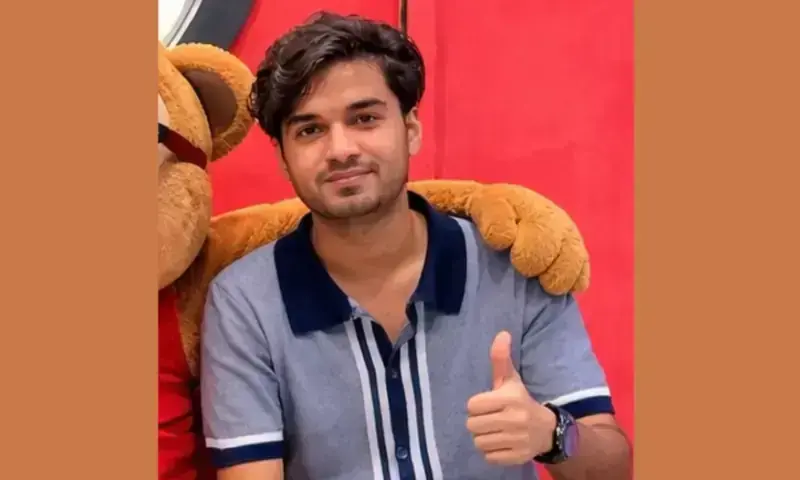
Ali, the owner of eatery Wafflix, went missing on July 28. His body was discovered the following day in bushes in Gulistan-i-Jauhar with a gunshot wound.
According to sources familiar with the investigation, the DNA report has confirmed the identity of the deceased, effectively dismissing speculation on social media that another person may have been killed.
Investigators are still awaiting results from additional samples collected during the exhumation of Ali’s body, as well as the final report of the police surgeon in light of the laboratory findings.
Chemical report reveals gunshot residue, acid traces
Sources said the chemical examination of samples collected during the first post-mortem produced three significant findings.
The report confirmed gunshot residue on the back of the perforation in Ali’s shirt, indicating an entry wound. It also detected traces of acid on the shirt and found bupivacaine — an anaesthetic and painkiller — in the victim’s blood.
However, investigators said the presence of bupivacaine did not necessarily establish that Ali had been given an anaesthetic before his death. Similarly, although acid traces were found on his clothing, no acid burns were observed on his body.
Several samples were collected during the exhumation, which was carried out around 12 days after his death following a court order obtained on an application filed by Ali’s family.
Confusion over bullet wounds
A major point of uncertainty for investigators remains the direction of the gunshot.
Sources said the first post-mortem examination indicated a bullet wound on the front of Ali’s chest, while a second report suggested that he had been shot from behind.
According to investigators, the chest wound measured around 38mm and was accompanied by burn marks on the shirt. The wound on the back measured approximately 7mm, but investigators found no corresponding burn marks on the shirt.
“We are not challenging anything at this stage, but there is still confusion among investigators,” a source familiar with the case said.
The investigation team has now decided to conduct geofencing around the crime scene to trace the possible movements of pedestrians and people travelling by cars or motorcycles around the time of the incident.
Investigators will also obtain the call data record of Ali’s mobile phone to help establish his movements and contacts before his death.
At the request of the family’s lawyer, Jibran Nasir, DSP Siraj Lashari of Hyderabad and Karachi South police inspector Mohammed Ali have also been added to the investigation team.
The secretary of the investigation team and SSP RRF Mohammed Ali Raza, along with other officers, visited the crime scene on Tuesday. Ali’s father, Mir Husain, and lawyer Jibran Nasir also accompanied the investigators.
Lawyer alleges evidence was mishandled
Speaking to the media, Jibran Nasir raised serious questions about the handling of Ali’s digital evidence.
He alleged that Ali’s smartwatch, which he described as the deceased’s only significant digital footprint, remained in the possession of SSP SIU Samiullah Soomro for eight days without a formal memo.
Nasir claimed that information extracted from the smartwatch was subsequently shared with the media and questioned whether the handling of the device amounted to evidence manipulation.
The lawyer further alleged that police had taken possession of the smartwatch from the family a few days after Ali’s death without preparing a formal seizure memo.
Family rejects suicide theory
Nasir strongly rejected any suggestion that Ali had taken his own life, saying the businessman was neither depressed nor facing financial deprivation.
He alleged that Ali remained missing for nearly 12 hours after he was last seen and may have been subjected to torture during that period.
The lawyer also raised concerns over the discovery of acid traces on Ali’s clothes, saying the family feared he might have been forced to consume acid.
Nasir alleged that the killers were professionals who attempted to conceal Ali’s identity by pouring acid on his face and thumbs and setting the crime scene on fire.
He also claimed that approximately Rs300 million may have been withdrawn or debited from Ali’s account in an attempt to create the impression that he had suffered a major financial loss and subsequently committed suicide.
These claims have not been independently verified.
Questions over investigation team
The lawyer also criticised the composition of the initial investigation team, questioning the inclusion of East SSP Zubair Nazir Sheikh and alleging that the Sindh High Court had ordered an inquiry against the officer in connection with a Rs500 million extortion allegation.
Nasir also questioned the participation of SP Usman Sadozai, claiming that the officer had been in Azad Jammu and Kashmir for about two weeks and asking how he could have attended meetings of the investigation committee.
He further accused Gulistan-i-Jauhar police of initially treating Ali’s death as a suicide and failing to properly identify or preserve evidence, including the traces of acid.
Nasir alleged that attempts were being made to protect an individual he described as “powerful, brutal and oppressive”.
The family’s lawyer said he had met the newly constituted investigation team along with Ali’s family and had also visited the crime scene on Tuesday.
Investigators, meanwhile, continue to examine the forensic evidence, digital data, movements around the crime scene and conflicting findings from the post-mortem examinations before determining the next direction of the probe.