


ISLAMABAD: Pakistan has requested a $10 billion Exchange Stabilisation Facility from the United States in a move aimed at strengthening its foreign exchange reserves, supporting the rupee and reducing reliance on multilateral lenders, according to a source familiar with the matter.
The request, reported for the first time, comes after Pakistan played a key diplomatic role in facilitating talks during the recent US-Iran conflict, a development that has enhanced Islamabad’s international standing and fueled expectations of stronger economic cooperation with Washington.
According to the source, Pakistan has formally sought a Bilateral Exchange Stabilisation Support Facility worth $10 billion from US Treasury Secretary Scott Bessent. The proposed facility would have a maturity period of up to five years and is intended to provide financial stability at a time when Pakistan continues implementing economic reforms under its International Monetary Fund (IMF) programme.
If approved, the facility would significantly boost Pakistan’s foreign exchange reserves, help stabilise the national currency, and ease pressure on the country’s external financing needs. It would also strengthen investor confidence while reducing dependence on emergency financial assistance from international institutions.
The US Treasury Department declined to comment on the reported request, while Pakistan’s Ministry of Finance did not immediately respond to media inquiries.
Aurangzeb Meets US Treasury Secretary
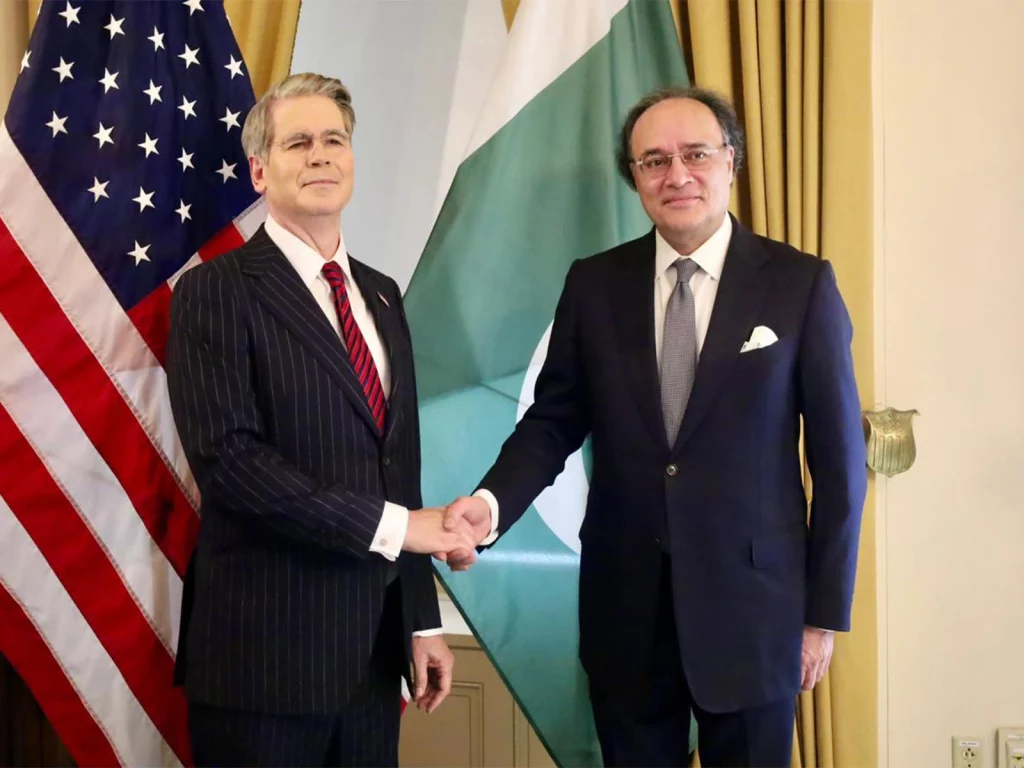
Pakistan’s Finance Minister Muhammad Aurangzeb met US Treasury Secretary Scott Bessent in Washington on Tuesday to discuss bilateral economic cooperation and Pakistan’s financial outlook.
According to a statement issued by the Ministry of Finance, Aurangzeb highlighted the vulnerability of Pakistan’s economy to regional geopolitical tensions and emphasized the need for stronger international financial support.
The statement said the finance minister sought greater US backing for Pakistan’s efforts to improve access to international capital markets, increase foreign exchange reserves, and enhance the country’s sovereign credit rating.
Both sides reaffirmed their commitment to expanding bilateral economic ties, encouraging greater US investment, and advancing strategic development projects.
IMF Reforms Continue
Pakistan remains under a $7 billion IMF programme, which requires the government to implement wide-ranging fiscal and structural reforms. These include increasing tax revenues, reducing public spending, and maintaining tighter monetary policies to stabilize the economy.
The proposed US facility would complement these reforms by providing additional financial support without replacing Pakistan’s commitments under the IMF programme.
Rare Financial Support Mechanism
Exchange Stabilisation Facilities are uncommon financial instruments managed through the US Exchange Stabilization Fund (ESF). They are typically used to provide foreign governments with dollar liquidity, currency swaps or financial guarantees to strengthen foreign exchange reserves and stabilize national currencies during periods of economic stress.
If Washington approves Pakistan’s request, it would represent one of the most significant examples of bilateral financial cooperation between the two countries in recent years and could provide a major boost to Pakistan’s efforts to restore macroeconomic stability.