

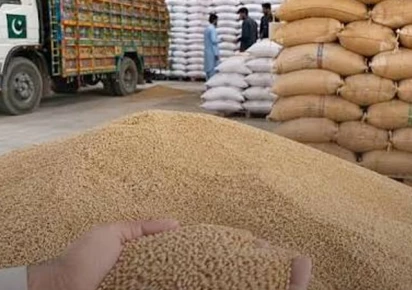

ISLAMABAD: Pakistan has decided to import one million tonnes of wheat after the federal government concluded that existing strategic reserves are insufficient to meet the country’s requirements, despite earlier assurances that domestic production would be enough for the current year.
The move has surprised industry observers, particularly because Punjab, traditionally Pakistan’s only wheat-surplus province, has also requested the allocation of one million tonnes of imported wheat to meet its own needs.
While wheat imports are not uncommon for Pakistan, the timing of the decision has raised questions. The import plan comes just three months after the wheat harvest, despite repeated government claims that domestic production and carryover stocks would be sufficient to meet national demand.
Until recently, officials maintained that Pakistan had produced around 29.8 million tonnes of wheat during the current season, supplemented by more than 2 million tonnes of carryover stocks, enough to satisfy the country’s annual consumption requirements.
However, the latest decision suggests that available reserves may be lower than previously estimated, prompting the government to replenish strategic stocks through imports.
The development is particularly striking because market conditions have not indicated unusually high domestic consumption. Poultry feed manufacturers, which often use wheat as a substitute grain, have largely avoided wheat this year as maize remains significantly cheaper, making it the preferred option for the poultry industry.
In addition, Pakistan’s border with Afghanistan has remained closed for both formal wheat exports and large-scale cross-border smuggling, reducing another potential source of domestic supply pressure.
Despite these factors, wheat prices have risen sharply since the harvest. The price of wheat has increased from approximately Rs3,300 per 40 kilograms to around Rs4,700 per 40 kilograms, exceeding the cost of imported wheat under current international market conditions.
The unexpected price surge points to a possible imbalance between supply and demand and has fueled concerns over the accuracy of official production figures, the adequacy of government-held strategic reserves, and the overall management of Pakistan’s wheat supply chain.
Agricultural experts believe the decision to import wheat so soon after the harvest highlights the need for greater transparency in crop production estimates, stock monitoring and procurement policies. They argue that improved planning and more reliable data are essential to ensuring food security and maintaining stable prices in the domestic market.
The federal government’s import plan is expected to help stabilize wheat supplies and ease pressure on domestic prices, although it has also sparked debate over the effectiveness of Pakistan’s agricultural planning and grain management system.