

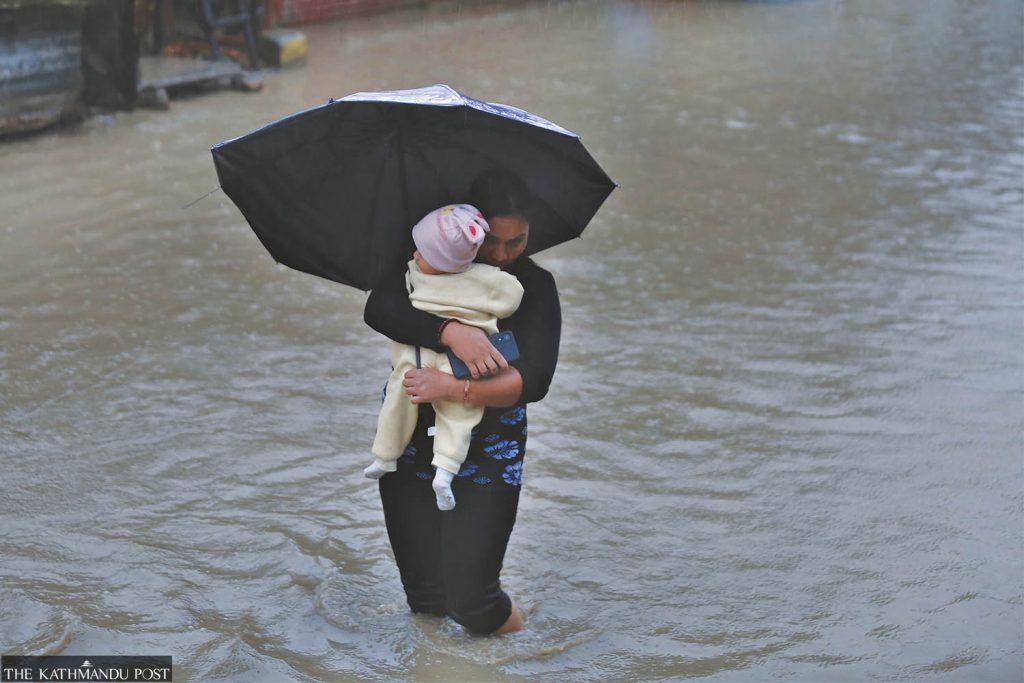

Relentless rain is more than a weather description. It is a phrase that captures something most dictionaries struggle to fully convey: rain that doesn’t stop, that refuses to ease, that keeps coming day after day until the ground can absorb no more and the rivers have nowhere left to go.
Right now, that is exactly what millions of Pakistanis are living through. Since June 26, 2026, relentless monsoon downpours have killed at least 109 people, injured 344 others, and damaged hundreds of homes across the country with Punjab and Khyber Pakhtunkhwa bearing the heaviest toll. And forecasters warn the worst may still be ahead.
What Does “Relentless Rain” Mean?
Relentless Meaning
The word relentless comes from the verb relent, which means to soften, to ease, or to let up. When something is relentless, it does the opposite it shows no mercy, no pause, no sign of giving way.
Relentless rain therefore means rainfall that continues without pause or weakening. It does not necessarily mean the hardest rain you have ever seen. It means rain that simply will not stop — hour after hour, day after day until everything around it gives way.
In everyday use, relentless describes anything that keeps coming without mercy: a relentless workload, a relentless opponent, or a relentless fever. But when attached to rain, the word carries particular weight because nature has a way of making even modest rainfall devastating when it simply refuses to stop.
Relented Meaning
The past tense relented means that something which was relentless finally gave way. When rain relents, it eases. When a storm relents, it softens. When floodwaters relent, they begin to fall back.
In Pakistan’s current monsoon crisis, the rain has not relented. Forecasters say it will continue through August and into September the statistical peak of the monsoon season.
The Rain That Refuses to Relent Pakistan Monsoon 2026
What Has Happened Since June 26
Pakistan’s 2026 monsoon season arrived on June 26 and has not paused since. The National Disaster Management Authority (NDMA) confirmed that by late July, at least 109 people have died and 344 others have been injured since the season began.
More than half of those deaths were not caused by drowning. They were caused by collapsing houses and roofs a detail that reveals something important about Pakistan’s vulnerability. When relentless rain soaks into mud-brick walls or poorly constructed roofs for days on end, the structures simply fail.
Khyber Pakhtunkhwa recorded the highest death toll, with 55 fatalities, followed by Punjab with 36 deaths. Lahore Pakistan’s second-largest city was inundated to a degree that prompted authorities to set up at least 17 emergency flood relief camps to house displaced families.
A Punjab irrigation official described the situation plainly: around 400 square kilometres of the Lahore and Gujranwala districts were submerged. Punjab Chief Minister Maryam Nawaz Sharif placed rescue teams and emergency services on high alert across the province.
What Made This Season Especially Dangerous
Pakistan enters every monsoon season with significant underlying vulnerability. The country ranks 18th out of 191 countries on the INFORM Risk Index, which measures exposure to natural hazards, community vulnerability, and capacity to cope.
This year, two additional factors made things worse. First, accelerated glacial melt in Gilgit-Baltistan and KP added to river levels at the same time that monsoon rain was pushing them up from the surface. Second, Pakistan’s rapid urbanisation has created sprawling informal settlements the kind that Lahore has in abundance that sit directly in flood pathways with minimal drainage infrastructure.
The Pakistan Meteorological Department warned of significant rises in rivers, streams, and mountain channels across glaciated regions, noting that prevailing conditions could trigger localised flooding and riverbank erosion on top of the monsoon flooding already underway.
Remembering Relentless Rain 2022
The Catastrophe That Defined a Generation
The phrase relentless rain 2022 carries enormous weight in Pakistan’s recent memory. That year, monsoon rains of historic intensity submerged roughly one-third of the country an area larger than the United Kingdom.
The 2022 floods killed 1,737 people, displaced millions from their homes, wiped out crops across Sindh and Balochistan, and caused economic losses estimated in the tens of billions of dollars. The scale of destruction was so vast that satellite imagery showed Pakistan looking like an inland sea from above.
Authorities this year have been careful to say they cannot rule out a repeat. The 2022 benchmark is the comparison every official is quietly watching.
Rain Sounds for Sleeping When Rain Becomes Trauma
The Psychology Behind the Phrase
There is something worth noting about the phrase rain sounds for sleeping a search term that millions of people type into their phones when they want comfort. For most people, rainfall is calming. The steady sound of rain against a window, the smell of wet earth, the drop in temperature all of these trigger rest.
But for someone whose roof has collapsed, whose crops are underwater, or whose family has been displaced to a relief camp, rain sounds do not signal comfort. They signal the approach of something that may take more from them.
This contrast rain as comfort for some, rain as threat for others captures why relentless rain is a phrase that carries different weight depending on where you are standing. In a warm room in Karachi, rain sounds might accompany sleep. In a flooded village in KP, the same sound means a sleepless night on higher ground.
Understanding the Language of Heavy Rainfall
How Meteorologists Describe Relentless Rain
Weather forecasters use several terms to describe different kinds of prolonged or heavy rainfall. Each has a specific meaning, though they often overlap in news reporting:
Incessant rain refers to rain that does not stop continuous rainfall without meaningful breaks. It is the closest technical equivalent to relentless rain.
Torrential rain describes rainfall of extreme intensity a lot of water falling in a short period. A cloudburst is a specific type of torrential rain: sudden, extremely heavy, and typically brief.
Persistent rain is a meteorological term for rainfall that continues over an extended area and time period without necessarily being intense at any given moment. It is what erodes soil, saturates ground, and eventually causes rivers to overflow their banks.
Pakistan’s 2026 monsoon has involved all three. The cloudbursts brought hundreds of millimetres of rain in short windows. The persistent rain kept soil saturated between storms. And the incessant nature of the season as a whole has given rivers no time to fall before the next wave arrives.
What Happens Next
The Season Is Not Over
Punjab’s monsoon season typically runs through September. Forecasters have already issued pre-alerts for another weather system expected to affect the Sutlej, Ravi, Chenab, and Jhelum river basins before the month is out.
Active flood alerts remain in place along major rivers. Evacuation operations are ongoing in vulnerable riverside communities. NDMA is coordinating with provincial disaster management authorities to issue early warnings ahead of each new weather system.
The NDMA’s position is clear: what has happened so far is the middle of the season, not the end.
Conclusion
Relentless rain meaning in a dictionary is simple enough: rainfall that does not let up, that shows no mercy, that refuses to ease. In Pakistan in 2026, that definition has a human cost attached to it 109 deaths, 344 injuries, hundreds of collapsed homes, and millions of lives disrupted since June 26 alone.
The memories of relentless rain 2022 still shape how officials, communities, and aid organisations approach each new monsoon season. This year, the warnings are the same, the vulnerability is still there, and the rain has not relented.
Frequently Asked Questions (FAQs)
Can We Say “Heavy Rainfall”?
Yes, “heavy rainfall” is grammatically correct and widely used in both journalism and meteorology. It describes rain of significant intensity typically more than 15 millimetres per hour in meteorological terms. “Heavy rainfall” is a neutral, factual phrase appropriate for news writing, official reports, and everyday conversation. In contrast, “relentless rain” carries an additional meaning of duration and relentlessness it implies the rain has been ongoing without relief, not just that it has been intense at a given moment. Both phrases are correct, but they describe different dimensions of the same event. Heavy rainfall focuses on intensity; relentless rain focuses on persistence. Pakistan’s current monsoon crisis involves both.
What Does Incessant Rain Mean?
Incessant rain means rain that does not stop continuous, unrelenting rainfall without meaningful breaks. The word incessant comes from Latin and means “without ceasing.” In news reporting and everyday language, incessant rain is often used interchangeably with relentless rain, though technically incessant emphasises the absence of any pause, while relentless emphasises the merciless or unyielding nature of the rain. In practice, both phrases are used to describe prolonged rainfall that overwhelms drainage systems, saturates soil, raises river levels, and causes flooding. Pakistan’s NDMA reports frequently use both terms when describing active monsoon conditions.
What Is Continuous Rain Called?
Continuous rain has several names depending on the context. In meteorology, it is often described as persistent rainfall or sustained precipitation. In journalism and everyday speech, people use terms like relentless rain, incessant rain, nonstop rain, or simply prolonged rainfall. When continuous rain is also extremely heavy, the terms torrential or monsoon downpours are commonly applied. When it falls in a sudden, intense burst, it is called a cloudburst. In Pakistan’s 2026 monsoon season, all of these have applied at different times and in different locations from the cloudbursts that hit Lahore in a matter of hours to the persistent, week-long rain that saturated KP and pushed rivers toward flood stage.