


Singapore scientists develop diving suit that keeps cockroaches active underwater for three hours
Scientists in Singapore have developed a pioneering diving suit that enables Madagascar cockroaches to remain active underwater for up to three hours, marking a significant step forward in bio-hybrid robotics.
The breakthrough was achieved by researchers at the School of Mechanical and Aerospace Engineering at Nanyang Technological University (NTU), led by Professor Hirotaka Sato.
The project expands on previous research involving cyborg cockroaches equipped with tiny electrodes attached to their sensory organs, allowing the insects to be remotely controlled for search-and-rescue missions in disaster zones.
Researchers explained that one of the biggest challenges was the cockroach’s inability to survive underwater for extended periods, limiting its usefulness in flood response and other aquatic environments.
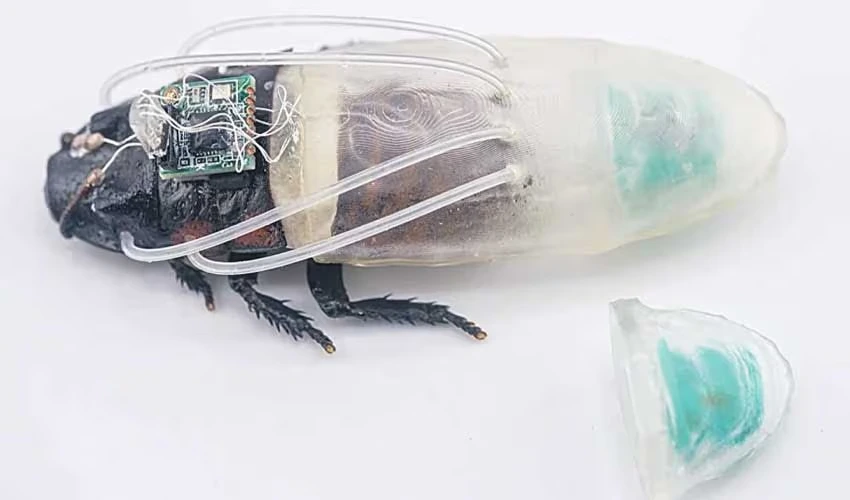
To overcome this limitation, the team designed a lightweight, 3D-printed diving suit made from resin-based materials. Instead of relying on traditional oxygen tanks, the suit generates oxygen through a chemical reaction between hydrogen peroxide and manganese dioxide.
The oxygen is delivered directly to the insect’s breathing openings, allowing it to remain functional while submerged.
During laboratory tests, the cockroaches stayed active underwater for up to three hours and moved at an average speed of 78.4 millimetres per second—approximately 10 millimetres per second slower than their speed on land.
According to the research team, the technology could pave the way for advanced bio-hybrid robotic systems capable of operating in flooded areas, underwater environments and other emergency situations where conventional robots face limitations.