

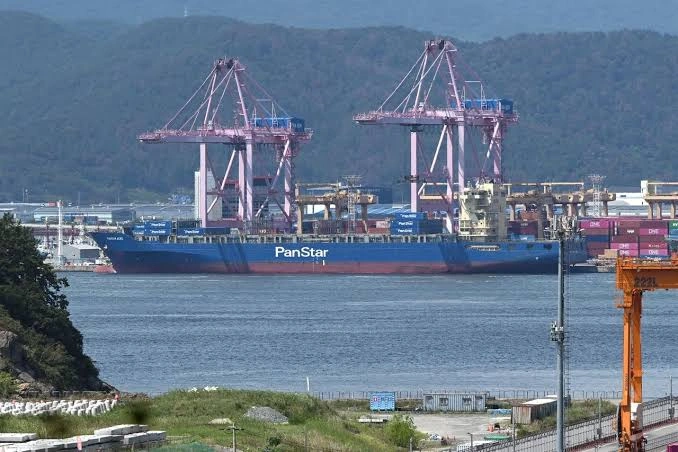

SEOUL: South Korea is preparing to send its first trial container ship through the Arctic shipping route, as rising geopolitical tensions in the Middle East push governments and shipping companies to explore alternative routes between Asia and Europe.
The container vessel PanStar Acro is scheduled to depart from Busan New Port and travel to Europe through the Arctic, in a voyage designed to assess whether the route can become commercially viable. South Korea’s oceans ministry said the ship is expected to leave at 8pm local time, weather and other unforeseen conditions permitting.
The vessel will travel to Felixstowe in the United Kingdom, Rotterdam in the Netherlands and Gdansk in Poland before returning to South Korea. The complete journey is expected to take around 45 days.
Arctic Shipping Route Could Cut Thousands of Kilometres
The traditional maritime route connecting Asia and Europe passes through the Suez Canal, while the Arctic route could shorten the journey by approximately 7,000 kilometres and reduce travel time by around 10 days, according to the Korea Institute for International Economic Policy.
South Korea’s Vice Oceans Minister Nam Jae-hon said the Arctic route could eventually become an alternative to shipping lanes affected by geopolitical instability in the Middle East.
The South Korean voyage follows a similar journey by the Chinese container ship Dubai Tower, which recently departed Ningbo for Europe, travelling north through the Bering Strait before heading west along Russia’s Arctic coastline.
Experts say the increasing number of commercial voyages indicates that the Northern Sea Route is gradually emerging as a secondary maritime corridor. However, South Korea could face geopolitical and regulatory challenges because vessels travelling along the route may rely on Russian navigation and weather services.
Environmental organisations have also raised concerns about the consequences of increased Arctic shipping. The region is warming significantly faster than the global average, causing sea ice to decline and making previously difficult maritime routes increasingly accessible.
The Northern Sea Route remains seasonally dependent on ice conditions and may require icebreaker assistance during periods when sea ice becomes too extensive.
Environmental groups argue that making the Arctic route commercially attractive could create a troubling cycle in which further warming and declining sea ice make shipping easier, potentially increasing activity in a fragile environment.
Major international shipping companies, including CMA CGM, MSC and Hapag-Lloyd, have indicated that they will avoid Arctic shipping routes.
South Korea’s trial voyage will therefore provide an important test of whether the changing Arctic environment can support a commercially practical shipping corridor while also highlighting the growing economic and environmental debate surrounding the region.