

Pakistan is dealing with one of the worst traffic safety emergencies in its history. Karachi alone recorded 536 traffic deaths in 2025, with 60 of those linked to trucks. Faisalabad has formed a dedicated committee headed by the FDA Director General to tackle its own mounting congestion crisis. And Punjab saw a 29 percent spike in road traffic crashes in January 2025.
Against that backdrop, understanding what a traffic management system actually is, how it works, and why it matters has never been more relevant. This guide covers the basics definitions, examples, control methods, courses, and jobs alongside a clear look at what’s going wrong in Pakistan and what structured solutions exist.
What Is a Traffic Management System?
A traffic management system is the combination of infrastructure, technology, policies, and human coordination used to regulate the movement of vehicles and pedestrians on roads. The goal is simple: move people and goods safely, efficiently, and with minimal disruption.
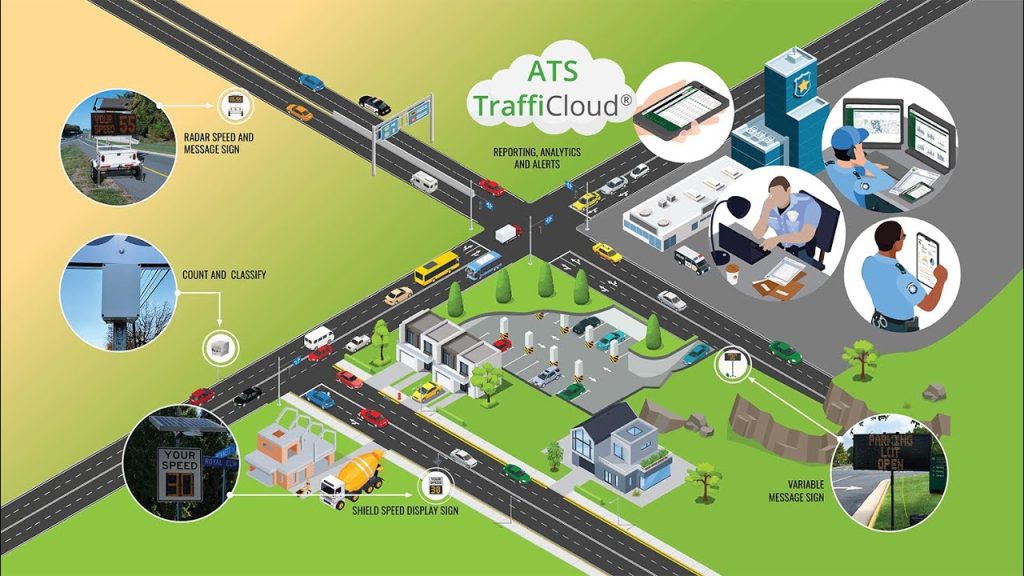
A modern traffic management system isn’t just traffic lights. It includes real-time monitoring cameras, variable speed signs, signal coordination software, incident detection, emergency response routing, and data analytics. In more advanced cities, artificial intelligence helps predict congestion before it forms and adjusts signals dynamically across entire road networks.
Traffic Management Examples in Real Life
Understanding traffic management examples helps make the concept concrete. Here are the most commonly applied forms:
Signal Management
Traffic signals at intersections are the most basic example. Coordinated signal systems that “green wave” traffic along main corridors timing lights so a vehicle hitting green at one intersection will catch green at the next are a common urban traffic management tool.
Road Marking and Signing
Lane markings, pedestrian crossings, no-parking zones, and speed limit signs are passive forms of traffic management control. They guide behavior without requiring enforcement at every point.
Incident Management
When accidents block a road, a structured incident management protocol traffic diversion, emergency services coordination, public alerts is part of the traffic management system. Karachi’s traffic police have been using challan campaigns and driver arrests as their primary incident-response tool, which addresses the aftermath but not the pattern.
Variable Message Signs
Electronic signs that update in real time to warn drivers of congestion ahead, construction zones, or weather conditions are standard in developed traffic management systems. These are largely absent from Pakistan’s urban road network.
Heavy Vehicle Restriction Schedules
Many cities globally restrict heavy vehicles trucks, dumpers, trailers to specific time windows (typically overnight) to keep them off roads when pedestrian traffic is highest. The HRCP specifically called for this in Karachi after 99 major accidents in 37 days in early 2025, most involving heavy vehicles.
Traffic Management Notes Core Principles
Whether you’re writing traffic management notes for a course or trying to understand the field, the core principles are consistent:
Capacity — How many vehicles can a road segment move per hour? Most urban bottlenecks aren’t about road width but about how intersections are timed.
Flow — The actual number of vehicles moving past a point per unit of time. Efficient traffic management keeps flow close to capacity.
Speed — Average vehicle speed across a corridor. Higher speed doesn’t always mean better flow; at very high speeds, safe following distances reduce road capacity.
Density — The number of vehicles per unit length of road. When density gets too high, flow breaks down into stop-and-go conditions, massively reducing capacity.
Level of Service (LOS) — A grading system (A through F) that rates how well a road or intersection is functioning. Most Pakistani city centers run at LOS E or F during peak hours, meaning the system is effectively failing.
These fundamentals form the core of any traffic management PDF or university curriculum on transportation engineering.
Traffic Management PDF and Notes Resources
Students and professionals searching for traffic management PDF resources or traffic management notes can access materials through:
- Pakistan Engineering Council (PEC) Transportation engineering guidelines
- National Highway Authority (NHA) Pakistan Road design and management documents
- Asian Development Bank (ADB) Has published detailed Pakistan road safety assessments
- World Bank Transport Resources Free access to urban traffic management guides
- University departments NED University, UET Lahore, and NUST all have civil engineering and transportation planning programs with coursework materials
The ADB has specifically warned in its Pakistan road safety assessment that unless strong management and enforcement measures are implemented, road fatalities in Pakistan could increase by at least 33 percent by 2030.
Traffic Management PPT What Should It Cover?
A comprehensive traffic management PPT for academic or professional use typically covers:
- Definition and scope of traffic management
- Road hierarchy and design standards
- Signal types and control methods
- Road safety statistics (local and international)
- Incident management protocols
- Case studies from cities with effective systems
- Technology integration: cameras, sensors, data analytics
- Enforcement tools: challans, vehicle fitness certificates, driver testing
- Policy recommendations
For Pakistan-specific presentations, including data from Rescue 1122 Punjab (196,963 emergencies in January 2025 alone) and Karachi traffic police records gives the PPT real grounding in local conditions.
What Is Traffic Management Course?
A traffic management course is formal training that prepares professionals to plan, implement, and evaluate systems for regulating vehicle and pedestrian movement.
Academic Courses
In Pakistan, transportation planning and traffic engineering are covered within:
- BE Civil Engineering (specialization options in transportation)
- MSc Transportation Engineering
- Urban Planning degrees
NED University, UET Lahore, and NUST are the primary institutions offering these programs.
Professional Certification
Internationally recognized certifications include:
- Institute of Transportation Engineers (ITE) programs
- Traffic Management Practitioner (TMP) certification in the UK
- Road safety auditor training
Short Courses
The NHA and certain provincial governments have occasionally run short-duration traffic management training for police officers and municipal engineers. These are typically funded through ADB or World Bank technical assistance programs.
What Is Traffic Management Job? Roles and Responsibilities
The traffic management job market covers a range of public and private sector roles.
Traffic Engineer
Plans and designs road networks, signal systems, and traffic control infrastructure. Works for city governments, NHA, or private engineering consultancies. In Pakistan, these roles typically require a civil engineering degree and often PEC registration.
Traffic Police Officer
Enforces traffic laws on the ground. Karachi’s traffic police issued 34,655 challans and arrested 490 drivers in a 37-day period in early 2025 a scale of enforcement that shows the workforce involved in this function.
Traffic Management Planner
Works on long-term transport planning for cities and regions. Coordinates between transport, land use, and development planning. This role is critical but relatively underdeveloped in Pakistani urban governance.
What Would an Effective Traffic Management System Look Like for Pakistan?
Based on what works in comparable cities globally and what the ADB has recommended for Pakistan, a functional traffic management system for Pakistani cities would need:
Adaptive signal control on major corridors, replacing fixed-cycle signals that create artificial bottlenecks at off-peak hours and fail at peak hours.
Time-of-day heavy vehicle restrictions, keeping dumpers and trailers off urban roads during peak pedestrian hours the single biggest lever available for reducing fatalities in Karachi right now.
Automated enforcement through cameras and e-challans rather than relying primarily on officer presence that can’t cover every intersection.
Centralized incident management, coordinating traffic police, Rescue 1122, and municipal bodies through a single operations room rather than in separate silos.
Genuine driver testing and vehicle fitness enforcement not just confiscating fitness certificates after accidents, but preventing unroadworthy vehicles and untrained drivers from operating in the first place.
None of these require imported technology or exceptional budgets. They require institutional will and sustained implementation.
Conclusion
Traffic management is not an abstract academic topic in Pakistan it’s the difference between whether someone’s family member makes it home. The formation of bodies like Faisalabad’s special traffic committee is a recognition that the existing approach isn’t working. Whether those bodies follow through with the “scientifically planned solutions” that officials have called for, or dissolve into the same cycle of challan campaigns and post-accident investigations, will determine whether Pakistan’s road death toll keeps climbing toward the ADB’s projected 33 percent increase by 2030.
FAQs
What are three types of traffic?
The three main types of traffic in transportation planning are local traffic, through traffic, and turning traffic. Local traffic originates or ends within the immediate area residents, shoppers, and workers going short distances. Through traffic is passing through an area to reach a destination beyond it the heavy vehicles and long-distance transport that dominate Pakistan’s national highways and cause particular problems when routed through urban centers. Turning traffic crosses or merges with other streams at intersections, which is where the majority of urban accidents occur.
Is traffic management a stressful job?
It depends heavily on the specific role. Traffic police officers working manual intersection duty in Pakistan particularly in cities like Karachi and Lahore during peak hours work in physically demanding and genuinely high-stress conditions: heat, exhaust fumes, aggressive drivers, and the constant risk of accidents in the immediate vicinity. Traffic engineers and planners in office roles face a different kind of stress, dealing with political pressure, public complaints, and the challenge of implementing solutions with limited budgets. Operations center staff managing real-time incidents face time-pressure stress similar to emergency dispatch.
What is the job description of a traffic manager?
A traffic manager, depending on context, handles one of two very different functions. In transportation, a traffic manager oversees the planning and coordination of vehicle movement systems, manages enforcement and compliance programs, analyzes accident and congestion data, and coordinates with engineering, law enforcement, and local government to implement improvements. In media or advertising (a different industry that uses the same title), a traffic manager schedules and coordinates the flow of creative work through an agency or broadcaster. In Pakistan’s public sector, the traffic management job typically sits within city traffic police departments, the NHA, or provincial transport departments, and requires civil engineering or law enforcement qualifications depending on the specific role.