
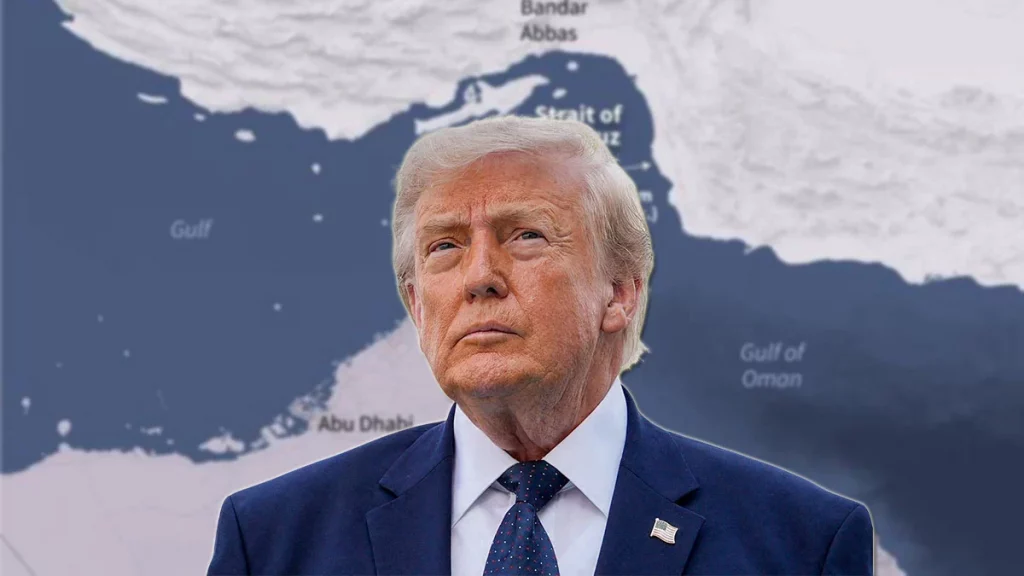

WASHINGTON: US President Donald Trump said on Monday that negotiations between the United States and Iran were progressing positively, expressing hope that diplomacy could end months of hostilities. However, he warned that American military strikes would resume if the talks failed to produce results.
Speaking to reporters, Trump said Washington was engaged in “good talks” with Tehran and believed there was a realistic opportunity to reach an agreement.
“We’re having good talks. I think there’s a good chance that something could happen. If it does, that’s good. If it doesn’t, we’ll go back to doing what we were doing two days ago,” Trump said.
Trump Signals Diplomacy but Keeps Military Option Open
Later, during a campaign rally in Michigan, Trump reiterated that while negotiations remained the preferred path, the United States was prepared to use military force if necessary.
Referring to Iran, he said the country could not be persuaded through incentives alone and stressed that Washington would respond forcefully if diplomacy collapsed.
His remarks followed the US decision to suspend a two-week aerial campaign against Iran on Saturday, marking a temporary pause in military operations after months of escalating tensions.
Iran Says It Has Not Abandoned Diplomacy
Iran responded cautiously to Trump’s comments, insisting it remained committed to diplomatic engagement while rejecting claims that it had requested negotiations.
Foreign Ministry spokesman Esmail Baghaei said communication between Tehran and Washington was continuing through international mediators but dismissed reports suggesting Iran had initiated the talks.
He said diplomacy remained an option for Iran, adding that reports claiming Tehran had sought negotiations were false.
Regional Tensions Continue Despite Pause
Despite the temporary halt in US military operations, security tensions remained high across the Middle East.
Saudi Arabia, Jordan and Iraq reported drone attacks on Monday, raising concerns that regional proxy groups continue to pose a threat even as diplomatic efforts move forward.
Saudi authorities said their air defence systems intercepted drones targeting petroleum infrastructure, including facilities near Riyadh. The kingdom stated that the drones were launched from Iraq by Iran-backed armed groups and warned that it reserved the right to respond.
Meanwhile, Yemen’s Iran-aligned Houthi movement claimed responsibility for an attack targeting Saudi Arabia’s East-West Pipeline leading to the Red Sea port of Yanbu, describing it as retaliation for Saudi military activity.
Strait of Hormuz Remains Flashpoint
Iran also reaffirmed that it maintained control over the strategically important Strait of Hormuz, one of the world’s busiest oil shipping routes.
Tehran accused the United States of threatening commercial vessels and oil tankers in nearby waters and alleged that Washington was attempting to impose an illegal maritime blockade.
Iran’s central military command described the reported US actions as a dangerous escalation that could further destabilize the region.
Diplomatic Window Remains Open
A senior Iranian official previously indicated that Tehran would refrain from further attacks as long as the United States maintained its self-imposed ceasefire.
While both sides continue exchanging messages through mediators, uncertainty remains over whether the current diplomatic efforts can produce a lasting agreement or whether the conflict could once again escalate into direct military confrontation.