

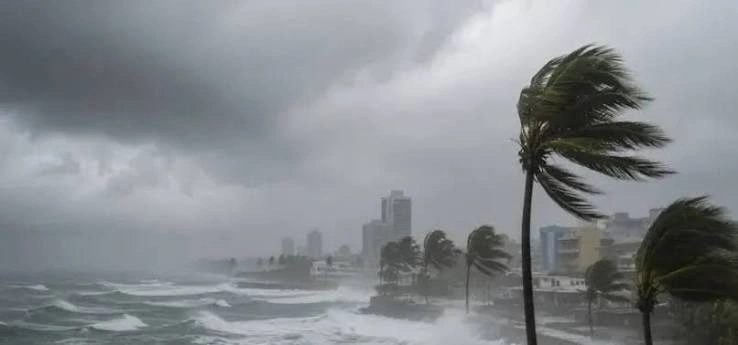

China’s strongest typhoon of 2026 batters Guangdong with winds exceeding 160 km/h, causing mass evacuations, flight cancellations, and widespread emergency response efforts.
BEIJING: Typhoon Noul, the strongest storm to strike China this year, made landfall in the early hours of Sunday, unleashing destructive winds and torrential rainfall across the country’s southern coastline while forcing hundreds of thousands of residents to evacuate.
According to China’s state broadcaster CCTV, the centre of Typhoon Noul crossed the coast near the town of Pinghai in Guangdong Province at approximately 3:50 a.m. local time (1950 GMT). The storm came ashore about 80 kilometres northeast of Hong Kong with maximum sustained winds of 162 kilometres (101 miles) per hour.
Officials described Noul as the most powerful typhoon to hit China in 2026, prompting large-scale emergency measures across southern provinces.
Ahead of the storm’s arrival, Chinese authorities evacuated more than 340,000 residents, suspended railway services, halted outdoor work, and activated emergency disaster response plans in vulnerable areas.
Guangdong Province raised its disaster relief emergency response to the third-highest level, as emergency teams were deployed to monitor flooding, landslides, and infrastructure damage.
Officials urged residents to remain indoors as powerful winds and heavy rainfall continued across the region.
Typhoon Noul also caused major disruptions to air travel across southern China and Hong Kong.
According to Hong Kong International Airport, more than 350 arriving and departing passenger flights were cancelled on Sunday due to dangerous weather conditions.
Hong Kong’s weather authorities initially issued the No. 9 Tropical Cyclone Warning Signal, the city’s second-highest storm alert, before lowering it to Signal No. 8 later in the morning as the storm weakened after moving inland.
The Hong Kong Observatory warned that although Noul was gradually losing strength, gale-force winds continued to affect many parts of the city.
Authorities reported widespread storm damage, including fallen trees, damaged public property, and hazardous road conditions.
The Hong Kong government confirmed receiving more than 100 reports of fallen trees, while nine people sustained injuries during the severe weather.
Television footage broadcast by CCTV showed powerful winds scattering debris, uprooting trees, and toppling small roadside structures, including sports facilities.
Meteorological officials warned that Typhoon Noul would continue moving inland across Guangdong Province before weakening further.
However, the storm is expected to bring prolonged heavy rainfall to several inland provinces, including Jiangxi, Hunan, and Hubei, with rainbands extending as far north as Henan and Shandong through Tuesday.
Authorities remain on high alert for possible flooding, flash floods, and landslides as emergency response teams continue monitoring the evolving weather situation.