

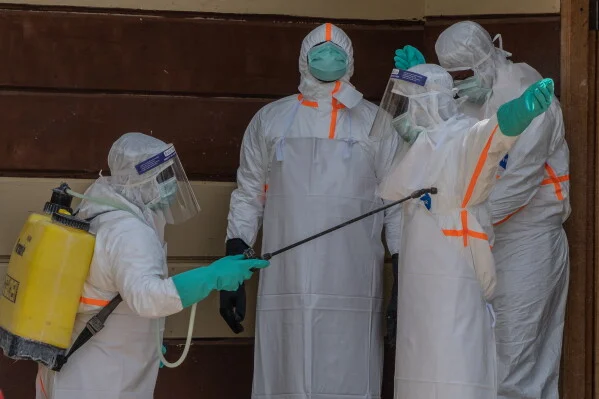

The United Nations Development Programme (UNDP) has issued a stark warning regarding the ongoing Ebola outbreak in the Democratic Republic of Congo (DRC), projecting that the epidemic could cost African economies up to $3.6 billion. Beyond the immediate health emergency, the agency cautions that the situation is rapidly evolving into a far-reaching socioeconomic crisis. Broad restrictions on travel and trade, while aimed at containment, are inadvertently dismantling local economies and informal livelihoods, threatening to eliminate tens of thousands of jobs and push nearly one million additional people into poverty—disproportionately affecting women across the DRC and neighboring countries like Uganda, Rwanda, and South Sudan.
According to current figures from the World Health Organization (WHO), the DRC has recorded 1,333 cases and 399 deaths, with the conflict-hit northeastern Ituri province serving as the epicentre. Compounding the crisis is the fact that this specific epidemic is caused by the Bundibugyo species of the virus, for which no vaccine or definitive treatment currently exists. Even if containment measures prove successful in the DRC and Uganda, the UNDP anticipates severe structural damage, including a baseline real GDP loss of over $1 billion for the DRC alone. To mitigate the fallout, the UN is urging leaders to transition from strict border closures to targeted screening, implement direct cash transfers for vulnerable communities, and deploy emergency financial mechanisms to safeguard essential healthcare services.