


Tensions between the United States and Iran remain high as efforts to reach a diplomatic settlement face serious challenges, while the Pentagon is pushing American defense companies to accelerate weapons production after months of fighting have sharply reduced key U.S. munitions stocks.
The latest developments have raised concerns over Washington’s ability to sustain a prolonged military confrontation with Iran while simultaneously pursuing negotiations.
Although reports have suggested that talks between Washington and Tehran have reached an impasse, President Donald Trump said on Tuesday that negotiations were still making progress, including discussions involving the Strait of Hormuz. Trump also said the United States was rapidly replenishing its weapons supplies.
Pentagon Presses Defense Industry to Increase Production
The Pentagon has intensified efforts to rebuild depleted weapons inventories, with senior officials pressing defense manufacturers to increase output.
The push comes after the U.S. military used large quantities of missiles and other precision weapons during the conflict with Iran.
Recent reporting indicates that the United States has used virtually all of its long-range precision missiles during the war, including significant numbers of ATACMS and Precision Strike Missiles.
The Pentagon’s effort reflects growing concern that existing production rates may not be sufficient to rapidly replace weapons being consumed during the conflict.
US Weapons Stocks Under Pressure
The scale of weapons consumption has become a major issue for U.S. defense planners.
American forces have relied heavily on long-range strike weapons and air-defense systems during operations against Iran. The resulting shortages have prompted officials to examine ways to expand production and shorten manufacturing timelines.
The challenge is particularly significant because some advanced missiles require substantial time and specialised components to manufacture.
Increasing production therefore cannot immediately restore depleted inventories.
Diplomacy Remains Uncertain
The military pressure is unfolding alongside uncertain diplomatic efforts between Washington and Tehran.
Iran and the United States continue to disagree over the terms of any potential agreement, particularly concerning Iran’s nuclear programme and wider regional security issues.
Trump has maintained that Iran cannot be allowed to develop nuclear weapons while continuing to keep military options available.
At the same time, the president has indicated that economic pressure and negotiations remain part of his strategy toward Tehran.
The conflicting military and diplomatic signals have added uncertainty over whether the conflict will move toward a negotiated settlement or another escalation.
Strait of Hormuz Adds to Pressure
The Strait of Hormuz remains another major source of tension.
The strategically important waterway carries a significant share of global oil shipments, meaning prolonged disruption could have consequences far beyond the Middle East.
Iran has indicated that the strait will not fully reopen until Washington changes its approach, adding pressure on both sides to find a diplomatic solution.
Any prolonged disruption could increase energy prices and create additional pressure on global markets.
A Race to Rebuild US Military Capacity
The Pentagon’s efforts to increase weapons production highlight a broader challenge facing the United States: maintaining sufficient military reserves during a period of multiple global security commitments.
The Iran conflict has consumed weapons that were originally maintained for potential future contingencies, while previous military assistance to Ukraine and other operations had already placed pressure on American stockpiles.
The latest production push is therefore not simply about replacing weapons used in Iran. It is also about restoring U.S. military readiness for other potential conflicts.
What Happens Next?
The immediate future of the U.S.-Iran confrontation remains uncertain.
Washington faces a difficult balance between maintaining military pressure, rebuilding its weapons inventories and keeping diplomatic channels open.
Iran, meanwhile, continues to resist U.S. demands while seeking changes to Washington’s approach.
For now, the combination of uncertain negotiations, depleted U.S. weapons stocks and tensions around the Strait of Hormuz means the risk of further escalation remains high.
A diplomatic breakthrough could ease the pressure quickly, but a collapse in negotiations could send the region toward another dangerous phase of the conflict.
SEO Package
Focus Keyword: US Iran tensions
SEO Title: US-Iran Tensions Rise as Pentagon Races to Rebuild Weapons Stocks
Slug: us-iran-tensions-pentagon-weapons-stockpiles
Meta Description: US-Iran tensions remain high as Washington faces weapons shortages and pushes defense companies to accelerate production amid uncertain negotiations.
Keywords: US Iran tensions, US Iran conflict, Donald Trump Iran, Iran negotiations, Pentagon weapons stockpiles, US military weapons shortage, Iran war, Strait of Hormuz, Trump Iran policy, US defense industry
Tags: US-Iran Relations, Donald Trump, Iran, Pentagon, US Military, Weapons Stockpiles, Middle East, Strait of Hormuz, Geopolitics, World News
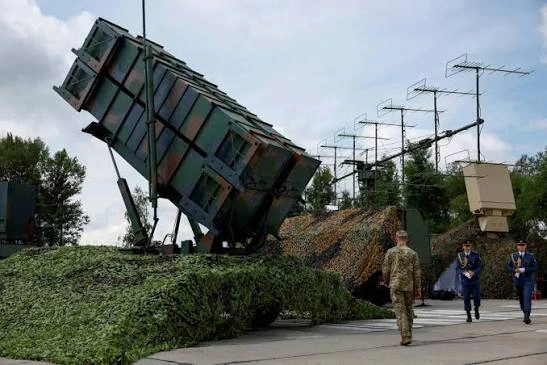
Image Caption: US-Iran tensions remain high as Washington works to replenish weapons stocks amid ongoing diplomatic uncertainty.
Image Alt Text: US military weapons and rising tensions between the United States and Iran
Suggested Headline: US-Iran Tensions Intensify as Pentagon Races to Replenish Depleted Weapons Stocks