

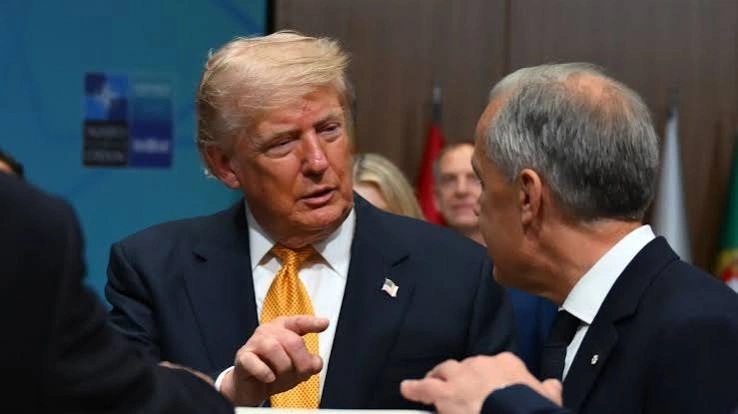

Canada suspends trade negotiations with Washington after rejecting last-minute US proposals, with reciprocal tariffs now expected to intensify tensions between the two North American trading partners.
A fresh wave of US tariffs on Canadian goods has taken effect after last-minute trade negotiations between Washington and Ottawa broke down, escalating tensions between the two countries and raising concerns about the future of their deeply integrated economies.
Canadian Prime Minister Mark Carney announced late Friday that Canada was suspending trade negotiations with the United States after concluding that changes proposed by Washington were unacceptable. Carney said Canada would respond with reciprocal tariffs on US goods, matching American duties “dollar for dollar.”
Carney said negotiators had made important progress during intensive discussions that began in July, but the final US proposals failed to meet Canada’s objectives.
“Last-minute changes in the US proposed terms were unfair, uneconomic, and called into question the reliability of any deal,” Carney said.
US-Canada Trade Talks Break Down
The collapse came just before a Friday night deadline, ending hopes that the two sides could reach a new trade agreement. The negotiations had gained momentum earlier in the week after US President Donald Trump temporarily paused planned tariffs and suggested that Washington and Ottawa were close to a deal.
Trump had threatened to impose a 50% tariff on nearly $20 billion worth of Canadian imports, putting significant pressure on Canadian officials to reach an agreement.
However, despite what Carney described as “important progress,” Canadian negotiators ultimately concluded that the proposed terms did not provide sufficient benefits for Canada.
“As a result, this evening, I have decided to suspend trade negotiations with the US and have directed negotiators to return to Ottawa,” Carney said.
The decision marks a sharp change in tone from earlier statements by officials on both sides, who had expressed optimism that a mutually beneficial agreement could be reached.
Washington Blames Canada for the Breakdown
Following Carney’s announcement, US Trade Representative Jamieson Greer accused Canada of backing away from commitments that had been discussed during negotiations.
Greer said Canada had declined to finalize the trade agreement under terms that the United States believed had already been agreed upon.
According to Greer, Washington had offered Canada favorable treatment compared with other major exporters to the US market. He said new Canadian demands and changes to previous commitments had disrupted what he described as a carefully negotiated balance.
The conflicting statements from Washington and Ottawa highlight the growing differences between the two governments as they attempt to resolve their latest trade dispute.
Tariffs on Steel, Aluminium and Autos at Center of Talks
One of the most important issues during the negotiations involved tariffs on major Canadian exports, particularly steel, aluminium and automobiles.
Reports indicated that negotiators were considering a reduction in US tariffs on Canadian steel and aluminium from 50% to 25%. Discussions also reportedly included lowering tariffs on Canadian automobiles from 25% to 15%.
Such reductions would have provided relief to Canadian manufacturers and exporters, many of which rely heavily on access to the US market.
However, the proposed reductions were not enough to secure a final agreement before the deadline.
Canada Threatens Reciprocal Tariffs
With negotiations suspended, Canada is preparing to respond to US trade measures with reciprocal tariffs on American products.
Carney’s “dollar for dollar” pledge signals that Ottawa is prepared to match the value of US tariffs imposed on Canadian goods. The move could increase costs for businesses and consumers on both sides of the border.
Canada and the United States maintain one of the world’s most closely integrated trading relationships, with billions of dollars in goods crossing their shared border every year. Disruptions to that trade could affect manufacturers, farmers, retailers, transport companies and consumers.
What Happens Next?
The immediate future of US-Canada trade relations remains uncertain following the breakdown in negotiations. Both governments could face pressure from businesses and industries affected by higher tariffs to return to the negotiating table.
For Canada, reciprocal tariffs could provide leverage in future discussions but could also increase the cost of imported American products. For the United States, higher tariffs on Canadian goods could raise costs for industries that depend on Canadian raw materials and components.
The latest dispute also raises broader questions about the stability of trade agreements between the two North American economies.
While negotiations have been suspended, the dispute does not necessarily mean that talks are permanently over. Both sides could eventually return to negotiations if economic pressure increases or new proposals emerge.
For now, however, the implementation of new US tariffs on Canadian goods represents a significant escalation in the ongoing trade dispute and puts further pressure on Washington and Ottawa to find a sustainable agreement.