



Why the Government Kept Petrol and Diesel Prices Unchanged: Minister Breaks Silence
Government Rejects Claims of Favoring Any Sector as Petrol and Diesel Prices Remain Unchanged
A Powerful Opening Hook
As households and businesses waited anxiously for the latest fuel price announcement, the government’s decision to leave petrol and diesel prices unchanged quickly became one of the country’s biggest talking points. With speculation swirling over whether certain industries were benefiting from the move, the petroleum minister has now addressed the controversy directly, insisting that the government is not giving preferential treatment to any sector.
The clarification comes at a time when fuel prices remain closely tied to inflation, transportation costs, and the broader economy, making every government decision on petroleum products a matter of national interest.
Government Defends Decision to Keep Fuel Prices Unchanged
Federal Petroleum Minister Ali Pervaiz Malik has defended the government’s fuel pricing policy after authorities decided to keep petrol and high-speed diesel prices unchanged in the latest fortnightly review.
Responding to criticism over the decision, Malik said the government remains committed to passing on the benefits of lower international oil prices to consumers while also meeting its financial and international obligations. He rejected suggestions that policymakers were protecting one segment of the economy at the expense of another.
“The government is not giving preference to any particular sector,” the minister said, stressing that petroleum pricing decisions are made after considering multiple economic factors rather than serving specific interests.
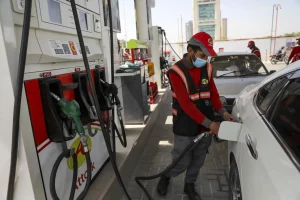
Why Fuel Prices Were Left Unchanged
Fuel pricing has become increasingly complex as governments balance domestic economic pressures with fluctuations in global crude oil markets.
Although international oil prices have shown periods of easing, authorities say pricing decisions are influenced by several factors beyond crude prices alone. Exchange rate movements, import costs, taxes, petroleum levies, freight charges, and fiscal commitments all play a role in determining retail fuel prices.
Officials argue that maintaining stable petrol and diesel prices helps avoid sudden economic shocks while allowing the government to manage public finances more effectively.
The minister maintained that every pricing decision is taken through an established mechanism rather than political considerations.
Fuel Prices Remain a Key Economic Indicator
Petrol and diesel prices affect nearly every sector of the economy.
Transportation companies, manufacturers, farmers, retailers, and millions of commuters closely monitor fuel prices because any increase typically leads to higher costs for goods and services. Conversely, stable fuel prices can help slow inflationary pressures and provide greater certainty for businesses planning future operations.
Economists note that governments often face difficult choices between protecting consumers from global price volatility and maintaining fiscal discipline.
Minister Rejects Allegations of Preferential Treatment
The government’s latest announcement prompted speculation that keeping fuel prices unchanged may have benefited selected industries.
Addressing those concerns, Malik firmly dismissed the allegation, saying no industry or economic sector receives special treatment under the current pricing policy.
According to the minister, the government’s objective is to protect the overall economy while ensuring that any available relief reaches consumers whenever fiscal conditions permit.
He also reiterated that Pakistan continues to follow an internationally aligned pricing mechanism that considers global petroleum benchmarks alongside domestic financial realities.
Economic Pressures Continue to Shape Policy
The decision comes as Pakistan continues to navigate economic challenges, including inflation, external financing commitments, and uncertainty in international energy markets.
Recent geopolitical tensions have added further volatility to global crude oil prices, forcing governments worldwide to carefully balance consumer relief with budgetary constraints.
Financial analysts say Pakistan’s fuel pricing decisions will remain closely linked to developments in international energy markets, exchange rate stability, and fiscal policy over the coming months.
Why This Matters
The government’s decision extends beyond fuel stations.
Stable petrol and diesel prices can help moderate transportation costs, reduce pressure on supply chains, and support businesses already dealing with higher operating expenses. For consumers, unchanged fuel prices may provide temporary financial relief at a time when inflation continues to affect household budgets.
However, economists caution that maintaining stable fuel prices over the long term depends on international oil prices and the government’s fiscal capacity. If global energy markets experience another sharp increase, policymakers could face renewed pressure to review domestic fuel rates.
Public Reaction and Social Media Buzz
The announcement generated immediate discussion across social media platforms.
Many users welcomed the decision, saying that avoiding another increase in petrol and diesel prices would help families already struggling with the rising cost of living.
Others questioned whether the current pricing policy fully reflects movements in international crude oil prices, with some calling for greater transparency in how retail fuel prices are calculated.
Economic commentators have also highlighted the importance of communicating pricing decisions clearly to maintain public confidence.
What Happens Next?
Attention is now turning to the government’s next fortnightly fuel price review.
Future decisions are expected to depend on several key factors, including:
- International crude oil prices.
- Exchange rate fluctuations.
- Domestic inflation trends.
- Fiscal requirements.
- Global geopolitical developments affecting energy supplies.
If international oil prices remain relatively stable, consumers could continue to benefit from unchanged or lower fuel prices. However, renewed volatility in global energy markets may force policymakers to reconsider their current approach.
Conclusion
The government’s decision to keep petrol and diesel prices unchanged has provided short-term certainty for consumers while fueling debate over Pakistan’s broader energy and economic policies.
By rejecting allegations that any sector is receiving preferential treatment, Petroleum Minister Ali Pervaiz Malik has sought to reassure the public that fuel pricing decisions are based on economic considerations rather than political preferences.
As global oil markets continue to fluctuate, future petroleum price announcements are likely to remain among the country’s most closely watched economic developments.