


Iran and Oman Launch Joint Strait of Hormuz Committee Amid Rising Regional Tensions
Tehran and Muscat Deepen Maritime Cooperation as Strategic Waterway Remains Under Global Spotlight
A Powerful Opening Hook
As geopolitical tensions continue to shape the Middle East, Iran and Oman have taken a significant diplomatic step by holding the first meeting of their joint committee on the Strait of Hormuz. The move comes at a time when the strategic waterway remains under intense international scrutiny following months of regional military tensions and concerns over global energy security.
The inaugural meeting signals a renewed commitment by both neighboring countries to strengthen cooperation on one of the world’s most vital maritime corridors through which nearly one-fifth of global oil supplies pass every day. Against a backdrop of heightened security concerns, the initiative could play an important role in maintaining stability and ensuring the uninterrupted flow of international trade.
Iran and Oman Hold First Joint Strait of Hormuz Committee Meeting
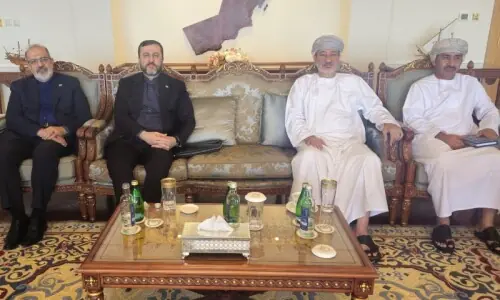
Iranian Deputy Foreign Minister Saeed Khatibzadeh announced that Iran and Oman had successfully convened the first meeting of their Joint Committee on the Strait of Hormuz, marking a new phase in bilateral cooperation on regional maritime affairs.
According to Iranian officials, the committee is intended to strengthen dialogue on maritime security, economic cooperation, navigation safety, environmental protection, and coordination regarding issues affecting the Strait of Hormuz.
The meeting reflects the close diplomatic relationship between Tehran and Muscat, with Oman continuing to play an important role as one of the region’s most active mediators in regional diplomacy.
Why the Strait of Hormuz Matters
The Strait of Hormuz is widely regarded as one of the world’s most strategically important shipping lanes.Located between Iran and Oman, the narrow waterway connects the Persian Gulf with the Gulf of Oman and the Arabian Sea. Every day, millions of barrels of crude oil, liquefied natural gas, and commercial goods pass through the strait, making it indispensable to global energy markets.
Any disruption to shipping in the area has the potential to affect international oil prices, supply chains, and global financial markets. Because of its strategic importance, developments involving the Strait of Hormuz are closely monitored by governments, energy companies, and investors worldwide.
A New Framework for Bilateral Cooperation
Officials described the newly established committee as a platform for regular consultations between Iran and Oman on issues related to maritime governance and regional cooperation.
Among the areas expected to be discussed are:
- Maritime security coordination.
- Safe navigation for commercial shipping.
- Environmental protection in regional waters.
- Emergency response mechanisms.
- Economic and trade cooperation linked to maritime transport.
Although few operational details have been released, analysts believe the committee could help improve communication between the two countries during periods of heightened regional tension.
Oman’s Diplomatic Role
Oman has long maintained balanced relations with countries across the Middle East and has frequently served as a neutral mediator during periods of regional crisis.
Over the years, Muscat has facilitated diplomatic contacts involving Iran, Gulf Arab states, and Western governments. The country’s neutral foreign policy has earned it a reputation as a trusted venue for sensitive negotiations.
The launch of the joint committee further reinforces Oman’s role in promoting dialogue and regional stability.
Regional Security Remains in Focus
The committee’s first meeting comes after months of heightened military activity across the Middle East, including tensions involving Iran, Israel, and the United States.
Although Iranian officials described the committee as a cooperative initiative rather than a military arrangement, maritime security remains one of the region’s highest priorities.
International shipping companies continue to monitor developments closely because any instability in the Strait of Hormuz can have immediate consequences for global trade and energy markets.
Why This Matters
The establishment of the joint committee carries significance beyond bilateral relations.
For Iran, enhanced cooperation with Oman may strengthen regional diplomatic engagement while demonstrating a commitment to dialogue on maritime security.
For Oman, the initiative aligns with its long-standing foreign policy of promoting stability through diplomacy rather than confrontation.
For the international community, any mechanism that contributes to safe navigation through the Strait of Hormuz could help reduce risks to global energy supplies and international commerce.
Public and International Reaction
The announcement has attracted attention among regional analysts and international observers.
Energy market experts view closer maritime cooperation positively, particularly as global oil markets remain sensitive to geopolitical developments in the Gulf.
Diplomatic observers also note that continued dialogue between neighboring states may help reduce misunderstandings during periods of heightened regional tension.
While governments have yet to issue widespread public responses, analysts believe the committee could become an important platform for future regional cooperation.
What Happens Next?
Following the inaugural meeting, officials are expected to continue discussions through regular committee sessions.
Future meetings may focus on:
- Expanding maritime cooperation.
- Coordinating emergency response procedures.
- Strengthening commercial shipping safety.
- Enhancing environmental protection.
- Promoting broader regional dialogue.
Analysts say the committee’s long-term impact will depend on how actively both governments implement the agreements reached during future sessions.
Conclusion
The first meeting of the Iran–Oman Joint Committee on the Strait of Hormuz represents an important diplomatic development at a time when regional stability remains under close international scrutiny.
Although the initiative focuses primarily on maritime cooperation, its broader significance lies in encouraging dialogue between neighboring countries responsible for one of the world’s most strategically important waterways.
As geopolitical tensions continue to evolve, closer coordination between Tehran and Muscat may contribute to greater stability in a region that plays a critical role in global energy security.