
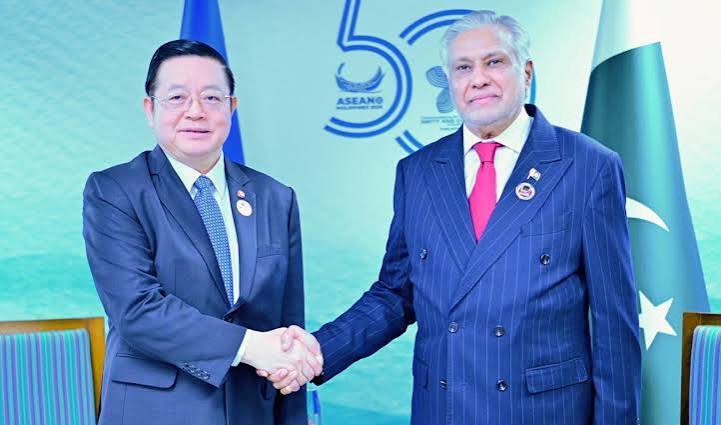

Deputy Prime Minister and Foreign Minister Ishaq Dar held delegation-level talks with ASEAN Secretary General Dr Kao Kim Hourn in Islamabad on Thursday, with Pakistan ASEAN trade and investment at the top of the agenda. Dr Kao is in Pakistan on a working visit from November 18 to 20. Both sides also discussed regional connectivity, agriculture, climate resilience and digital innovation, according to the Foreign Office.
Background: A Partnership Almost Three Decades Old
Pakistan has been a Sectoral Dialogue Partner of the Association of Southeast Asian Nations since 1993. It joined the ASEAN Regional Forum in 2004, which gave it a seat at the bloc’s main security dialogue platform. Over the years, however, the relationship has often been described as having more potential than results, especially when it comes to Pakistan ASEAN trade and investment flows.
The Foreign Office said Dr Kao’s trip is the first high-level visit to Pakistan by an ASEAN Secretariat head. That makes it a notable diplomatic moment. ASEAN was founded on August 8, 1967, when Indonesia, Malaysia, the Philippines, Singapore and Thailand signed the Bangkok Declaration. The bloc has since grown to 11 members, including Brunei, Vietnam, Laos, Myanmar, Cambodia and Timor-Leste.
Pakistan has also been working to engage the bloc at other levels. Earlier this year, Mr Dar attended the 33rd ASEAN Regional Forum ministerial meeting in Manila. Last year, envoys from seven ASEAN member countries met Pakistan’s Minister for Investment to explore new avenues of economic cooperation.
Details: What Was Discussed in Islamabad
During the talks at the Ministry of Foreign Affairs, the two delegations reviewed progress under the Pakistan-ASEAN Sectoral Dialogue Partnership. The Foreign Office shared the outcome in a post on X. It said the conversation centred on expanding Pakistan ASEAN trade, attracting investment and improving regional connectivity, along with cooperation in agriculture and food security.
Climate resilience and disaster preparedness also featured prominently. Pakistan has faced repeated climate-linked shocks in recent years, and several Southeast Asian countries deal with similar risks. Digital innovation was the other area singled out for closer collaboration, an area where both regions are trying to attract technology investment and build skills.
Mr Dar highlighted the scope for stronger links between the business communities of Pakistan and ASEAN member states. He also stressed the importance of scholarships, student exchanges and joint research projects to deepen people-to-people ties. The two sides exchanged views on regional developments as well. Pakistan reaffirmed its commitment to working closely with the ASEAN Secretariat and member states to move the partnership forward.
Quotes: What Officials Said
In its statement ahead of the visit, the Foreign Office said the trip “underscores” the shared commitment of Pakistan and ASEAN to deepening and diversifying cooperation. The word “diversifying” matters here. It suggests that both sides want the relationship to go beyond a narrow set of sectors.
After Thursday’s meeting, the Foreign Office said the ASEAN side appreciated Pakistan’s “constructive role” in promoting regional peace and stability. Officials presented this as recognition of Islamabad’s diplomatic engagement, although the handout did not give further detail on specific commitments or timelines.
Impact: Why This Matters for Pakistan and the Region
For Pakistan, closer ties with a bloc of 11 Southeast Asian economies could open new options for exporters, investors and students. Diversifying trade partners is a long-standing economic priority, and Pakistan ASEAN cooperation offers a route into some of Asia’s fastest-growing markets. The practical outcome will depend on follow-through, including business delegations, trade facilitation steps and clear investment pathways.
For ASEAN, Pakistan is a large consumer market and a gateway to South and Central Asia. Stronger regional connectivity could eventually link Southeast Asian supply chains with South Asian demand. Analysts often point out that such gains take time, and that tariffs, logistics and regulatory alignment need sustained attention before trade figures change.
The talks also fit Pakistan’s wider diplomatic activity. Readers can follow related coverage in our Pakistan section, including the recent report on Pakistan’s defence talks with UK and Türkiye military chiefs. On the economic side, our story on the Saudi Pakistan energy deal shows how Islamabad is seeking external partners for large projects. The new FBR refund system for exporters is also relevant, since smoother export processes would help any push to expand Pakistan ASEAN trade.
Conclusion: What Comes Next
Dr Kao’s visit runs until November 20, and he is expected to call on Pakistan’s leadership during the stay. Further meetings could clarify whether Thursday’s discussions will lead to concrete steps, such as business forums, student exchange programmes or joint climate projects.
For now, the talks signal that both sides want to move from dialogue to delivery. Whether Pakistan ASEAN trade and investment grow meaningfully will depend on how quickly these conversations become agreements and projects. For more updates, visit our National and International news sections.
Frequently Asked Questions (FAQs)
1. Who met in Islamabad to discuss Pakistan ASEAN trade?
Deputy Prime Minister and Foreign Minister Ishaq Dar met ASEAN Secretary General Dr Kao Kim Hourn at the Ministry of Foreign Affairs on Thursday, November 19, 2026. The meeting took the form of delegation-level talks. Both sides reviewed the Pakistan-ASEAN Sectoral Dialogue Partnership and discussed ways to widen economic cooperation. Dr Kao is in Pakistan on a working visit from November 18 to 20.
2. Why is Dr Kao Kim Hourn’s visit to Pakistan significant?
According to the Foreign Office, it is the first high-level visit to Pakistan by the head of the ASEAN Secretariat. That gives the trip symbolic weight, because it shows ASEAN’s willingness to engage Pakistan directly at the institutional level. It also gives Islamabad a chance to present its trade, investment and connectivity priorities to the people who coordinate the bloc’s work. Whether it produces tangible results will become clearer in the coming weeks.
3. What areas of cooperation were discussed between Pakistan and ASEAN?
The Foreign Office said the talks covered trade and investment, regional connectivity, agriculture and food security, climate resilience, disaster preparedness and digital innovation. Mr Dar also spoke about links between business communities and about scholarships, student exchanges and joint research. These topics show an effort to combine economic goals with education and people-to-people contact, so that the relationship rests on more than trade figures alone.
4. How long has Pakistan been associated with ASEAN?
Pakistan became an ASEAN Sectoral Dialogue Partner in 1993 and joined the ASEAN Regional Forum in 2004. The forum is a platform where countries from Asia and beyond discuss security and political issues. Pakistan has also taken part in recent ministerial meetings, including one in Manila earlier this year. Even so, the economic side of the relationship is widely seen as having room to grow.
5. Which countries are members of ASEAN?
ASEAN was founded in 1967 by Indonesia, Malaysia, the Philippines, Singapore and Thailand, through the Bangkok Declaration. The bloc now has 11 members. These include Brunei, Vietnam, Laos, Myanmar, Cambodia and Timor-Leste. Together they form a large and diverse regional market, which explains why Pakistan wants deeper ties for trade, investment and cooperation.
6. How could Pakistan ASEAN trade benefit ordinary people and businesses?
If talks turn into practical steps, Pakistani exporters could gain access to new buyers, and investors could find clearer opportunities in Southeast Asia. Student exchanges and scholarships could also benefit young people. However, these outcomes are not guaranteed. They depend on policy follow-up, trade facilitation and business participation, so the benefits will likely appear gradually rather than immediately.