
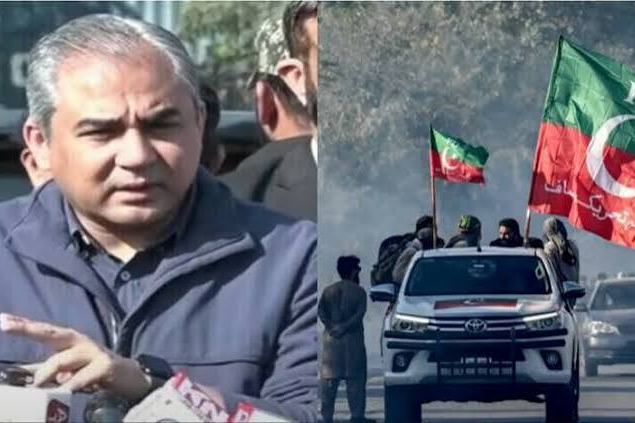

Freedom of Speech in Pakistan should not become a shield for individuals who cross the state’s red lines, Interior Minister Mohsin Naqvi said on Tuesday. Addressing a seminar organised by the Sustainable Development Policy Institute (SDPI) in Islamabad, he stressed that terrorism, hate speech, incitement to violence and child sexual exploitation required a firm response.
Naqvi said citizens and journalists should have the freedom to express their opinions, question the government and report on public issues. However, he argued that this freedom should not be used to justify activities that threaten public safety or encourage violence.
Naqvi Identifies Four Red Lines
During his address, the interior minister identified four areas where he said the government would not compromise:
-
Terrorism
-
Hate speech
-
Incitement to violence
-
Sexual exploitation of children
He said Pakistan had suffered significant losses because of terrorism and warned that online hate and incitement could contribute to violence in society.
Naqvi maintained that protecting citizens from harmful online activities was an important responsibility of the state. He also emphasised the need to distinguish between legitimate criticism and content that promotes violence or threatens others.
Social Media Platforms Face Questions Over Complaints
Naqvi raised concerns about the response of international social media companies to complaints submitted by Pakistani authorities.
He claimed that social media platforms acted on only 47 per cent of complaints submitted by Counter Terrorism Departments (CTDs). According to him, limited cooperation from platforms made it difficult for authorities to address harmful online content.
The minister also highlighted a shortage of trained staff and resources within Pakistan’s cybercrime investigation system.
Giving Punjab as an example, he said the province had a population of approximately 140 million, while the National Cyber Crime Investigation Agency (NCCIA) had only 61 personnel there. He added that the number included drivers, clerks and officers.
Government Plans Stronger Social Media Regulation
The interior minister said the government had established the Social Media Protection Regulatory Authority to improve oversight and accountability in the digital environment.
He called for social media platforms, over-the-top (OTT) services and major content creators to register with the authority.
Naqvi said the proposed registration system was not intended to silence people or restrict genuine opinions. Instead, he described it as a way to establish accountability and ensure that platforms could be approached when harmful content or other serious issues emerged.
He also stressed that social media companies should appoint authorised representatives in Pakistan who could respond to official complaints and make decisions when required.
Pak ID App to Make Cybercrime Complaints Easier
Naqvi also discussed plans to improve the process of reporting cybercrime. He said the government was moving NCCIA complaints onto the Pak ID app to make the process more accessible for citizens.
He added that the agency was developing a centralised complaint system through which people would be able to track the progress of their cases.
The proposed system is intended to provide citizens with a more straightforward way to report online harassment, threats and other cybercrime-related problems.
Naqvi Highlights Online Blackmailing Cases
During the seminar, the minister recalled meeting five girls at a recent town hall event who were reportedly facing distress because someone was threatening to release sensitive material about them online.
He used the incident to highlight the difficulties victims face when trying to get harmful content removed from social media platforms.
Naqvi argued that companies should respond quickly when victims report online blackmailing and harassment. He also called attention to the need for better support systems for people facing digital threats.
Freedom of Expression and Digital Safety Debate Continues
The minister’s remarks came during wider discussions in Pakistan about social media regulation, online safety and freedom of expression.
The SDPI seminar, titled “Social Media Platforms and the Post-Truth Era”, focused on the responsibilities of digital platforms and the challenges associated with misinformation and harmful online content.
The issue involves balancing two important concerns: protecting people from online threats while ensuring that citizens and journalists can express opinions and question public authorities.
The government’s proposed regulatory measures are likely to keep this debate in focus as authorities consider ways to improve platform accountability and cybercrime reporting.
Readers can explore more national developments in the Pakistan news section.
What Happens Next?
Naqvi’s statements indicate that the government intends to strengthen its approach to social media regulation and cybercrime complaints. Platform registration, local representatives and a centralised complaint system are among the measures he discussed.
However, the effectiveness of these plans will depend on their implementation and the response of social media companies. Ensuring online safety while protecting legitimate freedom of expression will remain a key challenge for Pakistan.
Frequently Asked Questions
1. What did Mohsin Naqvi say about freedom of speech?
Mohsin Naqvi said freedom of speech should not protect individuals who cross the state’s red lines, including those involved in terrorism, hate speech, incitement to violence and child sexual exploitation.
2. What four issues did Naqvi identify as red lines?
He identified terrorism, hate speech, incitement to violence and sexual exploitation of children as areas requiring a firm response.
3. What concerns did Naqvi raise about social media platforms?
He claimed that platforms acted on only 47 per cent of complaints submitted by Counter Terrorism Departments and called for greater cooperation from social media companies.