
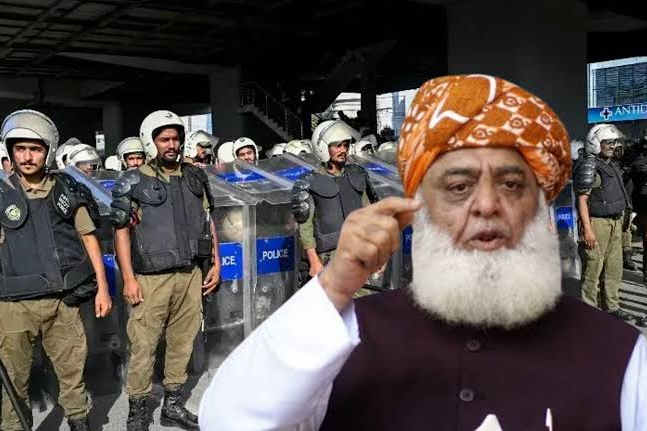

Maulana Fazlur Rehman Sargodha Ban has become a major political development after the district administration prohibited JUI-F chief Maulana Fazlur Rehman and eight other political and religious figures from entering Sargodha for 30 days. The decision comes ahead of a planned JUI-F public conference scheduled for November 26, 2026.
The restrictions also affect 19 local religious scholars, who have been barred from delivering speeches during the same period. Authorities have cited public safety and law-and-order concerns as the reason behind the measures.
The district administration has also restricted 19 local religious scholars from delivering speeches during the same period. Authorities have cited concerns about public safety and law and order, while JUI-F maintains that its planned political conference should proceed under its constitutional rights.
Background: Why Did the Sargodha Administration Impose Restrictions?
The restrictions were introduced ahead of a political conference organised by JUI-F in Sargodha. The party announced the event under the name Protection of the Constitution of Pakistan and Public Rights Conference, with senior leadership expected to participate.
The administration’s decision followed a district police report that raised concerns about public order. Officials reportedly believed that certain speeches and public activities could create tensions or encourage gatherings that might affect the security situation.
Deputy Commissioner Hussain Ahmed Raza Chaudhry issued the orders under Section 7(1) and Section 5(1) of the relevant legal framework. These provisions were cited separately for the entry restrictions and the ban on speeches.
Daily Pakistan English News
The decision has placed the planned conference at the centre of a wider discussion about political activities, administrative authority and the right to peaceful assembly in Pakistan.
Details: Nine Religious and Political Figures Face Entry Restrictions
According to the notification, nine individuals have been prohibited from entering, staying or residing anywhere within Sargodha district for 30 days.
The list includes:
-
Maulana Fazlur Rehman
-
Maulana Naseer Ahmed Abrar
-
Maulana Amjad Khan
-
Maulana Safiullah
-
Professor Ghazanfar Aziz
-
Maulana Muhammad Noor Khan
-
Maulana Muhammad Zakariya Shah
-
Maulana Muhammad Yahya
-
Maulana Muhammad Jameel Abdul Nasir
The restrictions apply throughout the district rather than being limited to the conference venue. This means the named individuals cannot legally enter or stay in Sargodha during the specified restriction period.
Speech Restrictions Affect 19 Local Religious Scholars
Alongside the entry ban, the district administration has imposed a separate restriction on 19 local religious scholars. They have been prohibited from delivering speeches for 30 days.
The restrictions cover four tehsils of the district. According to the reported notification, 11 scholars belong to Sargodha, five to Kot Momin, two to Sillanwali and one to Shahpur.
The administration has justified the measures on public safety grounds. However, the restrictions have also raised questions about how local authorities balance security requirements with the activities of political and religious groups.
Daily Pakistan English News
Section 144 Adds Another Layer of Restrictions
The latest decision follows the imposition of Section 144 across Sargodha district on November 23, 2026. The order was introduced for seven days and prohibited public gatherings, political meetings, rallies, demonstrations, sit-ins and processions.
Section 144 is commonly used by district administrations in Pakistan to restrict certain public activities when officials believe there may be a threat to public order.
In this case, the restrictions affect more than the nine individuals named in the entry ban. They also create challenges for political workers and supporters planning to attend the JUI-F conference.
The combination of Section 144, entry restrictions and speech limitations has made the situation particularly sensitive for the local administration and the opposition party.
JUI-F Maintains Its Conference Should Proceed
Despite the restrictions, JUI-F announced that its conference would take place on November 26 at Fatima Jinnah Road in Sargodha.
The party described the gathering as an opportunity to discuss constitutional supremacy, public rights and political issues facing the country.
JUI-F Punjab spokesperson Hafiz Ghazanfar Aziz said preparations for the conference had been completed and party caravans were travelling towards Sargodha.
According to the party’s announced programme, one caravan was expected to be led by Maulana Fazlur Rehman and Punjab Secretary-General Hafiz Naseer Ahmed Abrar. Another group was scheduled to be led by central Secretary-General Maulana Abdul Ghafoor Haideri, alongside other senior party representatives.
The spokesperson urged authorities not to obstruct the party’s political activities. He also appealed to workers to remain peaceful, avoid confrontation and exercise their constitutional and legal rights responsibly.
Daily Pakistan English News
Political Context: Growing Tensions Between JUI-F and the Government
The Sargodha restrictions come amid increasing political disagreements between JUI-F leadership and the federal government.
Maulana Fazlur Rehman has recently criticised government decisions and raised concerns about political and constitutional matters. The disagreements have contributed to an increasingly tense atmosphere between the party and government representatives.
Earlier, Fazlur Rehman also faced restrictions on his movement in Lahore while he was scheduled to attend a gathering organised by the Lahore High Court Bar Association. Police barriers were subsequently removed, and a legal challenge concerning the incident was brought before the Lahore High Court.
Dawn
These developments have brought renewed attention to the relationship between political parties, government authorities and state institutions.
For additional context, readers can explore Pakistan Publications Inc’s coverage of Bilawal Bhutto’s call for a democratic reset and its report on political stability and the government’s five-year term.
Impact: What Do the Restrictions Mean for Pakistan’s Political Environment?
The Sargodha decision has implications for political participation, public gatherings and the relationship between opposition parties and administrative authorities.
Impact on Political Activities
Restrictions on senior party figures can affect political mobilisation and communication with supporters. When prominent leaders cannot enter a district, organising public meetings and maintaining direct contact with local party workers can become more difficult.
The situation may also influence how other opposition parties approach public gatherings in areas where similar restrictions are introduced.
Impact on Local Residents
Section 144 can affect ordinary residents as well as political supporters. Restrictions on gatherings and road movement may create inconvenience for people travelling for work, business or personal commitments.
Local authorities therefore need to communicate restrictions clearly and ensure that essential public movement is not unnecessarily disrupted.
Impact on Democratic Rights
Pakistan’s Constitution protects freedom of assembly and association, subject to lawful restrictions. At the same time, district administrations have responsibilities concerning public safety and maintaining law and order.
The challenge is to ensure that security measures remain lawful, proportionate and limited to the circumstances that justify them.
Similar questions about political detentions and legal safeguards have also featured in Pakistan’s debate over detained political leaders.
What Happens Next?
The coming days will be important in determining how the situation develops in Sargodha. The administration’s restrictions, the party’s response and any subsequent legal proceedings could influence the next steps.
Authorities may issue further instructions depending on their assessment of the security situation. JUI-F leadership may also consider legal options if it believes the restrictions interfere with its political activities.
The duration and enforcement of the orders will remain important factors. Any decision to extend, modify or withdraw the restrictions could change the situation for political leaders and local supporters.
For now, the key issue is whether the authorities can maintain public order while ensuring that political and constitutional rights are respected.
Readers can follow further developments through the Pakistan news section and National news section of Pakistan Publications Inc.
Conclusion
The decision to bar Maulana Fazlur Rehman and eight other figures from Sargodha for 30 days has added another development to Pakistan’s ongoing political tensions. The separate restrictions on 19 religious scholars and the enforcement of Section 144 have further complicated the situation surrounding JUI-F’s planned conference.
While the administration has cited public safety and law-and-order concerns, JUI-F continues to emphasise its right to organise political activities. The coming days will show how both sides respond and whether the matter leads to further administrative or legal developments.
Maintaining peace, protecting public rights and ensuring that government decisions follow the law will remain central to resolving the situation.
Frequently Asked Questions (FAQs)
1. Why has Maulana Fazlur Rehman been barred from entering Sargodha?
The Sargodha district administration has imposed a 30-day entry restriction on Maulana Fazlur Rehman and eight other religious and political figures. Authorities cited concerns raised in a district police report regarding public safety and law and order. The decision came ahead of a JUI-F public conference scheduled for November 26, 2026.
2. How many people have been affected by the Sargodha administration’s decision?
A total of nine individuals have been prohibited from entering, staying or residing in Sargodha district for 30 days. In a separate order, 19 local religious scholars have also been restricted from delivering speeches during the same period. These measures cover several areas within the district, including Sargodha, Kot Momin, Sillanwali and Shahpur.
3. What is the reason behind the restrictions on religious scholars?
The administration cited concerns about speeches that could potentially affect public order and create tensions. According to the reported notifications, the decision followed recommendations based on a district police report. The restrictions prohibit the 19 named scholars from delivering speeches for 30 days, although the broader legal implications of the orders may remain subject to further review.
4. What was JUI-F planning to organise in Sargodha?
Jamiat Ulema-e-Islam-Fazl had announced a public gathering titled the Protection of the Constitution of Pakistan and Public Rights Conference. The event was scheduled for November 26 at Fatima Jinnah Road in Sargodha. The party planned to bring together senior leaders and supporters to discuss constitutional matters, public rights and political issues.
5. What is Section 144, and how does it affect political gatherings?
Section 144 is a legal provision used by authorities in Pakistan to impose temporary restrictions on certain activities when public safety or law and order are considered at risk. Depending on the notification, it can prohibit public meetings, rallies, demonstrations, processions and other gatherings. In Sargodha, the administration imposed these restrictions for seven days starting November 23, 2026.
6. Has JUI-F agreed to cancel its public conference?
JUI-F announced that it intended to proceed with its conference despite the administrative restrictions. Its Punjab spokesperson, Hafiz Ghazanfar Aziz, said preparations had been completed and party caravans were travelling towards the city. The party also called on its workers to remain peaceful and avoid confrontation while pursuing their political and constitutional rights.
7. Could the restrictions affect political activities in other parts of Pakistan?
The situation could influence discussions about how public gatherings and political activities are regulated in other districts. Similar administrative measures may raise questions about the balance between public safety and constitutional freedoms. However, the impact of the Sargodha decision on other areas will depend on individual security assessments, legal requirements and future government decisions.
8. What developments should people expect after the 30-day restriction?
The situation will depend on whether the district administration maintains, modifies or withdraws its orders. JUI-F may also consider legal proceedings if it challenges the restrictions. Further statements from government officials, party representatives or the courts could clarify the legal position and determine how political activities will be managed in Sargodha.