

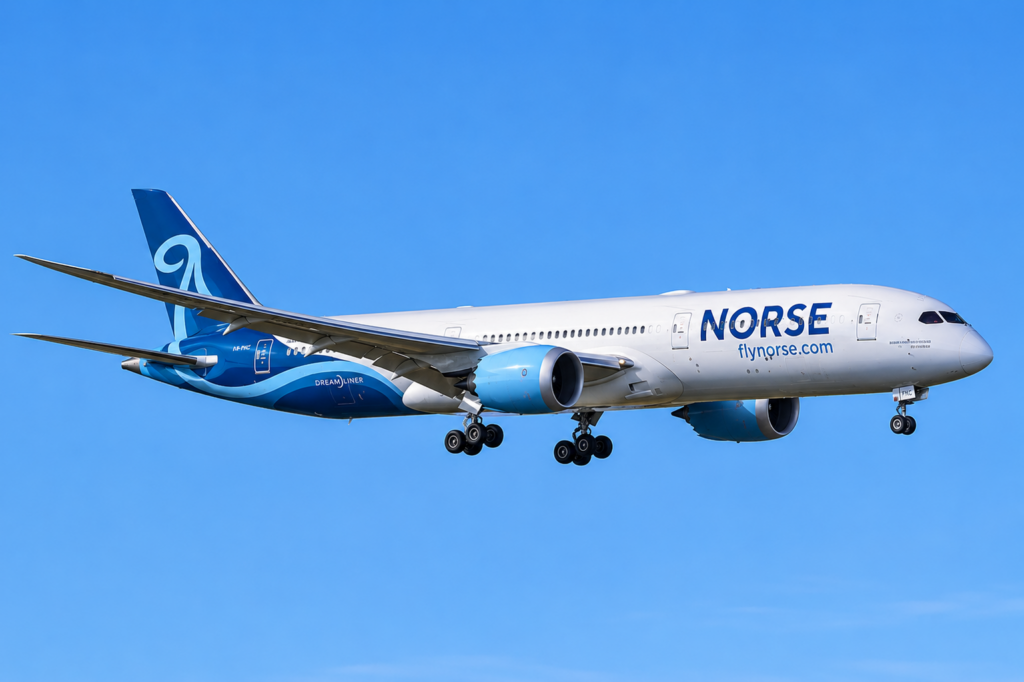

Norse Atlantic Airways is facing mounting financial pressure as aircraft lessors reportedly seek the return of leased jets while the airline works to secure urgent funding and restructure its operations.
The situation highlights the challenges facing the Norwegian long-haul airline as it attempts to stabilize its finances, maintain operations, and navigate a difficult aviation market marked by high operating costs, fuel prices, and changing leasing arrangements.
The developments could affect the airline’s fleet strategy, future routes, and its ability to maintain partnerships with other airlines as it looks for a more sustainable business model.
Norse Atlantic Financial Crisis Deepens as Aircraft Owners Cancel Leases and Funding Talks Continue
The financial troubles of Norse Atlantic Airways have taken a dramatic turn after aircraft lessors issued termination notices covering the airline’s entire fleet of 12 aircraft. The Norwegian low-cost carrier is now facing a serious challenge to its survival as it searches for emergency funding, disputes the lease cancellations and attempts to find a way to keep its business alive.
The airline has already suspended its flights and warned that bankruptcy could become a possibility if it fails to secure the necessary financial support. The latest developments have raised further concerns about its future operations, employees, passengers, aircraft arrangements and partnerships with other airlines.
The crisis also highlights the financial risks facing airlines that depend heavily on leased aircraft, international routes and long-haul operations while operating in a market affected by expensive fuel, uncertain passenger demand and growing operational costs.
Norse Atlantic Airways Faces a Critical Financial Situation
Norse Atlantic Airways is dealing with one of the most serious financial challenges since it began operating in 2022. The company recently described its financial position as critical and began seeking urgent financial assistance to avoid a potentially damaging outcome.
The airline’s business model was built around offering affordable long-haul flights between Europe and destinations in the United States. It aimed to attract travellers looking for lower fares while operating modern Boeing 787 Dreamliner aircraft designed for international routes.
However, the aviation industry can be financially difficult for airlines that operate long distances. Aircraft leasing, fuel, airport charges, crew expenses, maintenance, insurance and other operational costs can quickly consume revenue, particularly when an airline has limited financial reserves.
Norse Atlantic has been attempting to adjust its business strategy to address these challenges. The company has increasingly explored aircraft leasing arrangements with other airlines, allowing it to generate revenue through contracts involving aircraft, crews, maintenance and insurance.
The latest developments suggest that its financial restructuring efforts have not yet provided sufficient stability. With the lessors now seeking to terminate agreements covering all 12 aircraft, the airline faces additional pressure at a time when it is already struggling to secure funding.
Aircraft Lessors Issue Termination Notices for All 12 Aircraft
The companies that own Norse Atlantic’s aircraft have issued notices terminating leasing agreements covering all 12 aircraft in its fleet, according to the airline’s announcement on Friday.
The development represents a major setback because Norse Atlantic does not own the aircraft it depends on for its operations. Leasing agreements allow airlines to operate aircraft without paying the full purchase price upfront, but they also require the airline to meet contractual payments and other obligations.
The airline has said it contests the validity of the termination notices. This means the dispute could involve further discussions, legal considerations and negotiations between the airline and aircraft owners.
Norse Atlantic has not indicated that the dispute has been resolved. The company is also continuing its discussions regarding short-term financing, although it has warned that there is no guarantee that a viable financial solution will be found.
The termination notices create a complicated situation for the carrier. Even if it secures fresh funding, it may still have to resolve the aircraft lease dispute before it can determine whether it has the fleet capacity needed to restart operations.
The issue is therefore not limited to obtaining money. The airline may need to negotiate with its lessors, establish the status of its aircraft agreements, address outstanding financial obligations and determine whether it can continue operating under its existing business structure.
Why Aircraft Leasing Is Important for Airlines
Aircraft leasing is a major part of the global aviation industry. Many airlines lease aircraft instead of purchasing them because buying a commercial passenger jet requires a substantial investment.
A modern wide-body aircraft can cost hundreds of millions of dollars at its published price, although actual transaction prices vary considerably. Leasing allows airlines to access aircraft while spreading their financial commitments over time.
Leasing arrangements also provide flexibility. Airlines can add aircraft when demand grows, reduce capacity when business slows and adjust their operations according to seasonal travel patterns.
However, this arrangement creates a dependency on aircraft owners. Airlines must continue meeting contractual requirements, including lease payments and agreed conditions. If a lessor terminates a contract, the airline could lose access to aircraft that are essential to its scheduled services.
The Norse Atlantic situation demonstrates how a financial dispute can quickly become an operational crisis. Without access to aircraft, an airline cannot maintain its routes, carry passengers or generate the revenue needed to cover its expenses.
Even a company with a recognised brand, international routes and experienced aviation staff can face significant difficulties if its aircraft agreements become unstable.
Norse Atlantic’s Boeing 787 Dreamliner Fleet
Norse Atlantic Airways operates Boeing 787 Dreamliner aircraft, which are designed for long-distance passenger travel.
The Boeing 787 family is widely used by airlines for international services because of its fuel-efficient technology, modern cabin design and ability to operate long-haul routes. It is particularly attractive to airlines looking to connect major cities without relying exclusively on larger aircraft or traditional hub-and-spoke networks.
Norse Atlantic’s fleet arrangements were established through long-term aircraft leases. The company previously entered into agreements involving aircraft from AerCap Holdings and BOC Aviation.
These arrangements provided access to aircraft needed to establish its transatlantic business. But long-term aircraft leasing also creates significant financial obligations that can become difficult to manage if revenue declines or funding becomes limited.
The airline’s fleet situation is now central to its future. A potential rescue plan would need to address not only its cash position but also the availability of aircraft, the status of existing agreements and the company’s ability to rebuild a workable operating schedule.
If the lessor dispute remains unresolved, Norse Atlantic may face further restrictions on its ability to restart flights, regardless of whether it finds investors or lenders willing to provide temporary assistance.
Emergency Funding Talks Continue Amid Uncertainty
Norse Atlantic is continuing discussions to obtain short-term financing as it attempts to address its financial difficulties.
Emergency funding can provide a struggling company with additional time to meet immediate obligations, negotiate with creditors, restructure its business or explore potential strategic options.
However, securing funding during a severe financial crisis can be challenging. Investors and lenders may be reluctant to provide money if they believe the company has limited prospects of returning to profitability.
The airline’s current situation could make potential financiers more cautious because its aircraft agreements are also under dispute. A lender may want to know whether the airline can secure access to its fleet, restore operations, attract customers and generate enough cash to repay the financing.
A temporary funding arrangement could help Norse Atlantic address immediate liquidity problems, but it would not necessarily solve its broader financial challenges.
The company would still need a longer-term plan involving its fleet, operating costs, routes, commercial agreements and future revenue.
Norse Atlantic has acknowledged that it cannot guarantee a successful outcome to its financing discussions. This uncertainty is particularly important for passengers, employees, business partners and investors who may be waiting for information about the airline’s next steps.
Flight Suspension Adds Pressure to the Airline’s Recovery
The airline’s suspension of flights has further complicated its financial situation.
When an airline stops operating, it loses an important source of revenue. Ticket sales, onboard services, cargo operations and other commercial activities may be disrupted, while many financial obligations continue.
Airlines also have responsibilities towards passengers affected by cancellations. Depending on the applicable regulations, ticket conditions and circumstances, travellers may be entitled to refunds, alternative transportation or other assistance.
The longer operations remain suspended, the more difficult it may become for the airline to maintain customer confidence. Passengers may become hesitant to book future tickets if they are unsure whether flights will operate.
For Norse Atlantic, the priority is therefore to find a workable solution that addresses its financial situation and provides clarity about its ability to resume operations.
However, restarting flights would require more than simply announcing a new schedule. The airline would need to ensure that aircraft are available, operational arrangements are in place, crews can be assigned and necessary approvals and commercial agreements remain valid.
Passengers Face Uncertainty Following the Suspension
Norse Atlantic’s financial problems have created uncertainty for travellers who had booked flights with the airline.
Passengers planning international journeys may have to reconsider their travel arrangements, particularly if their flights were scheduled during the suspension period. Some travellers may be trying to find replacement services at short notice, potentially facing higher ticket prices or limited availability.
The situation is particularly difficult for people travelling for important reasons such as family visits, work, education, medical appointments or holiday plans.
Passengers should carefully review any communication received directly from the airline and check the status of their bookings before travelling to an airport.
Travellers should also keep copies of their ticket confirmations, payment receipts, cancellation notices and other relevant documents. These records may be useful when seeking refunds, contacting payment providers or reviewing applicable passenger rights.
People who booked through travel agents or third-party platforms may also need to contact the booking provider to understand the available options.
The airline’s financial position remains uncertain, so passengers should avoid assuming that flights will resume simply because funding discussions are underway.
Pakistan International Airlines Also Affected by Norse Atlantic’s Problems
Norse Atlantic’s crisis has consequences beyond its own operations because it has been working with other airlines through aircraft leasing arrangements.
One of the affected partners is Pakistan International Airlines (PIA), which had entered into an agreement with Norse Atlantic involving Boeing 787-9 Dreamliner aircraft.
The arrangement was intended to support PIA’s long-haul capacity, particularly on routes connecting Pakistan with the United Kingdom. Norse Atlantic provided aircraft and operational services through an ACMI arrangement.
The situation illustrates how airline partnerships can create operational dependencies. A carrier may rely on another airline to provide aircraft and crew for specific routes, particularly when it needs to expand capacity quickly or manage fleet limitations.
When the provider experiences financial or operational difficulties, the receiving airline may need to make rapid adjustments to protect its passengers and maintain scheduled services.
PIA’s decision to use its own aircraft highlights the importance of contingency planning in international aviation. Airlines need backup arrangements that can help them respond to unexpected disruptions involving partners, aircraft availability or external service providers.
Readers can also explore our coverage of direct flights from Maldives to Pakistan for more developments in international air connectivity and regional travel.
What Is an ACMI Agreement and Why Does It Matter?
ACMI stands for Aircraft, Crew, Maintenance and Insurance. It is a type of aviation leasing arrangement in which one airline provides an aircraft along with crew, maintenance and insurance services to another airline.
This arrangement is often referred to as a wet lease.
Under an ACMI contract, the airline receiving the aircraft can expand its capacity without having to independently acquire another plane, recruit a full operating crew for it or manage every aspect of its maintenance arrangements.
The provider generally receives payment for supplying the aircraft and associated services, while the customer airline typically manages matters such as ticket sales, passenger handling, route marketing and other responsibilities defined by the agreement.
ACMI arrangements are commonly used for several reasons:
-
To increase capacity during busy travel seasons.
-
To replace aircraft undergoing maintenance.
-
To launch new routes quickly.
-
To meet unexpected passenger demand.
-
To support airline operations during fleet shortages.
-
To provide temporary aircraft capacity during restructuring.
-
To reduce the need for immediate aircraft purchases.
For Norse Atlantic, ACMI operations represented an important part of its strategy to generate revenue from aircraft and services beyond its own passenger routes.
The company had been shifting its business focus towards leasing aircraft and crews to other carriers as it attempted to reduce its exposure to fluctuations in passenger demand and fuel costs.
However, the model depends on having aircraft available, maintaining operational reliability and securing contracts that generate sufficient revenue. When aircraft lease agreements are terminated, the airline’s ability to provide ACMI services can also be affected.
Rising Fuel Costs Have Increased Pressure on Airlines
Fuel remains one of the most important expenses for commercial airlines. Jet fuel prices can change significantly because of international oil markets, geopolitical developments, supply disruptions and changes in refinery capacity.
Long-haul airlines can be particularly exposed to fuel-price fluctuations because their aircraft operate over extended distances and consume large amounts of fuel.
Higher fuel prices can increase the cost of operating each flight. Airlines may attempt to respond by adjusting fares, reducing routes, changing schedules, improving fuel efficiency or negotiating commercial arrangements that help manage their expenses.
However, airlines do not always have the ability to pass higher costs directly to passengers. Competitive markets can limit how much ticket prices can increase, especially when travellers have access to several airlines operating similar routes.
This can place pressure on airline profit margins. If ticket prices remain relatively low while fuel and other expenses increase, an airline may struggle to cover its costs.
Norse Atlantic has been operating in a challenging aviation environment, and fuel-related pressures have contributed to broader difficulties across the airline industry.
The current situation demonstrates how rapidly changing operating expenses can affect a carrier that is already facing funding constraints.
Geopolitical Disruptions Can Affect Aviation Operations
International aviation is closely connected to global political and economic conditions.
Conflicts, airspace restrictions, changes in international relations and security concerns can affect flight routes, airport operations and fuel supply chains.
When airlines are required to avoid certain airspaces, flights may need to take longer routes. Longer flights can increase fuel consumption, crew expenses and aircraft utilisation time.
Airspace restrictions can also disrupt connecting flights, reduce scheduling flexibility and create additional operational challenges.
The impact is not always limited to airlines directly operating in the affected region. International carriers may experience indirect consequences through fuel markets, airport congestion, changing passenger demand and altered flight schedules.
For airlines already operating with limited financial flexibility, unexpected disruptions can make it harder to manage costs.
The aviation industry must constantly adapt to these conditions, and airlines that have strong financial reserves may be better positioned to absorb temporary disruptions than those facing liquidity problems.
Norse Atlantic’s Low-Cost Long-Haul Business Model
Norse Atlantic entered the aviation market with a strategy focused on affordable long-haul travel.
The airline aimed to make international flights more accessible by offering competitive ticket prices and operating modern wide-body aircraft. Its model was designed to attract price-conscious passengers travelling between Europe and North America.
Low-cost long-haul airlines face a different set of challenges compared with carriers operating short domestic routes.
Long-haul flights require more fuel, larger aircraft, specialised crew arrangements and greater operational planning. The cost of a flight can be substantial even when the aircraft is not completely full.
Airlines must also carefully manage seat capacity. A large aircraft with many empty seats can generate considerable losses because the expenses of operating the flight remain high.
The low-cost model often relies on a combination of affordable base fares, optional services, efficient operations and careful route planning.
While passengers may welcome cheaper tickets, airlines need to ensure that the fares they collect cover their operating expenses. Strong passenger numbers alone do not always guarantee profitability.
Norse Atlantic’s current financial difficulties show how a low-cost long-haul business model can face pressure when expenses, financing requirements and commercial conditions become difficult to manage at the same time.
The Airline’s Share Price Reflects Investor Concerns
Norse Atlantic’s financial crisis has also affected investor confidence.
Its shares have experienced a substantial decline during the year, reflecting concerns about the airline’s financial position, its ability to secure funding and the uncertainty surrounding its future operations.
A sharp decline in a company’s share price does not automatically determine its final outcome. However, it can make it more difficult for the business to raise capital through equity markets, particularly when investors are uncertain about whether the company can recover.
Potential investors may consider several factors before providing support, including:
-
The airline’s outstanding financial obligations.
-
Its aircraft lease agreements.
-
The possibility of restarting flights.
-
Its future revenue prospects.
-
Its operating costs.
-
The availability of strategic partners.
-
Its restructuring options.
-
The risk of bankruptcy.
A potential rescue could involve new investors, financing arrangements, negotiations with lessors, a merger or acquisition, or other restructuring measures.
At this stage, however, there is no confirmed resolution that guarantees Norse Atlantic’s recovery.
Could Norse Atlantic Be Acquired by Another Airline or Investor?
The possibility of a takeover or other strategic transaction could become relevant as Norse Atlantic attempts to address its financial difficulties.
An airline facing serious financial pressure may consider several options, including selling part of its business, seeking a strategic investor, entering into a merger or negotiating a restructuring arrangement.
A potential buyer could be interested in the airline’s commercial operations, brand, routes, aircraft-related expertise, staff or other assets.
However, any transaction would depend on the company’s financial condition, contractual obligations, regulatory requirements and the willingness of potential buyers to assume or renegotiate its commitments.
Aircraft lease disputes may also complicate a takeover process because a buyer would need to understand which aircraft could remain available and under what conditions.
The airline’s suspended operations and uncertain fleet position could reduce its attractiveness to potential investors. On the other hand, a restructuring might offer an opportunity for a new owner to reduce costs, change its strategy or reorganise its business.
The outcome will depend on whether interested parties believe the airline can be returned to a stable and commercially viable position.
Impact on Employees and Aviation Industry Workers
The crisis is also creating uncertainty for Norse Atlantic’s employees.
Airline operations involve a large workforce, including pilots, cabin crew, engineers, maintenance specialists, ground staff, customer service teams, operational planners and corporate employees.
When an airline suspends operations, employees may face uncertainty regarding their schedules, salaries, future employment and contractual arrangements.
A prolonged financial crisis can also affect staff morale. Employees may have to wait for information while the company negotiates funding and evaluates possible restructuring options.
The wider aviation industry could also experience indirect effects. Aircraft lessors, maintenance providers, airports, ground-handling companies, fuel suppliers and travel businesses may have commercial relationships with the airline.
If the company eventually enters bankruptcy or undergoes a major restructuring, these parties may need to review their outstanding contracts and financial exposure.
Aviation is an interconnected industry, and difficulties experienced by one airline can affect several businesses that depend on its operations.
Why Winter Can Be a Difficult Period for European Airlines
The timing of Norse Atlantic’s financial difficulties may also be significant because the winter period can be challenging for airlines focused on leisure travel.
Passenger demand often changes according to season, destination, weather, holidays and travel preferences.
European leisure airlines may experience stronger demand during summer when passengers travel for holidays. Some routes may become less profitable during colder months, depending on the destinations served and the airline’s schedule.
Lower demand can make it difficult for airlines to maintain the same level of revenue throughout the year.
Airlines must therefore plan their fleet, crew and operating schedules carefully. They may reduce the frequency of flights, temporarily suspend routes or move aircraft to destinations where demand is stronger.
For a financially vulnerable airline, weaker seasonal demand can make the challenge of managing cash flow even more difficult.
The ability to secure additional revenue through aircraft leasing and other commercial arrangements may help reduce some of these pressures, but such arrangements also depend on aircraft availability and the airline’s ability to fulfil its contracts.
What Happens if Norse Atlantic Cannot Secure Funding?
If Norse Atlantic fails to secure sufficient funding, the company may face additional financial and legal consequences.
The airline has already warned that bankruptcy could become an option if its financial situation cannot be resolved.
A bankruptcy filing would not necessarily mean that every aspect of the business would immediately disappear. Depending on the legal process, the airline could potentially undergo restructuring, seek a buyer, sell assets or attempt to reorganise its operations.
However, the outcome would depend on the applicable legal framework, the company’s financial position, its creditors and the decisions made by relevant authorities.
Passengers could face additional uncertainty regarding cancelled flights and refunds. Employees might face changes in their employment arrangements, while creditors and commercial partners would need to assess their exposure.
The aircraft lease dispute could also become a significant part of any restructuring process.
A successful rescue would likely require a combination of financial support, negotiations with aircraft owners, a realistic operating plan and a strategy for restoring customer confidence.
Without those elements, the airline could struggle to rebuild its business even if it receives temporary funding.
International Aviation Is Facing a Challenging Business Environment
Norse Atlantic’s financial problems are part of a wider environment in which airlines are managing rising costs, operational challenges and changing passenger demand.
The industry has experienced significant changes in recent years. Airlines have adjusted their networks, introduced new aircraft, reconsidered route strategies and explored different commercial partnerships.
International travel remains important for tourism, business, education and family connections. Demand can be strong on some routes while weaker on others, making it difficult for airlines to predict revenue accurately.
Airlines also need to balance their fleet size with their operating requirements. Too many aircraft can increase costs when demand is weak, while too few aircraft can limit growth when passenger numbers increase.
Aircraft leasing can help manage this balance, but it also introduces contractual commitments that airlines must carefully manage.
Norse Atlantic’s situation demonstrates the importance of financial resilience, diversified revenue sources and stable commercial partnerships in an industry where operating conditions can change quickly.
For more aviation and international travel developments, readers can also explore our coverage of Dubai’s biometric immigration system, which highlights how airports and airlines are adapting to new technologies and changing passenger expectations.
What Could Happen Next?
The next stage of Norse Atlantic’s crisis will depend on several developments that could determine whether the airline survives, restructures or enters bankruptcy proceedings.
1. Securing Emergency Financing
The airline needs to obtain funding to address immediate financial obligations and potentially support its restructuring efforts.
Financing could come from investors, lenders, strategic partners or other sources, but the terms would depend on the company’s circumstances and the level of risk involved.
2. Negotiating With Aircraft Lessors
The company may need to negotiate with aircraft owners regarding the termination notices and the status of its leasing agreements.
Because the airline contests the validity of the notices, this issue could involve further discussions or legal proceedings.
3. Exploring a Strategic Transaction
Norse Atlantic could continue exploring options involving potential investors, buyers or commercial partners.
Any transaction would need to address the company’s financial condition, aircraft availability, contractual obligations and future business strategy.
4. Assessing Whether Operations Can Resume
Even if funding becomes available, the airline would need to determine whether it can resume operations safely, legally and commercially.
This would involve aircraft availability, crew planning, route scheduling, operational approvals, maintenance arrangements and customer service systems.
5. Communicating With Passengers and Employees
The company will also need to provide clear information to passengers and employees as the situation develops.
Transparent communication will be important in managing uncertainty, particularly if flight suspensions continue or the company announces further restructuring measures.
What the Crisis Means for the Future of Low-Cost Long-Haul Travel
Norse Atlantic’s difficulties could raise further questions about the long-term viability of low-cost long-haul aviation.
The concept of offering lower fares on international routes has attracted travellers seeking affordable alternatives to traditional airlines. However, long-haul operations require significant financial resources and careful management.
Airlines operating this model must balance low fares with expensive aircraft, fuel, airport services, maintenance and staffing requirements.
The financial pressures can become particularly challenging when an airline has limited opportunities to raise ticket prices or faces competition from established carriers.
The crisis does not necessarily mean that low-cost long-haul travel cannot succeed. Different airlines may have different financial structures, fleet arrangements, route networks and sources of revenue.
However, it reinforces the importance of building a business model that can withstand periods of lower demand, higher fuel prices and unexpected operational disruptions.
The future of Norse Atlantic may also provide important lessons for airlines considering similar strategies.
Conclusion
Norse Atlantic Airways is facing a serious financial crisis after aircraft lessors issued termination notices covering all 12 aircraft in its fleet. The airline has suspended flights, is seeking urgent short-term funding and has warned that bankruptcy remains a possibility if it cannot find a viable solution.
The company is contesting the termination notices, but the dispute adds another major challenge to its efforts to stabilise operations.
Its financial recovery will depend on whether it can secure funding, resolve its aircraft leasing issues, explore strategic options and develop a sustainable business plan.
The coming days could be crucial for the airline, its passengers, employees, investors and commercial partners. Until the company provides further clarity, its future remains uncertain, and the aviation industry will be watching closely to see whether Norse Atlantic can find a path towards recovery.
Additional Industry Concerns and Long-Term Challenges
Airline Financial Stability Depends on More Than Passenger Numbers
One of the important lessons from Norse Atlantic’s situation is that passenger demand alone does not determine whether an airline can remain financially stable. A carrier may attract travellers, operate popular routes and offer competitive fares, but its overall financial performance still depends on how much revenue it generates compared with the cost of operating its business.
Airlines have to manage several financial obligations simultaneously. Aircraft leasing payments, fuel expenses, airport charges, employee salaries, maintenance, insurance, technology systems and customer support all contribute to the cost of running an airline.
These expenses can become difficult to manage when cash reserves are limited. A company may have revenue coming in from ticket sales but still face difficulties meeting payments when expenses are due.
Cash flow is particularly important in aviation because many costs must be covered before or during the operation of a flight. Airlines must maintain aircraft, pay employees, purchase fuel and arrange airport services while also managing ticket revenue and other income.
For an airline experiencing financial pressure, delayed funding or unexpected expenses can create a serious problem. The situation may become more difficult if the airline is unable to operate its flights and generate normal revenue.
Norse Atlantic’s current crisis demonstrates how several financial challenges can combine. The airline is dealing with a funding shortage, suspended operations and a dispute involving aircraft leasing agreements. These issues are connected and could influence the outcome of any rescue attempt.
Aircraft Availability Can Determine Whether a Rescue Plan Succeeds
Financial assistance may be essential for Norse Atlantic, but access to aircraft will also be a major factor in its recovery.
An airline cannot generate revenue from passenger flights without aircraft that are available, maintained and authorised for operation. Even if investors provide money, the company must still determine how many aircraft it can use and whether it can rebuild a practical route network.
Aircraft availability also affects the airline’s ability to attract customers. Travellers are more likely to book flights with a carrier that offers a reliable schedule, convenient departure times and confidence that the journey will take place.
If Norse Atlantic loses access to a significant portion of its fleet, it could be difficult to restore its previous services. A smaller fleet might require a completely different operating strategy, fewer destinations or a more limited schedule.
The company would also need to consider the cost of rebuilding operations. Restarting an airline after a suspension can involve substantial administrative, operational and commercial work.
The fleet dispute is therefore likely to remain one of the most important issues in the company’s recovery discussions.
The Importance of Customer Confidence in an Airline Recovery
Customer confidence is another factor that may influence Norse Atlantic’s future.
Passengers generally want affordable tickets, but they also expect airlines to provide dependable services. Travellers need to know that their flights will operate as scheduled and that they will receive assistance if unexpected disruptions occur.
When an airline suspends operations because of financial problems, customers may become more cautious about booking future tickets.
Rebuilding confidence could require clear communication, dependable flight operations, transparent booking arrangements and a practical approach to passenger concerns.
The airline may also need to reassure travel agencies, corporate customers and other commercial partners that it has a realistic plan for restoring services.
Customer trust can take time to rebuild, especially when passengers have experienced cancellations or uncertainty. Even after an airline resumes operations, it may need to demonstrate consistency before travellers are comfortable booking again.
For Norse Atlantic, a successful recovery would therefore require more than financial support. It would also require a credible strategy for rebuilding its reputation and restoring passenger confidence.
The Role of Airline Partnerships in a Changing Market
Partnerships have become increasingly important for airlines operating in competitive international markets.
Airlines can cooperate through aircraft leasing, codeshare arrangements, charter operations, interline agreements and other commercial relationships. These arrangements may allow companies to expand their services without independently investing in every part of their operations.
For smaller or financially constrained carriers, partnerships can provide access to markets and customers that would otherwise be difficult to reach.
However, partnerships also create dependencies. If one airline experiences financial difficulties, another carrier may need to adjust its schedules, replace aircraft or find alternative arrangements.
The Norse Atlantic and PIA situation demonstrates how an agreement involving one airline can influence the operations of another. PIA’s ability to use its own Boeing 777 aircraft for UK services is an example of how carriers may need to respond when a partner’s operations are unexpectedly disrupted.
Airlines may increasingly review the financial stability of their commercial partners when entering into long-term agreements. This could lead to greater emphasis on contingency planning, alternative aircraft arrangements and stronger contractual protections.
Could the Aviation Industry See More Airline Restructuring?
The aviation industry has always experienced periods of consolidation, restructuring and financial pressure.
Airlines operate in a market where demand can change quickly, and financial performance is influenced by many factors beyond their control. Fuel prices, currency movements, economic conditions, competition, airport charges and geopolitical developments can affect their profitability.
When financial difficulties become severe, airlines may consider restructuring their operations to reduce costs and improve efficiency.
Possible measures include reducing unprofitable routes, renegotiating aircraft leases, changing fleet strategies, seeking new investors, selling assets or entering into partnerships with other carriers.
Some companies may attempt to reorganise their operations while continuing to fly. Others may suspend services while searching for financial support. In more serious cases, bankruptcy proceedings may become necessary.
Norse Atlantic’s current situation could become another example of how airlines are forced to reconsider their operating models when financial pressure becomes too severe.
The outcome may also influence how investors evaluate future low-cost long-haul ventures, particularly those that depend heavily on leased wide-body aircraft.
Frequently Asked Questions (FAQs)
1. Why is Norse Atlantic Airways facing a financial crisis?
Norse Atlantic Airways is facing a serious financial crisis because it has been struggling to secure sufficient funding to support its operations and meet its financial obligations. The company recently described its financial situation as critical and suspended flights while looking for emergency financing. The termination notices issued by aircraft lessors have further complicated the situation because the airline depends on leased aircraft to operate its business. It is now attempting to resolve its financial problems while contesting the validity of the lease termination notices.
2. Why have aircraft lessors terminated Norse Atlantic’s leasing agreements?
Aircraft lessors have issued termination notices covering all 12 aircraft in Norse Atlantic’s fleet amid the airline’s worsening financial situation. Aircraft leasing contracts involve financial and contractual obligations, and difficulties meeting those obligations can create disputes between airlines and aircraft owners. Norse Atlantic has stated that it contests the validity of the termination notices. The exact outcome of the dispute remains uncertain, and further negotiations or legal developments may determine whether the company can retain access to its aircraft.
3. Has Norse Atlantic Airways suspended all flights?
Yes. Norse Atlantic has suspended its flight operations following the announcement of serious financial difficulties. The airline is currently seeking short-term financing to address its situation and explore possible solutions. Passengers with existing bookings should check their flight status directly with the airline and review the options available to them. The suspension has also affected its commercial partnerships and created uncertainty about when its services might resume.
4. Is Norse Atlantic Airways going bankrupt?
Norse Atlantic has warned that bankruptcy could become a possibility if it fails to secure sufficient funding. However, the airline has not confirmed that it has completed a bankruptcy filing as part of the developments reported on November 27, 2026. It is continuing discussions regarding short-term financing, and the outcome of those discussions could influence its future. A successful funding agreement or restructuring could potentially help the company avoid bankruptcy, although its aircraft lease dispute would still need to be addressed.