

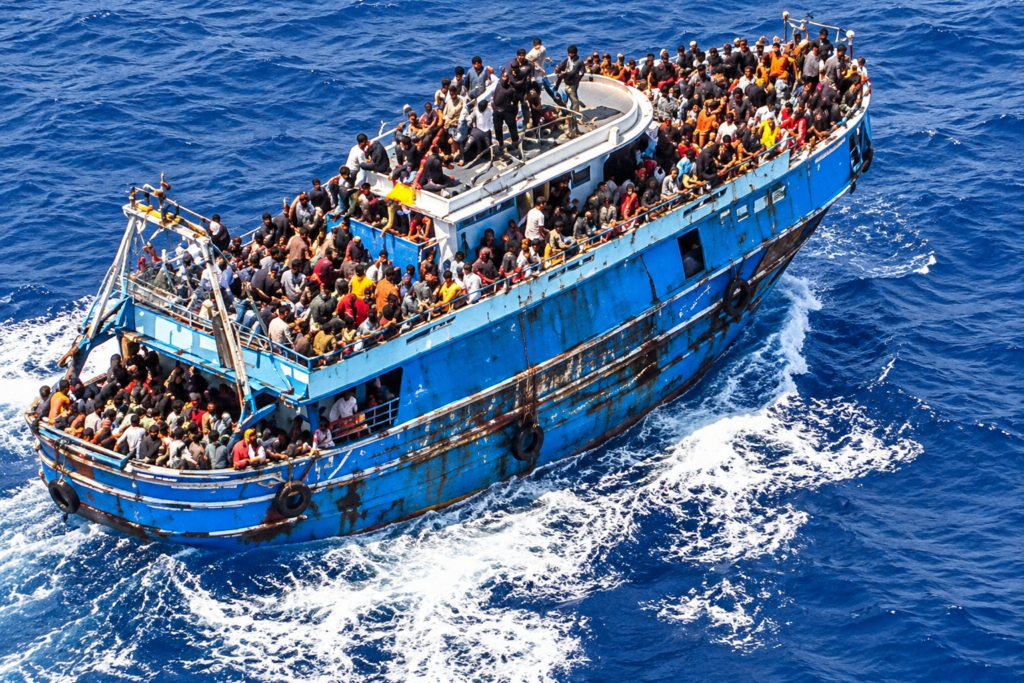

Reports of a Pakistani migrants boat capsizing near Libya have raised serious concerns about the safety of Pakistanis attempting to reach Europe through dangerous sea routes. Families in Pakistan are waiting for confirmation about the fate of their relatives after reports emerged that a migrant vessel may have overturned in the Mediterranean Sea.
Pakistan’s Foreign Office says the incident has not yet been independently verified. Officials are working through diplomatic channels in Libya to confirm whether Pakistani nationals were aboard the reported boat and to determine what happened.
The situation has created uncertainty among families who reportedly received information from travel agents about the possible accident. Authorities say they will share further details after receiving verified information from relevant sources.
What Happened to the Boat Carrying Pakistani Migrants?
Reports of a boat carrying Pakistani migrants capsizing near Libya emerged earlier this week. According to information circulating among affected families, the vessel was reportedly travelling towards Europe when it encountered trouble in the Mediterranean Sea.
The reported incident is believed to have occurred on November 21. However, the exact circumstances of the accident, the number of people aboard the vessel and the identities of those potentially affected remain unclear.
Families reportedly received information from agents who had arranged the journeys. Some people were said to have feared that their relatives had died or gone missing following the reported capsizing.
The lack of independently verified information has made it difficult for families to establish what actually happened. Authorities are now working to confirm the reports and determine whether Pakistani citizens were among the passengers.
Pakistan Foreign Office Responds to Reports
Pakistan’s Foreign Office has acknowledged the reports concerning a possible migrant boat accident near Libya. However, officials have stressed that the information has not yet been independently verified.
The Pakistani embassy in Tripoli is actively pursuing the matter and contacting relevant authorities to gather reliable information. The diplomatic mission is working to establish the facts surrounding the reported incident and identify whether Pakistani nationals were involved.
Officials have also contacted Libyan government authorities, the International Organization for Migration (IOM) and other relevant stakeholders as part of the verification process.
The Foreign Office has said that further information will be shared when verified details become available. The government is therefore avoiding definitive statements about casualties or the identities of passengers until the investigation provides clearer answers.
This cautious approach is important because inaccurate information could increase distress among families already facing uncertainty about the whereabouts of their loved ones.
Background: Why Pakistani Migrants Attempt Sea Journeys to Europe
Migration from Pakistan to Europe has become a major concern for families, authorities and international organisations working to prevent human trafficking. Many people consider overseas employment a way to improve their financial circumstances, support their families and escape limited opportunities at home.
For some migrants, the journey begins with promises of jobs, better wages and a secure future. Agents may advertise opportunities abroad and claim that they can arrange travel, accommodation or employment. However, not every arrangement is legitimate, and some people are encouraged to travel through irregular channels that expose them to serious dangers.
The Mediterranean route is particularly risky for migrants attempting to enter Europe through North Africa. People may travel through several countries before reaching coastal areas where smugglers arrange boat journeys across the sea.
In many cases, migrants are placed aboard vessels that are overcrowded, poorly maintained or unsuitable for long-distance travel. Passengers may have limited access to food, drinking water, communication facilities and emergency equipment.
The risks become even greater when weather conditions change or boats experience mechanical problems. Without sufficient safety equipment or trained crew, a relatively small problem can quickly turn into a life-threatening emergency.
The reported Pakistani migrants boat capsizing near Libya has once again drawn attention to these dangers and the uncertainty faced by families whose relatives leave the country through irregular migration networks.
Libya and the Mediterranean Migration Route
Libya has remained an important transit point for migrants hoping to reach European destinations across the Mediterranean Sea. Its geographical position makes it a departure point for journeys towards parts of southern Europe.
Migrants from several countries arrive in Libya through different routes. Some hope to find work before continuing their journeys, while others are reportedly taken directly towards coastal locations by people involved in irregular migration networks.
The journey across the Mediterranean is widely considered dangerous because of unpredictable weather, limited rescue coverage in some areas and the condition of boats used by smugglers.
Migrants may have little control over the vessels, their departure times or the route taken. Some are reportedly unaware of the actual risks until they reach the departure point.
The possibility of being abandoned at sea, detained, exploited or caught in an accident makes the journey extremely dangerous. People who survive a capsizing may still face difficulties accessing emergency assistance if they are far from shore.
Families in Pakistan Face Uncertainty Over Missing Relatives
The reports have caused distress among families who believe their relatives may have been travelling aboard the vessel involved in the alleged accident.
For families in Pakistan, the absence of verified information can be particularly painful. They may receive messages from intermediaries or agents but have no direct access to the people travelling overseas.
In situations involving migrant boats, communication may stop suddenly because passengers lose access to mobile phones, enter areas without network coverage or become separated during emergencies.
Families may struggle to determine whether their relatives have reached another country, are being held somewhere, require medical assistance or have been affected by a maritime accident.
The uncertainty can also create financial pressure. Many families invest their savings, borrow money or sell property to finance overseas journeys. When a migrant disappears, relatives may face both emotional distress and financial hardship.
The current reports concerning Pakistani migrants near Libya demonstrate why official verification is so important. Families need accurate information rather than rumours, unconfirmed casualty lists or claims from people who may have been involved in arranging the journeys.
Funeral Prayers and Reports of Possible Deaths
Reports about the incident have also mentioned funeral prayers in absentia for some individuals believed to have been affected.
Such prayers reflect the anxiety and grief experienced by families who fear that their relatives may not have survived. However, funeral arrangements or community reports alone do not establish the identities of victims or confirm the circumstances of their deaths.
Until authorities obtain reliable information, the number of missing people, confirmed fatalities and survivors remains uncertain.
Officials are expected to rely on information from relevant Libyan authorities, international organisations and other sources to establish the facts. Any confirmed information could help families understand what happened and determine the next steps.
Pakistan’s Embassy in Tripoli Is Working to Establish the Facts
Pakistan’s diplomatic mission in Libya is reportedly pursuing information from relevant authorities regarding the suspected maritime accident.
The embassy’s role is important because it can communicate directly with local government institutions, identify possible Pakistani nationals involved and coordinate requests for information.
Diplomatic officials may also assist families in obtaining verified details about missing relatives, depending on the information available and the circumstances of the case.
The verification process can take time, particularly when an accident occurs at sea and passenger records are incomplete or unavailable. Identifying individuals may require confirmation from survivors, local authorities, hospitals, immigration records or other official sources.
The Pakistani embassy has reportedly contacted Libyan government authorities, the International Organization for Migration and other relevant stakeholders.
These contacts are expected to help determine whether the reported capsizing took place as described, whether Pakistani citizens were aboard and whether any rescue or recovery operations were conducted.
Why Independent Verification Matters
In maritime accidents involving irregular migration, information often reaches families through unofficial channels. Messages from agents, social media posts and community contacts can circulate before authorities have established the facts.
While such information may provide initial clues, it can also be incomplete, inaccurate or contradictory. Sharing unconfirmed names or casualty figures may cause additional distress to families and create confusion.
Independent verification helps distinguish confirmed facts from claims that are still being investigated. It also supports more accurate reporting and allows officials to communicate responsibly.
The Foreign Office’s position reflects the importance of confirming details before announcing the identities of victims or providing definitive casualty figures.
The Role of the International Organization for Migration
The International Organization for Migration is a major international body working on migration-related issues, including migrant protection, emergency assistance, humanitarian support and safer migration practices.
In cases involving migrant boat accidents, organisations such as IOM may help support affected migrants, coordinate humanitarian assistance and work with government agencies involved in identifying people or responding to emergencies.
The organisation also documents migration-related risks and highlights the dangers associated with irregular routes, human trafficking and exploitation.
Cooperation between diplomatic missions, local authorities and international organisations can be particularly important when migrants are travelling without proper documentation or when passenger information is difficult to obtain.
The involvement of relevant stakeholders in the Libya case may help Pakistani authorities establish a clearer picture of the reported accident.
However, contact with an international organisation does not itself confirm that the incident occurred or that specific Pakistani nationals were involved. Verification remains the central issue.
Why Irregular Migration Has Become a Serious Concern in Pakistan
Irregular migration continues to attract attention in Pakistan because of the economic pressures faced by many households and the desire to secure employment abroad. Rising living costs, limited job opportunities, financial responsibilities and the hope of earning a better income can encourage people to consider risky travel arrangements.
For some individuals, migration is viewed as an investment in the future of their families. They hope to send remittances, repay debts, improve housing conditions and provide better educational opportunities for their children.
However, these expectations can make people vulnerable to individuals who promise guaranteed entry into European countries or lucrative employment without explaining the legal requirements and risks involved.
Some migrants may not understand the difference between legal work visas, tourist visas, asylum procedures and irregular border crossings. Others may knowingly accept dangerous routes because they believe the potential rewards outweigh the risks.
This situation highlights the importance of awareness campaigns, stronger enforcement against illegal recruitment practices and accessible information about legitimate overseas employment.
Pakistan also faces wider challenges involving migration management, documentation, border controls and the protection of citizens abroad. These issues require cooperation between government institutions, overseas missions, recruitment authorities and international organisations.
Related developments involving international migration and immigration policy are covered in our report on Pakistan’s enforcement measures against undocumented foreign nationals, which highlights the wider challenges associated with immigration regulation and legal documentation.
Economic Pressures and the Search for Overseas Employment
For many Pakistani households, overseas employment can provide an important source of income. Workers living abroad often send money to their families, helping them meet daily expenses and contributing to the country’s foreign exchange inflows.
However, the cost of migration can be substantial. Some prospective migrants pay agents, arrange transport, obtain documents and borrow money to finance their journeys.
When an overseas journey is arranged through unreliable intermediaries, migrants may lose their savings before reaching their intended destination. Some may discover that the promised employment does not exist or that the travel arrangements differ significantly from what they were told.
In the most dangerous situations, migrants may become victims of trafficking, exploitation, extortion or forced labour. Those travelling without legal protection can find it difficult to seek help or report abuse.
The risks are particularly severe when people depend entirely on an agent who controls their travel documents, communication or access to transportation.
The reported boat accident near Libya serves as a reminder that the consequences of unsafe migration can extend far beyond financial losses. A dangerous journey can put the lives of migrants and the emotional well-being of their families at risk.
Human Trafficking Networks and Dangerous Travel Arrangements
Human trafficking and migrant smuggling are related but distinct crimes. Smuggling generally involves facilitating irregular entry into a country, often in exchange for payment, while human trafficking involves exploitation and can occur across borders or within a single country.
People seeking to travel abroad may encounter networks that arrange transportation through several countries. These networks can operate through informal contacts, recruitment intermediaries and criminal groups that exploit migrants’ limited knowledge of immigration procedures.
Some migrants are reportedly moved between locations without being told where they are going. Others may be pressured to pay additional money during the journey or threatened if they attempt to leave an arrangement.
Boat journeys organised by criminal networks can be especially dangerous because passengers may have little information about the vessel, the captain, the route or emergency procedures.
Overcrowding, insufficient fuel, a lack of navigation equipment and inadequate safety gear can increase the likelihood of accidents. Migrants may also be unable to contact rescue services if their phones are confiscated or damaged.
How Illegal Migration Agents Can Exploit Families
Families hoping to send relatives abroad may be targeted by agents who use emotional promises and financial pressure to secure payments.
Common warning signs may include:
-
Promises of guaranteed entry into Europe without proper visas.
-
Requests for large advance payments without written documentation.
-
Refusal to provide clear information about travel routes.
-
Claims that passports or identity documents are unnecessary.
-
Pressure to make immediate decisions without checking the details.
-
Promises of employment without a verified employer or contract.
-
Instructions to hide travel plans from authorities.
These warning signs do not automatically prove that an individual agent is involved in a crime, but they should prompt careful verification before any money is paid or travel arrangements are made.
People planning to work abroad should check recruitment arrangements through authorised channels, verify their visa category and make sure they understand the terms of employment.
Mediterranean Sea Continues to Pose Risks to Migrants
The Mediterranean Sea remains a major migration corridor connecting North Africa with Europe. Although the route offers a potential pathway to European destinations, it is also associated with serious humanitarian concerns.
Migrants may attempt crossings in boats that are not designed to carry large numbers of passengers over long distances. In some cases, vessels leave coastal areas with limited equipment and inadequate emergency preparations.
The sea conditions can change rapidly, creating challenges for people who have little experience travelling on water. Waves, strong winds, poor visibility and mechanical failures can make even a short crossing dangerous.
When a vessel capsizes, passengers may be thrown into the water without life jackets. Rescue efforts can become difficult if the accident occurs far from shore or if authorities receive delayed information.
The deaths and disappearances associated with dangerous migration routes have repeatedly raised questions about the effectiveness of prevention efforts, rescue coordination and the accountability of smuggling networks.
The reported incident involving Pakistani migrants near Libya is part of a broader concern about the safety of people attempting to cross international waters through irregular channels.
Rescue Operations and Challenges at Sea
Maritime rescue operations require coordination between coastal authorities, rescue agencies, naval services and humanitarian organisations. The response often depends on the location of the vessel, available equipment, weather conditions and the time at which the emergency is reported.
In some situations, nearby vessels may assist people in distress before specialised rescue teams arrive. In other cases, the distance from shore and the condition of the boat may complicate rescue efforts.
Locating survivors can be challenging when there is no reliable passenger list or when the boat’s last known position is uncertain. Search operations may also be affected by limited information about departure times and routes.
These difficulties underline the importance of safe transportation, proper registration, reliable communication and access to emergency equipment.
For migrants, the absence of basic safety arrangements can turn a journey into a disaster. For families waiting at home, the lack of information can prolong uncertainty for days or even weeks.
Pakistan’s Responsibility to Protect Citizens Abroad
Pakistan’s diplomatic missions regularly assist citizens facing difficulties in foreign countries. Depending on the circumstances, consular support may include communication with local authorities, assistance with documentation, guidance for families and efforts to establish the whereabouts of missing nationals.
In a suspected maritime accident, the process may involve confirming passenger identities, checking available records, communicating with hospitals or relevant agencies and coordinating with local authorities.
The Pakistani government may also need to communicate with families and provide guidance on what information is required to establish the identity of missing individuals.
However, consular assistance depends on the available information and the legal authority of the mission in the host country. Pakistani officials cannot independently conduct every search or recovery operation in foreign territorial waters.
Cooperation with Libyan authorities is therefore essential in the current situation. The embassy’s efforts to obtain information could help clarify whether Pakistani nationals were aboard the vessel and whether survivors or casualties have been identified.
Communication With Families Is Equally Important
Families of missing migrants often need timely updates, even when officials cannot immediately confirm the details of an incident.
Clear communication can help prevent misinformation from spreading and reduce the risk of families relying on unverified claims from agents or social media accounts.
Authorities may need to provide guidance on where families can submit information, how they can report missing relatives and what documents may help with identification.
A transparent process can also help families understand why verification takes time and what steps are being taken to establish the facts.
In cases involving several missing individuals from the same community, coordinated communication may be particularly useful because families could be receiving similar but conflicting information.
Regional and International Impact of the Reported Incident
The reported boat capsizing near Libya has implications beyond the families directly affected. It also raises questions about irregular migration, regional security, humanitarian responsibilities and international cooperation.
Pakistan, Libya and European countries are connected through migration routes that involve multiple transit points. Efforts to address dangerous journeys require cooperation between countries of origin, transit countries and destination countries.
Pakistan has an interest in preventing citizens from falling victim to illegal migration networks. Libya faces challenges related to migrant arrivals, detention, trafficking and maritime departures. European countries continue to debate migration management, asylum procedures, border enforcement and humanitarian rescue.
International organisations have repeatedly highlighted the need to protect migrants while addressing the criminal networks that exploit them.
The situation also demonstrates that migration cannot be addressed solely through border restrictions. Economic opportunities, legal employment pathways, public awareness and stronger enforcement against fraudulent recruitment are important parts of a broader response.
Pressure on International Migration and Humanitarian Agencies
Whenever reports of a migrant boat accident emerge, humanitarian organisations may face renewed pressure to support search operations, identify victims and provide assistance to survivors.
The scale of such responsibilities depends on the confirmed circumstances of each incident. Not every reported boat accident involves the same rescue requirements, passenger numbers or nationalities.
For this reason, accurate information is necessary before agencies can determine what assistance is required and which families or communities need support.
The reported Libya incident could further draw attention to the safety of migrants travelling from South Asia and the risks associated with routes operated by criminal networks.
Why Legal Migration Channels Matter
Legal migration can provide people with opportunities to work, study and build better lives abroad. It also offers greater access to official documentation, employment protections and support mechanisms that may not be available to individuals travelling through irregular channels.
Before leaving Pakistan, prospective migrants should verify the destination country’s immigration requirements and ensure that they possess the appropriate visa and travel documents.
People seeking overseas employment should confirm that their employer is genuine and that their contracts clearly explain wages, duties, working hours, accommodation and other conditions.
They should also keep copies of their passports, visa documents, employment contracts and emergency contacts. Sharing travel details with trusted family members can help relatives respond if communication is lost.
Anyone considering a journey through an unfamiliar route should be cautious about claims that a dangerous sea crossing is routine or guaranteed.
Legal migration does not eliminate every risk, but it can significantly reduce exposure to fraudulent agents, criminal networks and unsafe transportation arrangements.
What Pakistani Authorities May Do Next
The next stage of the reported Libya boat accident will depend on the information received by Pakistan’s embassy and the relevant Libyan authorities.
Officials may continue efforts to establish the vessel’s identity, its departure point, the number of passengers and whether Pakistani nationals were among those travelling.
If names of missing citizens are confirmed, authorities may need to coordinate with families and relevant institutions to provide additional information or assistance.
The government could also issue further statements as the verification process progresses. Any confirmed information about survivors, casualties or the circumstances of the accident would help clarify the situation.
At this stage, it would be premature to assume a final casualty figure or declare the fate of individuals whose whereabouts have not been established.
The immediate priority remains obtaining reliable information and supporting families who are waiting for answers.
How Families Can Verify Information About Missing Migrants
Families who believe their relatives may have been aboard the reported vessel should avoid relying entirely on information provided by unofficial agents.
They should try to collect the migrant’s full name, passport details, last known location, departure date, contact information and the name of the person who arranged the journey.
These details may help authorities investigate the individual’s whereabouts. Families should preserve messages, payment records, travel documents and any communication received from agents.
They should also avoid sharing unverified casualty lists publicly, particularly when the identities of missing passengers have not been confirmed.
If an agent claims to know the fate of a migrant, families should ask for verifiable information rather than relying on verbal assurances or demands for additional payments.
The Pakistani embassy and relevant government departments can provide guidance about official reporting and verification procedures.
Pakistan’s Migration and Overseas Travel Landscape
Pakistan has a large overseas population, with citizens living and working in the Middle East, Europe, North America and other regions.
Overseas employment contributes to household incomes and the country’s economy through remittances. At the same time, migration involves different legal, financial and safety considerations depending on the destination and route.
Developments in international travel regulations, border security and immigration technology can also affect Pakistanis travelling abroad.
For example, changes in airport immigration procedures and biometric systems may influence how international travellers complete border checks. Our coverage of the Dubai biometric immigration system and faster airport processing explains how technology is changing international passenger movement.
Meanwhile, legal international connectivity can make overseas travel more accessible. Pakistan’s expanding travel links and diplomatic engagement are also relevant to people planning journeys abroad. Read our report on proposed direct flights between the Maldives and Pakistan for another development in regional connectivity.
These developments highlight the difference between organised, documented travel and dangerous journeys arranged through irregular migration networks.
Conclusion: Families Await Verified Information From Libya
The reported Pakistani migrants boat capsizing near Libya remains a developing situation, with the Foreign Office saying that the incident has not been independently verified.
Pakistan’s embassy in Tripoli is contacting Libyan authorities, the International Organization for Migration and other relevant stakeholders to establish the facts.
Reports that people from Bajaur may have died or gone missing have caused concern, but the identities of passengers and the number of casualties have yet to be officially confirmed.
Until reliable information becomes available, families should be cautious about unverified claims and follow official updates.
The incident also highlights the dangers of irregular migration across the Mediterranean, where overcrowded boats, unsafe travel arrangements and criminal smuggling networks can expose migrants to life-threatening risks.
Authorities are expected to continue their efforts to determine what happened. For families waiting in Pakistan, the most urgent need is accurate information, confirmation of their relatives’ whereabouts and assistance from the relevant authorities.
Frequently Asked Questions (FAQs)
1. What happened to the Pakistani migrants’ boat near Libya?
Reports suggest that a boat carrying migrants who were attempting to travel towards Europe may have capsized near Libya in the Mediterranean Sea. The incident was reportedly linked to November 21, 2026. However, Pakistani officials have said the reports have not been independently verified, and the exact circumstances of the alleged accident remain unclear.
2. How many Pakistani migrants were feared dead or missing?
Initial reports suggested that at least 25 people from Bajaur district in Khyber Pakhtunkhwa were feared dead or missing following the reported boat capsizing. However, this figure has not been independently confirmed by Pakistan’s Foreign Office. The number of passengers, casualties and missing individuals remains subject to verification.
3. Has Pakistan’s Foreign Office officially confirmed the boat accident?
No. The Foreign Office has stated that the reported capsizing has not been independently verified. Pakistan’s embassy in Tripoli is pursuing information from Libyan authorities, the International Organization for Migration and other relevant stakeholders to establish what happened and whether Pakistani nationals were aboard.
4. What is Pakistan’s embassy in Libya doing regarding the incident?
Pakistan’s embassy in Tripoli is contacting relevant Libyan government authorities and international organisations to obtain information about the reported boat accident. Its efforts include verifying whether Pakistani citizens were aboard the vessel and seeking reliable details about the incident. Further information is expected to be shared after the facts are established.
5. Where was the migrant boat reportedly travelling?
According to initial reports, the boat was reportedly carrying migrants hoping to reach Europe through the Mediterranean Sea. Libya is a major transit point for people attempting to cross into Europe through irregular migration routes. However, the vessel’s exact destination, route and departure details have not been officially confirmed.
6. Why are Pakistani migrants attempting to reach Europe through Libya?
Some migrants hope to find better employment opportunities, higher wages and improved living conditions in Europe. Economic pressures, unemployment, financial difficulties and the desire to support families can influence migration decisions. However, journeys arranged through illegal networks can expose people to exploitation, trafficking, detention, dangerous sea crossings and potentially fatal accidents.
7. What dangers do migrants face while crossing the Mediterranean Sea?
Migrants attempting Mediterranean crossings may face overcrowded boats, poor weather, mechanical failures, insufficient fuel, a lack of life jackets and limited access to emergency communication. Some vessels are operated by smugglers who prioritise payment over passenger safety. These conditions can result in capsizing, drowning, disappearances and other serious emergencies.
8. What should families do if their relatives are missing in Libya?
Families should collect all available information about their relatives, including full names, passport details, last known locations, travel dates, contact numbers and information about the agents who arranged the journey. They should report the situation through official channels and contact relevant Pakistani authorities or diplomatic representatives for guidance. They should also preserve messages and documents and avoid paying additional money to anyone making unverified claims about missing relatives.
9. What is the difference between migrant smuggling and human trafficking?
Migrant smuggling generally involves facilitating a person’s irregular entry into another country, often in exchange for money. Human trafficking involves exploitation through methods such as coercion, deception or abuse of vulnerability. Although the two crimes can overlap, they are legally and practically different. Migrants using irregular routes may also become vulnerable to trafficking, forced labour, extortion and abuse during their journeys.
10. Why is Libya a major transit point for migrants travelling to Europe?
Libya’s geographical position along the Mediterranean Sea makes it an important transit country for migrants hoping to reach Europe. People from different regions travel there through various routes before attempting sea crossings. However, migrants may encounter detention, exploitation, unsafe accommodation, criminal networks and dangerous maritime journeys. The route is particularly risky for those relying on smugglers or undocumented travel arrangements.
11. Has the fate of the missing Pakistani migrants been confirmed?
The fate of the reportedly missing Pakistani migrants has not been officially confirmed in the information currently available. Authorities are still pursuing verification of the incident and the possible presence of Pakistani citizens aboard the vessel. Families should rely on verified announcements from relevant authorities rather than unconfirmed social media posts or claims from travel agents.
12. How can Pakistan prevent similar migrant boat tragedies in the future?
Preventing similar incidents requires a combination of stronger action against human smuggling networks, public awareness campaigns, reliable overseas employment opportunities, improved recruitment oversight and cooperation with international agencies. Providing information about legal migration channels and warning people about dangerous sea crossings may also help reduce the number of individuals exposed to life-threatening journeys.
13. Will Pakistan issue another statement about the Libya boat incident?
The Foreign Office has indicated that further information will be shared when verified details become available. As the embassy continues contacting Libyan authorities and other stakeholders, additional information may clarify the circumstances of the reported accident, the identities of passengers and whether any Pakistani citizens were affected.