

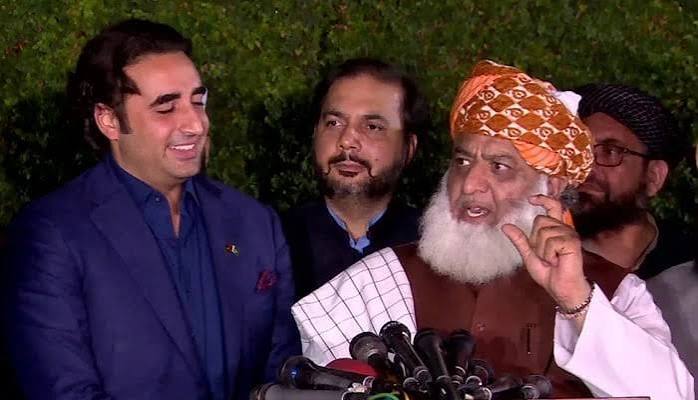

PPP Chairman Bilawal Bhutto-Zardari spoke to JUI-F chief Maulana Fazlur Rehman by phone on Sunday and condemned the government’s actions against him. The Bilawal Fazl call is a notable moment because the PPP is a partner of the ruling alliance. Even so, its chairman publicly criticised the way the federal government is treating a leading opposition figure.
Background: Rising Tension Between JUI-F and the Government
Relations between the JUI-F chief and the PML-N-led federal government have stayed tense for the past month. Much of the friction began with the Centre’s decision to impose governor’s rule and an emergency in Khyber Pakhtunkhwa. Maulana Fazlur Rehman was among the opposition voices who criticised that move.
Bilawal had already been trying to cool things down. On Tuesday he called for a “political reset” and urged the prime minister to rebuild trust with allies and the opposition instead of picking new fights. Last week he also argued that constant confrontation with rivals leaves the government with less energy to ease the public’s economic hardship.
The relationship between the PPP and JUI-F has not always been smooth, however. About a month ago Bilawal told Maulana Fazl to speak out clearly against terrorism, while accepting that the opposition leader had every right to question government policies. Sunday’s call shows how quickly the focus has shifted to the treatment of JUI-F itself.
Details of the Phone Conversation
The two leaders discussed the wider political situation, according to a statement from the PPP. During the talk, Bilawal condemned what he called the government’s actions and political vengeance aimed at the JUI-F. He also warned against steps that weaken democratic institutions.
The call came on the same day JUI-F held street protests in several cities of Khyber Pakhtunkhwa. The party was protesting against what it described as propaganda directed at its leadership. The timing gave the conversation extra political weight.
Another report said Bilawal criticised alleged government action involving Maulana Fazlur Rehman, his son and his brothers. Law-enforcement agencies are reportedly examining their property and assets over claims of acquiring wealth through unfair means. These claims have not been proven, and no court has ruled on them.
Cases Raised by the JUI-F
Separate reports show the party has its own list of complaints. A terrorism case was registered against Mufti Abrar Ahmed, secretary to the JUI-F chief, and the party says the charges are false. The JUI-F claims its workers were wrongly accused of attacking police personnel.
The National Accountability Bureau has also sent another call-up notice to Asad Mahmood, son of the JUI-F chief, in an inquiry into alleged illegal appointments at the Pakistan Post Office Department. The JUI-F says answering political differences with criminal cases goes against democratic values. The government has not accepted that description, and the legal process is still in progress.
What Bilawal Said: Key Quotes
The PPP statement quoted Bilawal as saying that “the government should tolerate the opposition’s criticism.” He made the point in plain language so that it would not be read as taking sides in a legal case. His argument was about political culture, not about any individual file.
Bilawal also told Maulana Fazl that a parliamentary democracy needs an active opposition. He urged the government to avoid actions that could weaken democracy and the role of Parliament. That message was aimed at his own coalition partner as much as at the opposition.
Impact on Pakistan’s Politics
The immediate effect is political pressure inside the ruling arrangement. When a coalition ally speaks out this openly, the government has to weigh its next steps more carefully. It also strengthens the case, made by many opposition parties, that investigations should be handled strictly according to law.
For Maulana Fazlur Rehman, the support is useful, because it shows he is not isolated. The JUI-F has already joined other opposition voices over governor’s rule in KP, and cooperation with the PPP could widen that circle. For the PPP, the call lets it present itself as a party that backs dialogue over confrontation.
The wider effect is regional. Khyber Pakhtunkhwa is dealing with serious security challenges, and political bitterness there can make coordination harder. A calmer relationship between the Centre and parties with a strong presence in the province would help both governance and public trust.
Conclusion: What Comes Next
The coming days will show whether the Bilawal Fazl call leads to a real change in approach or remains a statement of concern. Much depends on how the government responds, and on whether the cases involving JUI-F figures move forward through the courts and investigators. Further contact between the PPP, JUI-F and the government is likely.
For readers, the key point is that disagreement inside Pakistan’s political circle is now being aired publicly, even among allies. Any move toward dialogue, or any new legal action, will shape how this story develops. For more coverage and analysis, visit Pakistan Publications Inc and follow our latest Pakistan news and updates.
Frequently Asked Questions (FAQs)
What did Bilawal Bhutto-Zardari say in his call with Maulana Fazlur Rehman?
Bilawal spoke to the JUI-F chief on Sunday and condemned the government’s actions and what he called political vengeance against the party. He said the government should tolerate criticism from the opposition. He also urged it to avoid steps that could weaken democracy and Parliament. The PPP statement said the two leaders exchanged views on the overall political situation in the country.
Why is the Bilawal Fazl call considered important?
The call matters because the PPP is part of the ruling coalition’s wider support structure, yet its chairman publicly criticised the government’s treatment of an opposition leader. That is unusual and sends a political signal to the federal government. It also suggests the PPP wants a more tolerant political climate. The timing, on the day of JUI-F protests in KP, added to its significance.
What cases are linked to JUI-F leaders at the moment?
Reports say a terrorism case was registered against Mufti Abrar Ahmed, the secretary to Maulana Fazlur Rehman, which the party calls baseless. NAB has also sent another call-up notice to Asad Mahmood, the JUI-F chief’s son, in an inquiry into alleged illegal appointments at the Pakistan Post Office Department. Reports also say property and assets of the family are being examined. These are allegations and inquiries, not court findings.
Why have relations between JUI-F and the government worsened?
The friction has built up over roughly a month. A major trigger was the Centre’s decision to impose governor’s rule and an emergency in Khyber Pakhtunkhwa, which Maulana Fazl strongly criticised. Harsh exchanges between federal ministers and the JUI-F chief followed. The party now says it is being targeted through propaganda and legal action, while the government has defended its security measures.
What could happen next after this call?
Several outcomes are possible. The government may try to ease tension through talks, or the legal cases may continue and keep the dispute alive. The PPP may continue acting as a bridge, as Bilawal’s recent calls for a political reset suggest. Much will depend on how the government responds to the criticism and on how the court and investigation processes develop.