

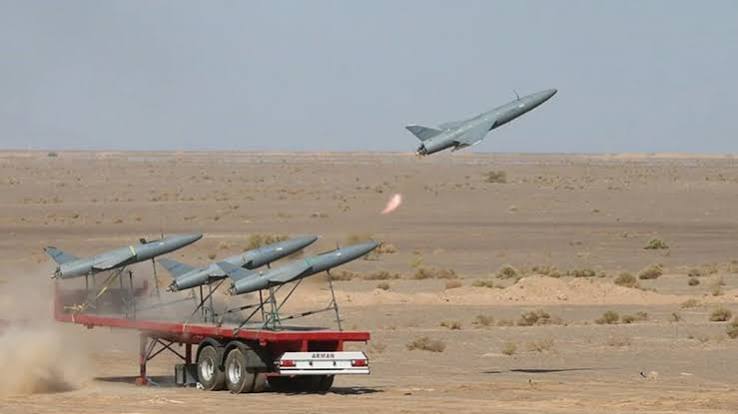

Iran’s Revolutionary Guards say they carried out a drone attack on a US radar system at a base in Bahrain, while the US military says it shot down the incoming drones. The latest Iran drone attack Bahrain has faced came early on Sunday, 15 November 2026. It is the second time in three days that the Gulf island has been targeted. Early reports point to no casualties, but the incident has pushed regional tensions up again.
What Happened in Bahrain on Sunday
Explosions were heard across Bahrain at around 4:00 a.m. local time. Residents woke to loud blasts as the country’s air defences responded to incoming drones. Bahrain’s military said it intercepted several Iranian aerial attacks before they could reach their intended targets. The kingdom also activated a nationwide alert, which many people had not seen for some time.
The warnings were the first of their kind since September. That detail matters because it shows how quiet the previous weeks had been. The sudden return of sirens and explosions reminded residents that the wider conflict has not ended, even if the fighting has slowed.
Background: A Conflict That Began in February
To understand this Iran drone attack Bahrain has now absorbed, it helps to look back at how the conflict started. Gulf countries, Bahrain among them, have faced thousands of Iranian drone and missile strikes since the war began on 28 February. In the opening days, Tehran launched waves of strikes across the region in response to US and Israeli attacks on Iran.
Bahrain hosts the headquarters of the US Navy’s Fifth Fleet, which makes it a key centre for American military operations in the Gulf. This is why the island has been a repeated target. Any strike there carries a message aimed directly at Washington and its regional partners.
In recent weeks, fighting between Washington and Tehran has eased overall, but sporadic attacks have continued, with Iran launching missile and drone strikes at US bases in Gulf countries. Sunday’s incident fits that pattern of limited but deliberate strikes during a wider lull.
Details of the Attack
According to Iranian state media, the strike was carried out by the IRGC Aerospace Force. The Guards said six of their drones targeted a US air defence radar system at the Al-Riffa helicopter base in Bahrain. The IRGC described the action as a second phase of retaliation for what it called hostile US actions.
The US account is different. US Central Command (CENTCOM) said it shot down two Iranian drones that were heading for the island, and reported no casualties or damage. The gap between “six drones” and “two shot down” is notable. Bahrain’s armed forces and its foreign ministry also said their air defences brought down Iranian drones. No independent confirmation has been published of any damage to the radar system, so the Iranian claim should be treated as unverified.
Reactions and Official Statements
Bahrain’s government framed the night as a successful defensive effort. The military said its interceptions prevented the attacks from reaching their intended targets, and the foreign ministry said air defence systems shot down Iranian drones. Bahrain’s position has been consistent: it condemns attacks on its territory and stresses the readiness of its forces.
Iran’s message was equally clear. State media carried the IRGC statement as proof that its forces can still reach US positions in the Gulf. CENTCOM, for its part, kept its statement short and focused on the interception and the absence of casualties, a signal that Washington wants to play down the damage.
Earlier in the conflict, analysts warned about the long-term effects on the region. An Atlantic Council expert said the war would push Gulf nations to reassess their national security and economic strategies, with consequences that last long after US operations in Iran end. Sunday’s events show how relevant that warning remains.
Impact on the Gulf and Beyond
The regional impact is the most immediate concern. Each new strike, even a failed one, forces Gulf governments to keep air defences on high alert and weigh the cost of hosting foreign forces. It also tests public patience, since residents must deal with sirens, closed airspace risks, and uncertainty.
Globally, the incident adds to worries about the Gulf’s role in energy and trade. The Gulf is central to oil shipments and busy air routes, so any return to heavier fighting can unsettle markets and travel plans. For readers in Pakistan, where millions of families have ties to Gulf economies, these developments are followed closely. You can find more world coverage on Pakistan Publications Inc.
Diplomatically, the strike complicates efforts to keep the recent calm in place. A limited exchange can still harden positions on both sides, especially when each describes its actions as retaliation for the other’s.
What Could Happen Next
Much depends on how Washington responds. If the US treats the interception as the end of the matter, tensions may stay at the current low simmer. If Iran follows its “second phase” language with more strikes, Bahrain and other host countries should expect further alerts.
Diplomacy remains the main path to lasting calm, but it is slow, and incidents like this make talks harder. For now, officials in the region are watching for any sign of escalation. Stay with Pakistan Publications Inc for updates as the situation develops.
Frequently Asked Questions (FAQs)
1. What happened in the latest Iran drone attack on Bahrain?
Early on 15 November 2026, explosions were heard across Bahrain as Iran’s Revolutionary Guards said they attacked a US military installation with drones. The IRGC claimed six drones targeted a US air defence radar at the Al-Riffa helicopter base. CENTCOM said it shot down two drones, and Bahrain’s military said it intercepted several attacks. No casualties or damage were reported by US officials, though Iran’s claims have not been independently verified.
2. Why does Iran keep targeting Bahrain?
Bahrain hosts the headquarters of the US Navy’s Fifth Fleet, which makes it one of the most important US military hubs in the Gulf. Since the conflict began on 28 February, Iran has struck many US-linked sites across the region, and Bahrain has been among the most frequently hit. Iran describes these attacks as retaliation for US actions, while Gulf governments and Washington call them unlawful aggression.
3. Were there any casualties or damage?
According to CENTCOM, there were no casualties and no damage from this attack. Bahrain said its forces stopped the attacks before they reached their targets. Iran’s Revolutionary Guards say they struck a radar system, but they have not provided independent evidence. Until credible confirmation appears, the safest reading is that the US and Bahraini accounts are the only ones backed by official military statements on the ground.
4. Is the wider US–Iran conflict getting worse?
Fighting between the two sides has eased overall in recent weeks, but sporadic attacks on US bases in Gulf countries have continued. Sunday’s strike was the second on Bahrain in three days, and the nationwide alert was the first since September. That suggests tensions are rising again, but it does not yet mean a return to the intensity seen at the start of the war.
5. How could this affect people outside the Middle East?
The Gulf is a major hub for energy supplies, shipping, and air travel, so instability can affect fuel prices, flights, and trade. Millions of workers from South Asia, including Pakistan, also live in Gulf states and send money home. Even limited attacks raise concern among families and businesses, which is why developments in Bahrain are followed well beyond the region.