
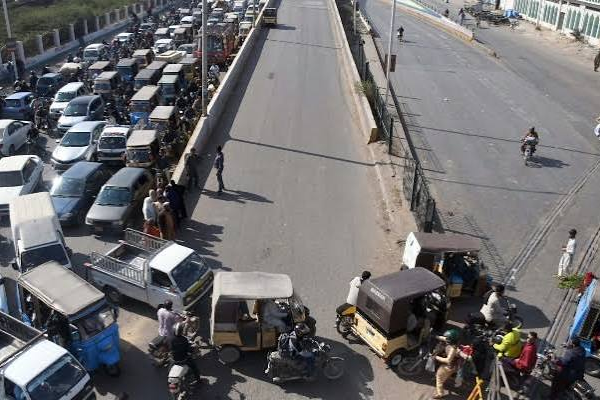

Karachi traffic congestion increased on Tuesday, November 24, after authorities closed several roads around PIDC Junction following a sit-in announcement by the Sindh Indus Lawyers Forum (SILF). Commuters travelling through Saddar and nearby areas faced delays and inconvenience as traffic police introduced diversions.
The road closures affected routes connecting PIDC Chowk, the State Life Building, and Dr Ziauddin Ahmed Road. Authorities advised motorists to use alternative routes to avoid traffic congestion.
Road Closures Around Karachi’s PIDC Junction
According to Karachi Traffic Police, both roads leading from PIDC Chowk towards the State Life Building were closed to regular traffic. Dr Ziauddin Ahmed Road was also blocked as authorities managed the situation following the lawyers’ protest.
The traffic alert was issued at approximately 1:16pm on Tuesday. The closures affected commuters travelling through Karachi’s central areas, particularly those heading towards Saddar and surrounding commercial locations.
The restrictions were introduced in response to a sit-in outside the Sindh High Court, where lawyers gathered to present their demands.
Alternative Routes Announced by Karachi Traffic Police
To reduce inconvenience, Karachi Traffic Police announced alternative routes for motorists travelling through the affected areas.
According to the traffic advisory, vehicles approaching PIDC Chowk were diverted towards Club Road. Meanwhile, traffic coming from the State Life Building was redirected towards Beaumont Road.
Commuters were advised to follow traffic police instructions and avoid unnecessary travel through the affected roads until normal traffic movement resumed.
Motorists travelling towards Saddar, PIDC, and nearby areas were particularly affected by the restrictions.
Lawyers Stage Sit-In Outside Sindh High Court
The road closures followed a protest organised by the Sindh Indus Lawyers Forum outside the Sindh High Court. The forum announced 16 demands under the banner of “Sindh Demands”, raising several political, constitutional, and administrative concerns.
One of the major demands involved opposition to the division of Sindh and proposals to establish new provinces or administrative units. The lawyers also expressed opposition to the Jalalpur Canal project.
Their protest reflects growing concerns among political and legal groups over provincial autonomy and decisions affecting Sindh.
Lawyers Raise Concerns Over Constitutional Amendments
The Sindh Indus Lawyers Forum also raised objections to constitutional amendments, apparently referring to the 26th and 27th amendments. The forum said its demands included concerns about constitutional changes and their potential impact.
Other issues included alleged irregularities in the Sindh Public Service Commission and accusations of government interference in lawyers’ bar associations.
The demands have added to the ongoing political debate over governance, provincial rights, and administrative changes in Pakistan.
Debate Over New Provinces Adds to Political Tensions
The lawyers’ demonstration comes amid an ongoing national discussion about creating new provinces and administrative units. Interior Minister Mohsin Naqvi previously called for changes to the country’s administrative structure, arguing that the existing governance system needed a reset.
The federal government has supported holding a referendum on the creation of new provinces or administrative units. However, the proposal has faced opposition from the Pakistan Peoples Party (PPP), particularly regarding any move to divide Sindh.
PPP Chairman Bilawal Bhutto-Zardari has warned against any forced attempt to divide provinces, saying such a move could create serious political consequences.
Impact of Road Closures on Karachi Commuters
Road restrictions around PIDC Junction can affect daily commuters, office workers, business activities, and public transport operating through central Karachi.
When major roads are blocked, vehicles are redirected towards alternative routes that may already experience heavy traffic. This can increase travelling times and create additional pressure on nearby intersections.
Karachi regularly faces traffic management challenges during protests, public gatherings, and security-related restrictions. Better coordination between traffic police and relevant authorities is important to minimise disruption.
For more information about road safety and urban congestion, read our guide on Pakistan’s traffic management system and road safety challenges.
What Happens Next?
The situation around PIDC Junction will depend on the progress of the lawyers’ sit-in and any further decisions by the authorities. Traffic police may revise road restrictions or reopen affected routes as the situation develops.
Commuters are advised to check official Karachi Traffic Police updates before travelling through PIDC, Saddar, and nearby areas. Following designated diversions can help motorists avoid unnecessary delays and reach their destinations more safely.
Frequently Asked Questions
Why were roads closed around Karachi’s PIDC Junction?
Authorities closed roads around PIDC Junction on November 24 following a sit-in organised by the Sindh Indus Lawyers Forum outside the Sindh High Court. The demonstration was held to present 16 demands concerning provincial rights, constitutional amendments, and other political and administrative issues.
Which roads were closed in Karachi?
According to the Karachi Traffic Police advisory, both roads from PIDC Chowk towards the State Life Building and Dr Ziauddin Ahmed Road were closed to traffic. These restrictions affected commuters travelling through the Saddar and PIDC areas.
Which alternative routes were announced for commuters?
Traffic approaching PIDC Chowk was diverted towards Club Road, while vehicles coming from the State Life Building were redirected towards Beaumont Road. Motorists were advised to follow traffic police instructions and use the designated diversions.
Why are lawyers protesting outside the Sindh High Court?
The Sindh Indus Lawyers Forum organised the sit-in to present 16 demands under the banner of Sindh Demands. Their concerns include opposition to the division of Sindh, the Jalalpur Canal project, constitutional amendments, alleged irregularities in the Sindh Public Service Commission, and government interference in lawyers’ bar associations.
How are the proposed new provinces connected to the protest?
The lawyers have opposed proposals that could lead to the division of Sindh. The issue has become politically sensitive following discussions about creating new provinces and administrative units. The PPP has also strongly opposed any forced attempt to divide Sindh.
How can Karachi commuters avoid traffic delays during protests?
Commuters should check official traffic police advisories before leaving, avoid roads affected by demonstrations, and follow alternative routes announced by authorities. Allowing extra travelling time and following instructions from traffic personnel can also help reduce inconvenience.