
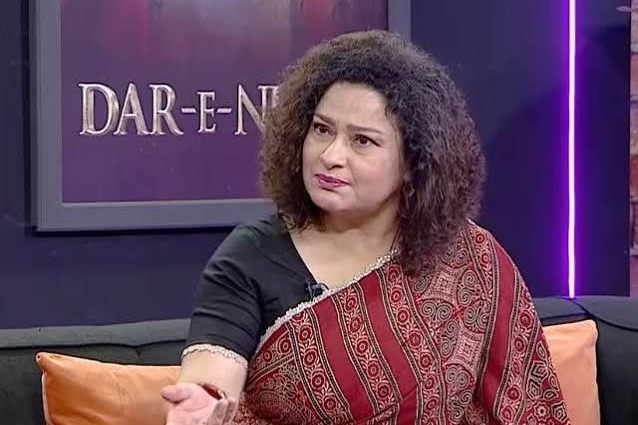

Sania Saeed Dar-e-Nijaat fans got a closer look at the thinking behind Khushbakht this weekend, as the actor said she enjoyed the role despite a few small reservations. She spoke on Hassan Choudary’s talk show Buzz, soon after a backstory episode left many viewers worried and upset. Saeed described her character as a resilient woman who refuses to pass her pain on to the next generation. She also pushed back on the idea that wealth and moral failure go together.
Why Khushbakht’s Backstory Shook Viewers
Over the weekend, the serial revealed more of Khushbakht’s past, and many viewers reacted strongly on social media. The audience learned that she had survived cancer and spent most of her life alone. She raised her son, Abu Bakar, without a partner, and the drama presents that as the foundation of the values he carries today.
For many fans, this reveal changed how they saw her. Earlier episodes showed a calm, giving woman who helps others without expecting anything back. The new details explained where that quiet strength came from. They also showed how much she had endured before the story began.
Dar-e-Nijaat has been one of the most discussed Pakistani drama serials of the season. Its cast includes Sheheryar Munawar as Abu Bakar and Durefishan Saleem, and the story keeps raising questions about class, family and redemption. That is why every new episode sets off a fresh round of debate online, and why the Sania Saeed Dar-e-Nijaat conversation has stayed so active.
What Sania Saeed Said on Buzz
Speaking to Choudary, Saeed explained that she was drawn to Khushbakht because she is, in her words, “a very resilient woman.” She said the character has seen a great deal of hardship and has still held on to her sense of kindness. According to Saeed, the values Khushbakht gave her son reflect what life taught her.
The actor argued that people can come from very different backgrounds, and what matters is what they build from those experiences. She said Khushbakht could have raised Abu Bakar to fit neatly into a harsh system, hoping he would protect her in later years. Instead, she chose to raise a gentler son, and Saeed said she liked that choice.
Saeed also stressed that Khushbakht does not believe her daughter-in-law or the wider family must suffer simply because she did. In Saeed’s view, that is what makes the character special. She breaks a painful cycle instead of repeating it, and the actor said this is the part of the role she values most.
The actor also spoke about how women are often portrayed on screen. She said female characters should not always be shown making the wrong decisions, and they should not be told that love must be earned through complete submission. This Sania Saeed Dar-e-Nijaat interview made clear that she sees the serial as telling a slightly different story, in which the women’s journeys take new directions as the plot moves ahead.
Saeed was careful to say that the story reflects the writer’s point of view. Viewers may agree or disagree with it, she said, but she believes it is very well told and that playing Khushbakht has been enjoyable.
Parenting, Values and the Question of Class
One of the strongest parts of the interview was Saeed’s discussion of parenting. When Choudary asked how much parents shape their children, she pointed to the values they practise at home and how present they are in their children’s lives. She said these things matter far more than money.
Speaking about Zaryab, she said the character is not a bad girl and has never been shown behaving recklessly. Zaryab stayed committed to one man from childhood, Saeed said, and crossed a line to protect that relationship. If she seems classist, the actor explained, that is because it is what she has seen in her own home.
Saeed was more critical of the parents in the story. She said Zaryab’s parents are not truly present in their children’s lives. She added that Zamil’s parents do not even know whether their son is dealing with anxiety, depression or drug use. In contrast, Abu Bakar has watched his mother give, share and help others, and he has made that a way of life.
The actor said that when children are taught that material things matter most, they will talk only about what is surface-level. She also objected to what she called a “reverse-classist” attitude, which treats wealth as a sign of bad character. She noted that Karachi, the country’s financial hub, is also a major centre of charity, and that this giving comes from citizens who have some wealth. For Saeed, parenting and generosity have little to do with how rich a family is.
Why This Matters for Pakistani Television
These comments add to a wider conversation about how Pakistani dramas treat women, class and family. Viewers often judge characters quickly, and a serial like Dar-e-Nijaat invites them to look at the reasons behind people’s choices. The Sania Saeed Dar-e-Nijaat interview shows that actors also think hard about the messages their characters carry.
The remarks also come at a time when audiences are paying close attention to storylines about mental health, parental neglect and unresolved trauma. By describing Khushbakht as a woman who ends a cycle of hurt, Saeed offers fans a hopeful way to read the character. That reading could shape how people discuss the coming episodes.
For the industry, interviews like this one keep viewers engaged between episodes. They also encourage writers and producers to build female characters with more depth and fewer clichés. Many fans are likely to watch the next episodes with these comments in mind.
What Comes Next
Saeed hinted that the story will continue to show the women’s choices in a more balanced and modern light. She said the decisions they make are good ones, and viewers will see that as the plot moves ahead. That suggests Khushbakht’s arc may be about healing rather than more suffering.
Fans can expect more twists in the coming weeks as the family conflicts deepen. Whether audiences agree with the writer’s view or not, the serial is likely to stay at the centre of online discussion. Readers can follow the latest on Pakistani drama news and entertainment updates for further developments.
Frequently Asked Questions
Who is Sania Saeed playing in Dar-e-Nijaat?
In Sania Saeed Dar-e-Nijaat coverage, the key detail is her role as Khushbakht, the mother of Abu Bakar, who is played by Sheheryar Munawar. Khushbakht is a strong, giving woman who raised her son alone after a difficult life. The serial has recently revealed that she survived cancer, and Saeed says this history explains the values she passed on to her son. The role is one of the most talked-about parts of the serial.
What did Sania Saeed say about Khushbakht on Buzz?
On Buzz with Hassan Choudary, Saeed said she enjoyed the role despite having small reservations. She described Khushbakht as resilient and praised her decision not to pass her pain on to the next generation. She also said the character could have raised her son to suit a harsh system for her own security, but chose a kinder path. Saeed said she liked those choices.
Why did viewers react strongly to the latest episode?
The weekend episode explored Khushbakht’s backstory in more detail, including her illness and her years of living alone. Many viewers said they felt worried and upset, because earlier episodes had shown only her calm, helpful side. The new details made fans see her struggle more clearly. They also sparked discussion on social media about the character’s strength and the sacrifices she made.
What does Sania Saeed think about parenting in the story?
Saeed believes good parenting depends on the values parents practise and how present they are, not on how much money they have. She criticised the lack of attention from Zaryab’s and Zamil’s parents, who do not seem to know what their children are going through. In contrast, she said Abu Bakar learned generosity by watching his mother. Her view is that children copy what they see at home.
What is meant by “reverse-classist” in her comments?
Saeed used the term for the belief that wealthy people are automatically immoral or poor parents. She said this is unfair, and pointed out that Karachi, a major commercial centre, is also home to a lot of charity work. That giving, she argued, comes from people with some level of wealth. In her view, kindness and good parenting can be found in any income group.
Does Sania Saeed think the drama portrays women fairly?
Saeed said women on screen should not always be shown as people whose decisions are wrong, or as people who deserve love only if they submit fully. She said Dar-e-Nijaat tells a slightly different story, and she hopes it shows women’s journeys in a fresh way. She also made clear that the story is the writer’s perspective, and viewers are free to disagree with it.
Where can I read more Sania Saeed Dar-e-Nijaat news and other drama updates?
You can find regular updates on new episodes, cast interviews and television trends on the Pakistan Publications Inc entertainment section. The site also covers breaking news, analysis and feature stories on other topics. Bookmark the page to stay informed about the latest developments in Pakistani showbiz.