
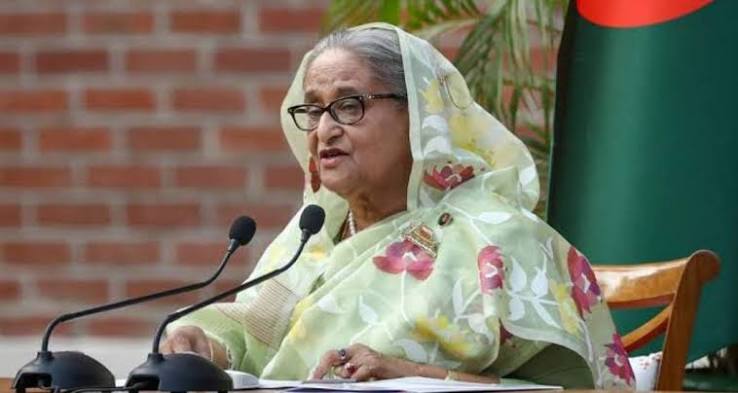

Former Bangladesh prime minister Sheikh Hasina has announced that she will return home in December, even though a court has sentenced her to death. In a written interview on Monday, she said she understands the dangers and will not let fear decide her future. Her announcement has pushed an already tense situation between Dhaka and New Delhi into the spotlight again. It also leaves Bangladesh asking what could happen if one of its most divisive leaders actually lands on its soil.
The Road to Exile
Hasina led Bangladesh for 15 years before a student-driven uprising ended her government in August 2024. She left for India shortly afterwards and has lived in hiding ever since. Her exit closed a long chapter in South Asian politics and opened a period of uncertainty that the country is still working through.
Later, a Bangladeshi tribunal found her guilty of crimes against humanity over the violent crackdown on protesters. The verdict was delivered in her absence, and the court handed down the death penalty. Hasina has rejected the ruling from the start and calls the trial politically motivated. Her party, the Awami League, has also been barred from political activity.
The political landscape has shifted since she left. Tarique Rahman became prime minister in February, and ties between Bangladesh and India have reportedly become steadier under his government. Even so, the question of Hasina’s future has never left the national conversation.
What Hasina Has Said
Hasina says preparations for her journey are already under way. Her lawyers have applied for a Bangladeshi passport and a national identity card through the country’s high commission in New Delhi. She insists she is not asking India for help with her return and describes the plan as a voluntary decision. In her view, extradition is a matter for two governments to settle, not something that involves her personal choice.
She has also criticised the response from Dhaka. According to her, officials spent months demanding that she come back, but now that she is taking real steps, they seem more focused on warning her than on letting it happen. She described those mixed messages as revealing. She added that more than 600 cases have been filed against her, which she calls baseless.
The government’s stance is firm. The prosecutor who won the conviction says she missed the deadline to file an appeal and will face the sentence if she returns. Officials have also said she has no legal options left. Bangladesh has asked India to hand her over, and India says the request is still under legal review.
Hasina has denied that the Awami League is responsible for a recent series of petrol bomb attacks across Bangladesh, as the authorities have alleged. With the party under strict limits, such accusations are likely to keep shaping the political mood in the weeks ahead.
Defiance and Warnings
Hasina has spoken openly about the personal risk. She says no threat of death will keep her away from her own country, and in an earlier interview she said that if death comes, she wants it to come on her own soil. She has also described the decision as a duty to her people rather than an act of defiance.
At the same time, she has made clear that she does not want to die. She says she wants to keep serving Bangladesh, but is ready to accept the consequences if that is the price of coming home. That mix of resolve and caution has become the centre of her public message.
The prosecutor’s response was just as blunt. He has said she will face the execution of the verdict if she returns. He has also advised that if she truly wants to come back, she should write to the Indian authorities and request her return under the extradition treaty.
Is It Strategy or a Real Plan?
Analysts are divided on her motives. Some believe the announcement is meant to keep her politically relevant, hold her supporters together and keep the banned Awami League alive. A party loyalist has compared the moment to her return in 1981, after the assassination of her father and most of her family.
Others point out that executing the daughter of the country’s founding leader would be a heavy decision for any government. The president has the power to pardon her or reduce her sentence. Bangladesh last carried out a hanging in 2023, according to Amnesty International. This means the outcome is not fully set by the court’s verdict, and political choices could still change it.
Regional and Global Impact
The most immediate impact falls on relations between India and Bangladesh. Hasina has lived in India for more than two years, so New Delhi is under pressure from both directions. Handing her over could be costly at home, while refusing might slow the recent improvement in ties with Dhaka. Every step will be closely followed across South Asia and in international affairs coverage.
Inside Bangladesh, her arrival could raise tension on the streets. Her supporters claim that millions of party workers would protect her, and the country is already dealing with arson and petrol bomb incidents. Security forces would need to plan for large gatherings, counter-protests and possible clashes.
Rights groups and foreign governments are also likely to watch closely, because death sentences issued in absentia often raise questions about fair trial standards. For readers following related developments, our World news section offers regular updates.
What Comes Next
December is now the month to watch. Her travel documents, India’s decision on the extradition request and her own security arrangements all need to fall into place before she can travel. Any one of these could delay the plan. It is also possible that the announcement is mainly a political message and that she never boards a flight.
If she does return, the Bangladeshi government will face a defining test. It will have to choose between enforcing the verdict, opening a path to pardon or a reduced sentence, or seeking a wider political settlement. Whatever it decides will show how a country in transition deals with its past. For more reports like this, visit Pakistan Publications Inc.
Frequently Asked Questions
1. Why does Sheikh Hasina want to return to Bangladesh in December?
Hasina says she feels a duty to the people of Bangladesh and does not want fear to decide that duty. Analysts see another reason as well. They believe the announcement helps her stay politically relevant, keeps her supporters loyal and gives the banned Awami League a rallying point while she is abroad. She has said she does not wish to die, but she is ready to accept the consequences if returning carries that price. Whether this is a firm travel plan or mainly a political signal will become clearer as the month gets closer.
2. What is the reason behind Hasina’s death sentence?
A Bangladeshi tribunal found her guilty of crimes against humanity over the deadly crackdown on the 2024 student-led protests. The uprising ended her 15-year rule, and she left for India in August 2024. The verdict was issued in her absence. She rejects the ruling and says the trial was politically motivated. Officials in Dhaka say she missed the appeal deadline, so they treat the legal process as finished. She also faces other cases, including corruption allegations.
3. Will India send Hasina back to Bangladesh?
Bangladesh has formally requested her extradition, and India says the request is under legal review. A decision depends on the treaty terms, Indian law and wider political interests between the two neighbours. Hasina has said she is not asking India to arrange her return and wants to travel voluntarily. The Bangladeshi prosecutor has also suggested that she write to the Indian authorities and seek her return under the extradition treaty. Until New Delhi announces its position, the matter remains open.
4. Could Hasina really be executed after she returns?
On paper, the prosecutor says the sentence will be carried out. In practice, the president can pardon her or reduce the punishment, so the final result depends on decisions that have not been made yet. Analysts also say it would be very hard for any government to execute the daughter of the country’s founding leader. Bangladesh last carried out a hanging in 2023, according to Amnesty International. So execution is legally possible, but the real outcome would depend on political and legal choices after she arrives.
5. How could her return affect Bangladesh and South Asia?
Inside Bangladesh, it could increase political tension, especially because the Awami League is banned and her supporters may gather in large numbers. Security forces would need to prevent clashes at a time when the country is already facing arson and petrol bomb attacks. Across the region, it would test the relationship between Dhaka and New Delhi, since India has hosted her since 2024. Rights groups and foreign governments would also follow how Bangladesh handles a case involving a death sentence passed in absentia.