

How One Extraordinary Wimbledon Weekend Changed British Tennis Forever
The Historic Five-Title Triumph That Sparked a New Era for British Tennis
A Weekend That Changed Everything
The summer of 2016 remains one of the most unforgettable chapters in British sporting history. The country was still absorbing the shock of the Brexit referendum, Leicester City had just completed one of football’s greatest fairy tales by winning the Premier League, and England held the Ashes.
Yet, amid all those headlines, another remarkable story unfolded on the pristine grass courts of Wimbledon.
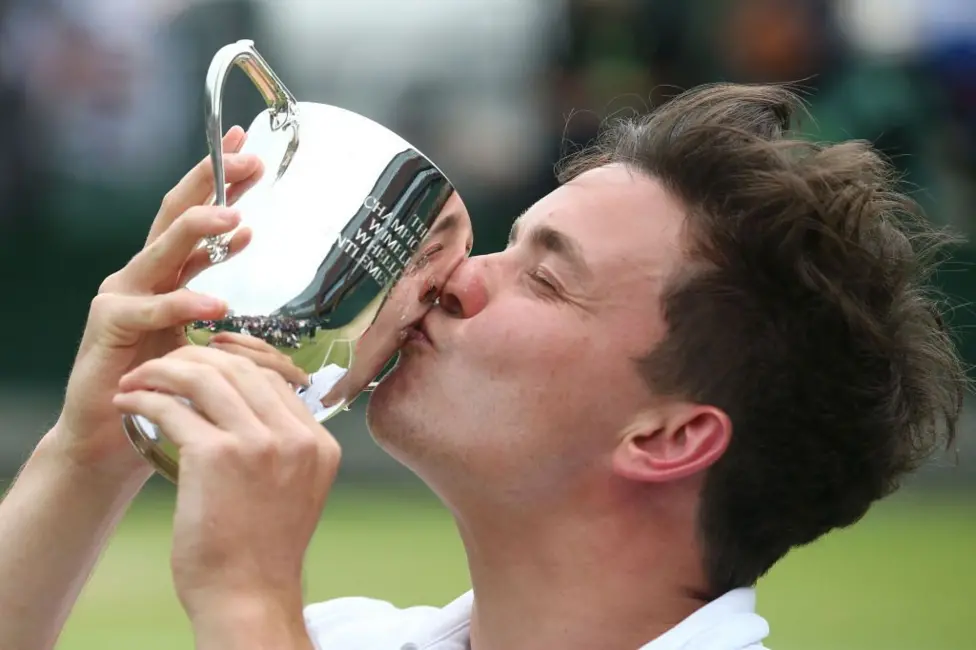
Over one extraordinary weekend, British players captured five Wimbledon titles—a feat unmatched in modern times. The celebrations reached their peak when Andy Murray lifted the Gentlemen’s Singles trophy for the second time, cementing his place among Britain’s greatest sporting icons.
Nearly a decade later, that golden weekend continues to influence British tennis, inspiring a new generation of players and transforming the sport across the country.
Andy Murray’s Defining Wimbledon Triumph
On July 10, 2016, Centre Court was packed with anticipation as Andy Murray faced Canada’s Milos Raonic in the men’s singles final.
Unlike many of his previous Grand Slam finals, Murray entered the match as the favorite. Roger Federer had been eliminated in the semifinals, Novak Djokovic suffered a surprise early exit, and Rafael Nadal missed the tournament through injury.
More importantly, Murray was playing arguably the best tennis of his career.
Having dropped only two sets throughout the tournament, he carried that momentum into the final. Displaying remarkable composure and consistency, Murray defeated Raonic 6-4, 7-6, 7-6 to claim his second Wimbledon crown.
The emotional victory marked another milestone in an already remarkable career. It also proved to be one of the defining moments of British sport in the 21st century.
British Success Began Before Centre Court
Long before Murray stepped onto Centre Court, history was already being made elsewhere around the All England Club.
On Court 17, Scotland’s Gordon Reid defeated Sweden’s Stefan Olsson to become the first British player to win the Wimbledon wheelchair singles title.
Only a day earlier, Reid had partnered with Alfie Hewett to win the wheelchair doubles championship, giving Britain its first titles of the weekend.
Reid later recalled the incredible atmosphere around British players throughout the tournament, describing a sense of confidence and excitement that seemed to grow with every victory.
Heather Watson Completes a Historic Weekend
As Murray celebrated his triumph, another British player was preparing for her own chance at history.
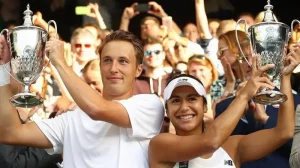
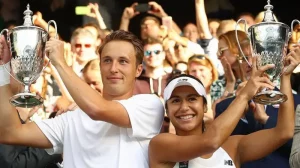
Heather Watson teamed up with Finland’s Henri Kontinen in the mixed doubles final, despite never having played together before the tournament.
The partnership proved magical.
Their victory made Watson the first British woman in 25 years to win a Grand Slam title, adding a fifth Wimbledon trophy to Britain’s remarkable collection.
Looking back, Watson has often described that day as one of the greatest moments of her career.
A Celebration to Remember
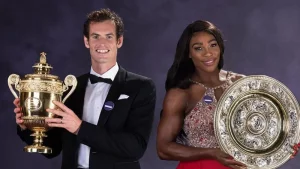
With history secured, attention quickly shifted from Centre Court to the traditional Wimbledon Champions’ Dinner.
Players exchanged tennis outfits for evening gowns and tuxedos as they gathered to celebrate one of the most memorable Championships in decades.
Murray, known for his reserved personality, even joined the celebrations well into the early hours.
Heather Watson later joked that the celebrations lasted until sunrise, creating memories that many of Britain’s champions still cherish today.
More Than Just Five Trophies
Those victories represented far more than a successful tournament.
For young players watching across Britain, they offered tangible proof that winning at the highest level was possible.
Andy Murray had already ended Britain’s 77-year wait for a men’s Wimbledon singles champion in 2013. His second title, combined with victories from Gordon Reid, Heather Watson, Jamie Murray, and other British champions, reinforced the belief that Britain could consistently produce world-class tennis players.
That belief continues to shape the sport today.
The Lasting Murray Effect
Perhaps the greatest legacy of that unforgettable weekend has been its impact on the next generation.
Participation in tennis has grown significantly across the United Kingdom over the past decade. The Lawn Tennis Association has invested heavily in renovating public courts, expanding indoor facilities, and improving grassroots programs.
Many of today’s leading British players—including Jack Draper, Emma Raducanu, Katie Boulter, and others—have cited Andy Murray as a major inspiration.
Murray himself remains actively involved in British tennis, mentoring younger players and recently joining Jack Draper’s coaching team during Wimbledon.
His influence extends far beyond his own achievements.
British Tennis Today
Nearly ten years after that historic weekend, British tennis is arguably stronger than it has been for decades.
The depth of talent has increased considerably, particularly in the men’s game, while British doubles specialists have continued collecting Grand Slam titles around the world.
Emma Raducanu’s remarkable US Open triumph in 2021 further demonstrated that British players are capable of competing for the sport’s biggest prizes.
Wheelchair tennis has also flourished, with Gordon Reid and Alfie Hewett becoming two of the sport’s most successful partnerships.
Why That Weekend Still Matters
Sport often has defining moments that change its future.
For British tennis, Wimbledon 2016 was one of those moments.
It wasn’t simply about lifting trophies it changed perceptions, inspired thousands of young athletes, encouraged greater investment, and created a winning culture that continues to benefit British tennis today.
Whenever new British stars walk onto Centre Court, they do so knowing that an unforgettable weekend nearly a decade ago proved greatness was possible.